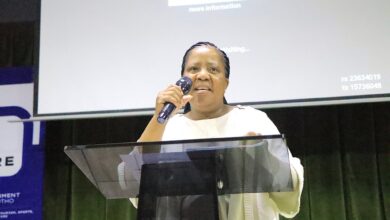
Lesotho E-Government Infrastructure Project Phase II Confirms Post Office E-Services Centre Ready for Public Use


Lesotho’s E-Government Infrastructure Project Phase II has confirmed that the e-Services Centre housed at the Post Office is ready for public use, marking an important step towards improving access to government services through digital technology. Project Coordinator Mr. Kori Lenyatsa announced the development during a visit to the Post Office by the Ministry of Information, Communications, Science, Technology and Innovation’s Heads of Departments, accompanied by officials from the African Development Bank, which is providing financial support for the project. The initiative aims to bring public services closer to communities, reduce administrative costs and make government processes more efficient. By using information and communication technology to improve service delivery, the project seeks to make essential services more accessible to Basotho, including people who do not own smartphones. The readiness of the centre signals progress in Lesotho’s wider digital transformation efforts and brings the country closer to providing more convenient, technology-enabled public services.
Speaking during the visit, Lenyatsa explained that the project team is visiting districts where e-Services Centres have been renovated to ensure that the facilities are ready for commissioning and eventual launch. This process allows the project to assess the centres and prepare them to serve members of the public. Having functional service centres is an important part of ensuring that investments in digital infrastructure translate into practical benefits for communities. The initiative is intended to help people access government services without relying entirely on traditional office-based procedures. By preparing facilities across different districts, the project aims to extend the reach of digital public services beyond major administrative centres.
The E-Government Infrastructure Project Phase II uses information and communication technology to improve how government departments deliver services to the public. Although telecommunications towers have improved mobile phone connectivity in many areas, Lenyatsa noted that some people do not have smartphones. This creates a barrier for individuals who might otherwise be expected to access online government services independently. The e-Services Centres are designed to help address this challenge by providing physical locations where people can receive assistance with digital services. This approach combines digital technology with direct support, helping more citizens benefit from government modernisation regardless of their personal access to devices.
The project involves participating ministries responsible for important public services, including the Ministry of Home Affairs, the Ministry of Public Service and the Ministry of Public Works and Transport. Through the initiative, Basotho are expected to access services such as tax filing and licence renewals at no cost to them through the project’s service arrangements. Bringing these services closer to communities could reduce the need for some residents to travel long distances to reach government offices. It could also make administrative processes easier for people who have limited internet access or need assistance completing online transactions. The availability of these services will depend on the functions implemented at each centre and the arrangements established by the relevant government departments.
Reducing the cost and complexity of government administration is another important objective of the project. Traditional paper-based processes often require printed documents, physical record handling and repeated visits between offices. Digital systems can reduce reliance on paperwork and manual procedures, making it easier for government departments to process information and manage administrative tasks. These improvements may also help reduce delays and improve the organisation of public records. By shifting suitable services to digital platforms, the government aims to create more efficient processes while making public administration more accessible to citizens.
Lenyatsa also reported progress in other parts of the E-Government Infrastructure Project Phase II, including the establishment of a fully operational e-Parliament. The digital system has enabled parliamentarians to move away from paper-based operations towards digital processes. This change represents an important application of technology within public institutions, where the management and exchange of documents play a significant role in daily work. Digital parliamentary systems can support more efficient access to information and reduce dependence on printed materials. Their effectiveness, however, depends on reliable connectivity, appropriate equipment, staff training and continued technical support.
Another major component of the project is the fibre connectivity link from Roma to Thaba-Tseka, which Lenyatsa said had reached 99 per cent completion. Reliable fibre connectivity can provide an important foundation for digital government services by supporting faster and more stable communication between connected locations. It can also help public institutions exchange information and access online systems more effectively. Extending connectivity towards Thaba-Tseka is significant for improving the digital infrastructure available to communities and institutions along the route. Completing the remaining work and ensuring that the network operates reliably will be important for maximising the benefits of this investment.
The project initially aimed to install e-Services facilities in 36 Post Offices, but it succeeded in establishing them at 20 locations and two Community Councils. This means the completed rollout has not yet reached the original target, leaving a gap between the planned coverage and the facilities established so far. Even so, the centres represent an effort to use existing public infrastructure to improve access to government services. Post Offices can provide familiar and accessible locations for citizens who need assistance with digital transactions. Expanding the network in the future could help reach more communities, provided the necessary funding, equipment, staffing and technical support are available.
Lenyatsa further explained that the project began in 2020 with plans to construct 48 telecommunications towers. However, 45 towers were ultimately constructed because of the high costs involved. Telecommunications infrastructure can require substantial investment in construction, equipment, power supply and ongoing maintenance, particularly in areas where access is difficult. These costs can affect the scale and pace of infrastructure projects, making careful planning and resource allocation essential. Although the project did not achieve its original tower target, the completed infrastructure forms part of the wider effort to strengthen connectivity and support digital services in Lesotho.
Staff training is the next important step in preparing the e-Services Centres for effective public use. Lenyatsa indicated that training for staff members who will assist citizens at the centres is expected to begin in the coming weeks. Proper training will help staff understand the available digital platforms, guide users through administrative processes and respond to common service-related questions. It will also be important for staff to understand how to handle personal information responsibly and direct citizens to the appropriate government departments when necessary. Well-trained personnel can make the difference between a digital service that exists in theory and one that provides practical value to the public.
During the visit, Administration Manager Mrs. ‘Maletsika Motsokotsi offered support by proposing that apprentices already deployed at District Administrator’s offices be considered for training to assist at the service centre. She noted that these apprentices are already receiving government funding, presenting a potential opportunity to use existing human resources to support the project. Their involvement could help provide additional assistance at the centre while making use of personnel already placed within government structures. The proposal also highlights the importance of coordination between departments when introducing new public services. The extent to which the apprentices will be deployed will depend on the arrangements made for their training and participation.
The success of the e-Services Centres will ultimately depend on more than renovated buildings and installed technology. Citizens need to know which services are available, how to access them and what documents or information they must bring when seeking assistance. Government departments must also ensure that their digital systems remain operational and that service requests are handled accurately. Reliable internet connectivity, trained staff and clear procedures will be essential to maintaining public confidence in the centres. Regular monitoring and feedback from users could help identify problems and guide improvements as the project develops.
Lesotho’s E-Government Infrastructure Project Phase II represents an important effort to modernise public administration and extend digital services to communities across the country. The readiness of the Post Office e-Services Centre, progress on the Roma to Thaba-Tseka fibre link and the introduction of a fully operational e-Parliament demonstrate several areas of development under the initiative. While the project has fallen short of some original infrastructure targets, the completed facilities and networks provide a foundation for further progress. The planned training of service centre staff and the proposed use of government-funded apprentices could also help prepare the facilities to serve the public effectively. With reliable technology, adequate support and continued cooperation among government departments, the initiative has the potential to reduce administrative burdens, improve access to essential services and make digital government more inclusive for Basotho.
Join 'Lesotho News' WhatsApp Channel
Get breaking Lesotho news — delivered directly to your WhatsApp.
CLICK HERE TO JOIN