Lesotho Strengthens Investment and Textile Industry Strategy at EuropAfrica Investment Forum 2026

The Kingdom of Lesotho proudly participated in the EuropAfrica Investment Forum 2026, held from 30 September to 2 October 2026 at the European Union Parliament in Brussels. The forum provided Lesotho with an important platform to present its investment potential, discuss economic challenges and strengthen engagement with European partners. The delegation was led by the Honourable Deputy Prime Minister of Lesotho, Justice Nthomeng Majara, who also delivered the keynote address. Lesotho used the event to highlight opportunities across several sectors while drawing attention to the urgent need for stronger support for its textile and manufacturing industries. The country’s participation demonstrated its interest in attracting investment, expanding market opportunities and building partnerships that can support long-term economic development.
The Deputy Principal Secretary of Foreign Affairs and International Relations, Mrs. Limpho Masilo-Motsamai, opened Lesotho’s contribution to the programme by presenting the country’s investment opportunities. Her presentation highlighted water and renewable energy as important areas for potential investment, reflecting Lesotho’s natural resources and development priorities. She also identified agriculture and agro-processing, textiles and manufacturing, tourism and technology as sectors with opportunities for investors and business partnerships. These sectors can contribute to economic diversification while creating employment and supporting the development of local businesses and skills. By presenting a broad investment portfolio, Lesotho positioned itself as a country with opportunities that extend beyond its established textile manufacturing base.
Water and renewable energy remain important areas within Lesotho’s economic development agenda because the country has significant water resources and strong potential for renewable energy development. Investment in these areas can support infrastructure development and create opportunities for regional economic cooperation. Agriculture and agro-processing also offer potential to increase the value generated from agricultural production by encouraging processing and related business activities within the country. Tourism provides another avenue for investment, particularly through the development of services and experiences that can strengthen the sector’s contribution to the economy. Technology can support these sectors by improving productivity, connectivity, innovation and access to modern business systems.
Textiles and manufacturing featured prominently in the discussions because the sector faces significant pressure following the end of the African Growth and Opportunity Act, commonly known as AGOA, and the introduction of new United States tariffs. Lesotho has built an important manufacturing base around textiles and apparel, making changes in international market access particularly significant for manufacturers, workers and related businesses. The changing trade environment creates a need for Lesotho to examine existing markets while developing stronger and more sustainable routes to international customers. The challenge is not simply finding another destination for exports, but ensuring that manufacturers can remain competitive under changing global trade conditions. This requires investment, stronger supply chains, appropriate skills and trade arrangements that work effectively for businesses operating in Lesotho.
In her keynote address, Deputy Prime Minister Justice Nthomeng Majara addressed these challenges and highlighted Europe as a potential alternative market for Lesotho’s textile industry. Lesotho already benefits from duty-free and quota-free access to the European Union under the EU-SADC Economic Partnership Agreement. However, having preferential market access does not automatically guarantee that manufacturers can take full commercial advantage of that opportunity. Businesses still need to meet the applicable rules governing where materials and products can be sourced and how goods qualify for preferential treatment. For Lesotho, the priority is therefore to make existing access to the European market more commercially useful for local manufacturers.
A major part of this effort involves the Rules of Origin under the EU-SADC Economic Partnership Agreement. More flexible Rules of Origin could give manufacturers greater opportunities to source materials from appropriate regional and international suppliers while still qualifying for preferential access where the agreement allows it. Regional sourcing could also encourage the development of stronger value chains across Southern Africa, reducing some of the constraints faced by manufacturers that depend heavily on inputs from outside the region. Greater regional integration could create opportunities for businesses involved in textiles, fabric production, accessories, logistics and other manufacturing inputs. Developing these connections would help Lesotho move towards a more integrated manufacturing ecosystem rather than relying primarily on final-stage garment production.
Investment in textile inputs represents another important part of the strategy. A competitive textile industry requires reliable access to materials and other inputs, as well as efficient production processes and dependable logistics. Strengthening domestic and regional supply chains can help manufacturers manage costs, improve reliability and respond more effectively to customer requirements. Skills development also remains essential because manufacturers need workers with the technical knowledge required for modern production, quality control and increasingly demanding international markets. Investment in quality certification can further help Lesotho’s manufacturers demonstrate that their products meet the standards expected by international buyers.
The discussions at the EuropAfrica Investment Forum 2026 therefore placed the future of Lesotho’s textile industry within a wider economic development strategy. The issue is not simply whether Lesotho has access to the European market, because that access already exists under the EU-SADC Economic Partnership Agreement. The more important question is whether the agreement, together with investment in infrastructure, inputs, skills, certification and regional value chains, can help Lesotho’s manufacturers compete successfully. This distinction is important because preferential tariffs alone cannot solve challenges involving production costs, supply chains, workforce capabilities and international competitiveness. Lesotho’s approach calls for trade policy and investment policy to work together so that market access produces tangible commercial opportunities.
The forum also gave Lesotho an opportunity to present its wider economic priorities to European investors and partners. Investment in water, renewable energy, agriculture, agro-processing, textiles, manufacturing, tourism and technology can support diversification and reduce dependence on a limited number of economic activities. A diversified investment base can also create opportunities for small and medium-sized businesses to participate in larger value chains. For international investors, these sectors provide areas in which partnerships can potentially support infrastructure, production capacity, skills development and access to markets. For Lesotho, attracting productive investment is important not only for capital formation but also for creating jobs, developing expertise and strengthening the capacity of local industries.
The participation of the Deputy Prime Minister and the senior Foreign Affairs and International Relations delegation also underscored the role of government diplomacy in supporting economic development. International investment forums provide governments with an opportunity to communicate national priorities directly to potential partners and decision-makers. Lesotho’s message in Brussels focused on practical economic needs, particularly the importance of making existing trade preferences work for manufacturers. The emphasis on regional sourcing and value chains also reflects the fact that Lesotho’s competitiveness cannot be considered separately from the wider Southern African economy. Stronger partnerships between Lesotho, regional economies and European markets could create new opportunities if supported by appropriate investment and trade policies.
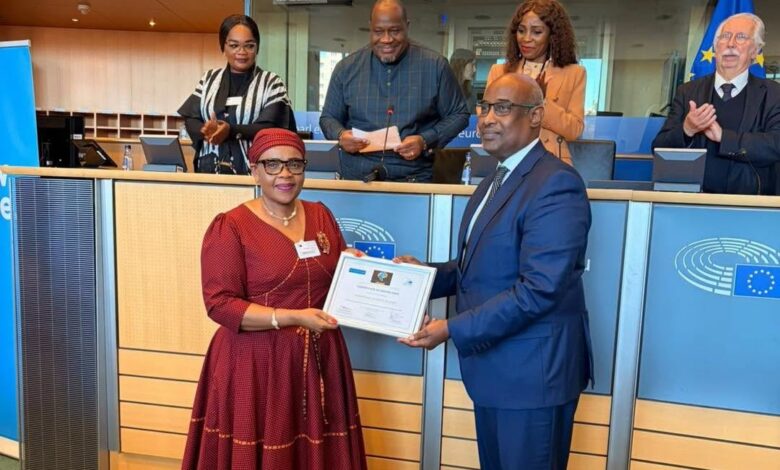
The programme was followed by a gala dinner where Deputy Prime Minister Nthomeng Majara received further recognition for her public leadership. She was honoured under the Global South-EU Women Leadership Awards for her contribution to public leadership, governance and development in the Kingdom of Lesotho. The recognition added an important dimension to Lesotho’s participation in the forum by highlighting the role of women in leadership and public service. It also placed the country’s economic and investment discussions within a broader conversation about governance and development. Her recognition reflected the importance of leadership in advancing national priorities and representing Lesotho in international forums.
Lesotho’s participation in the EuropAfrica Investment Forum 2026 presented a clear message about the country’s economic priorities and the challenges facing its textile industry. The country has opportunities across water and renewable energy, agriculture and agro-processing, textiles and manufacturing, tourism and technology, but turning those opportunities into sustained economic gains requires investment and effective partnerships. The changing international trade environment has made it especially important for Lesotho to strengthen its position in existing markets while developing new commercial opportunities. Europe offers potential, but successful access depends on more than duty-free and quota-free treatment. Lesotho needs trade arrangements, regional value chains, investment in textile inputs, skills development and quality certification that collectively support a sustainable and competitive manufacturing sector.
The EuropAfrica Investment Forum 2026 therefore represented more than an opportunity for Lesotho to promote investment. It provided a platform to articulate a practical economic strategy at a time when global trade conditions are changing and traditional export advantages face new pressures. The central message from the Lesotho delegation was that preferential market access must translate into real commercial value for local businesses and manufacturers. By combining investment promotion with focused trade and industrial policy, Lesotho can work towards stronger production capacity, broader economic diversification and improved access to international markets. The discussions in Brussels reinforced the importance of partnerships that support long-term competitiveness and sustainable development in the Kingdom of Lesotho.
Join 'Lesotho News' WhatsApp Channel
Get breaking Lesotho news — delivered directly to your WhatsApp.
CLICK HERE TO JOIN