
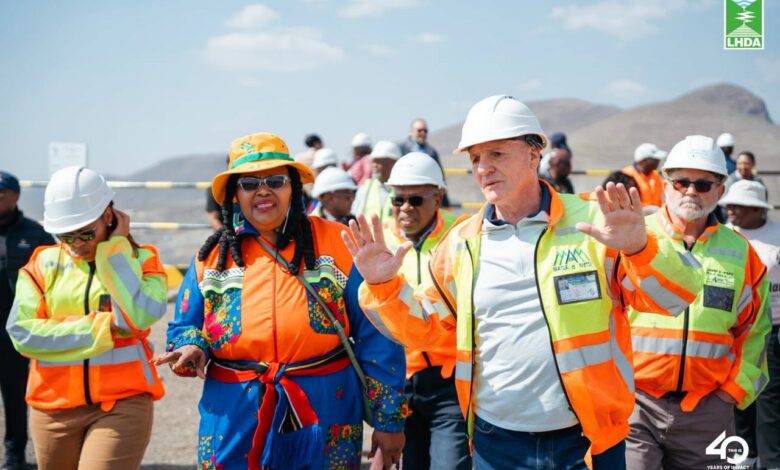
The opening of the Khubelu and Mabunyaneng Bridges has highlighted the close cooperation between the Kingdom of Lesotho and the Republic of South Africa through the Lesotho Highlands Water Project. The infrastructure milestone represents more than the completion of two bridges because it reflects a wider partnership built around water security, infrastructure development and economic cooperation. The ceremony brought together senior representatives from both countries to mark progress under a project that has significant importance for communities and economies on both sides of the border. It also demonstrated how joint investment in infrastructure can create benefits that extend beyond the immediate construction site. For Lesotho and South Africa, the bridges form part of a broader relationship shaped by shared resources and common development interests.
The ceremony was attended by the Honourable Mohlomi Moleko, Minister of Natural Resources of Lesotho, and the Honourable Pemmy Majodina, Minister of Water and Sanitation of South Africa. Their participation reflected the importance both governments attach to the continued development of the Lesotho Highlands Water Project. The presence of representatives from the two countries also reinforced the cooperative nature of the project and its role in supporting shared national priorities. Infrastructure developed through bilateral cooperation requires coordination, planning and long-term commitment from both sides. The opening of the Khubelu and Mabunyaneng Bridges therefore provided an opportunity to recognise the practical results of that cooperation.
The Lesotho Highlands Water Project has created a framework for cooperation around one of the most important natural resources, water. Lesotho’s highland water resources provide an important supply for South Africa while the project also supports infrastructure development within Lesotho. This arrangement has created opportunities for both countries to pursue their respective development priorities through cooperation. Water transfer infrastructure, roads, bridges and related facilities can also contribute to economic activity and improve access for communities. The Khubelu and Mabunyaneng Bridges add to this wider network of infrastructure associated with the project.
The significance of the bridges extends beyond their physical structures. Improved infrastructure can strengthen connectivity between communities and make it easier for people, goods and services to move through areas surrounding the project. Better connectivity can support local economic activity by improving access to markets, workplaces and essential services. It can also make it easier for communities to interact with neighbouring areas and participate in wider economic opportunities. Infrastructure therefore has an important role in ensuring that major development projects create benefits beyond their primary purpose.
For Lesotho, infrastructure associated with the Lesotho Highlands Water Project can support development in areas where difficult terrain has historically made connectivity challenging. Bridges provide important links across landscapes where movement can be affected by rivers, valleys and mountainous terrain. Reliable infrastructure can improve access for communities while supporting economic activities that depend on transport and connectivity. It can also help create conditions for further investment in surrounding areas. The opening of the two bridges therefore represents an infrastructure gain with potential benefits for local communities and the wider economy.
South Africa also has a strong interest in the continued progress of the Lesotho Highlands Water Project because of the project’s contribution to water security. Water is essential for households, agriculture, industry and economic activity, making reliable water supplies an important part of long-term development planning. Cooperation with Lesotho allows South Africa to access water resources while supporting infrastructure and development initiatives in the Kingdom. This relationship demonstrates how countries can work together to manage resources in ways that serve shared interests. Continued cooperation remains important as both countries respond to growing development and water management needs.
The project also demonstrates the economic dimension of cooperation between Lesotho and South Africa. Large infrastructure projects require construction activity, technical expertise, logistics and a range of supporting services. These activities can create opportunities for businesses and workers while contributing to economic activity in surrounding communities. Improved infrastructure can also support economic development after construction is completed by making transport and access more efficient. The benefits can therefore extend beyond the project itself and continue to influence local development over time.
The opening of the Khubelu and Mabunyaneng Bridges also highlights the importance of long-term planning in infrastructure development. Major projects such as the Lesotho Highlands Water Project require cooperation that extends across political cycles and changes in government leadership. The participation of ministers from both countries demonstrates the continued commitment to maintaining the partnership. Such continuity is important because water infrastructure and related development projects often require many years of planning, construction and management. Sustained cooperation can help ensure that infrastructure delivers value over its full operational life.
The bridges also carry a broader message about regional cooperation. Lesotho and South Africa share a border, economic ties and natural resources that make cooperation necessary in many areas. Development in one country can have effects on the other, particularly when shared water resources and cross-border infrastructure are involved. Joint projects provide opportunities for both countries to address these interests through structured cooperation. The successful delivery of infrastructure can strengthen confidence in the ability of neighbouring countries to work together on complex development priorities.
The wider impact of the Lesotho Highlands Water Project can also be considered through the relationship between water security and infrastructure. Water infrastructure requires supporting roads, bridges, tunnels, pipelines and other facilities to operate effectively. These assets can also create wider benefits when they improve connectivity and access for communities. The Khubelu and Mabunyaneng Bridges show how infrastructure developed within a major water project can contribute to objectives beyond water transfer. Their opening adds another visible example of how cooperation can produce tangible assets that support development.
For communities, the value of infrastructure is often measured by practical changes in daily life. Better bridges can reduce travel difficulties, improve access and strengthen connections between communities. They can also support the movement of agricultural products and other goods, helping local producers reach customers more efficiently. Reliable transport links can make it easier for people to access education, healthcare and employment opportunities. These benefits give infrastructure projects a social dimension that extends beyond their technical and financial objectives.
The partnership between Lesotho and South Africa also shows how shared resources can create opportunities for shared development. Water may be the central resource connecting the two countries through the Lesotho Highlands Water Project, but the relationship has produced cooperation across infrastructure and economic development. Each completed project can strengthen the broader framework of collaboration between the two governments. The opening of the bridges therefore represents another step in a partnership that continues to evolve. It reinforces the idea that cross-border cooperation can produce practical results when countries align their resources and development priorities.
The Khubelu and Mabunyaneng Bridges stand as visible examples of the progress that can come from sustained cooperation between Lesotho and South Africa. Their opening reflects the continued development of the Lesotho Highlands Water Project and its wider contribution to water security, infrastructure, connectivity and economic development. The participation of Ministers Mohlomi Moleko and Pemmy Majodina further demonstrated the importance placed on the partnership by both governments. As cooperation continues, infrastructure such as these bridges can help connect communities while supporting broader national and regional development goals. The project ultimately shows that when two neighbouring countries work together around shared resources and common interests, infrastructure can become a lasting foundation for stronger connections and shared prosperity.
Join 'Lesotho News' WhatsApp Channel
Get breaking Lesotho news — delivered directly to your WhatsApp.
CLICK HERE TO JOIN