Lesotho Strengthens School Feeding Partnerships Through High Level Engagements in Germany

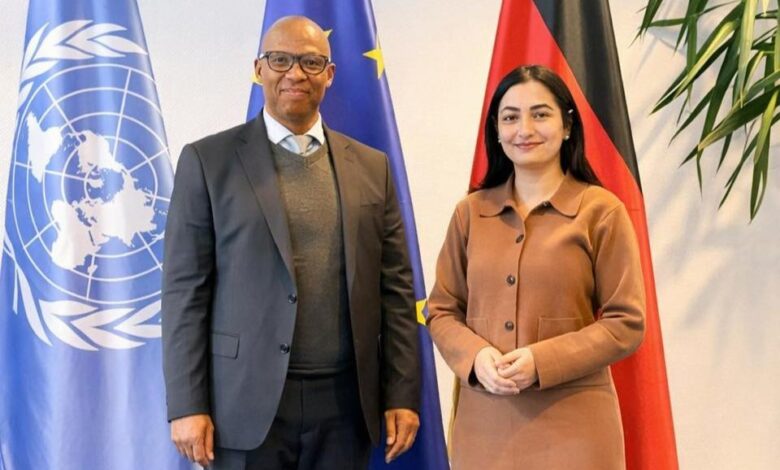
Hon. Prof Ntoi Rapapa, the Minister of Education and Training, recently led a high level engagement in Germany that placed Lesotho’s education and nutrition priorities at the centre of international cooperation. Accompanied by H.E. Ambassador Molala, the Minister held a courtesy meeting with H.E. Reem Alabali Radovan, Germany’s Minister for Economic Cooperation and Development. The meeting formed part of Lesotho’s broader effort to deepen strategic partnerships that support education systems, food security and long term national capacity.
The courtesy meeting focused on shared priorities between Lesotho and Germany. Discussions highlighted education as a foundation for economic growth and social stability. Hon. Prof Rapapa outlined Lesotho’s commitment to improving learning outcomes while addressing barriers that affect attendance and performance, particularly hunger and malnutrition among learners. Germany reaffirmed its interest in supporting initiatives that link education, nutrition and development outcomes in a practical and measurable way.
Beyond the courtesy engagement, the Minister held in depth meetings with the founding partners of the School Meals Accelerator. These partners included Germany’s Federal Ministry for Economic Cooperation and Development, the World Food Programme, the Novo Nordisk Foundation and the Rockefeller Foundation. The meetings brought together decision makers who play a central role in shaping global school feeding strategies and financing models.
Country representatives from the Philippines and Guatemala were also in attendance. Their participation allowed for direct exchange of experiences from different regions. Discussions covered policy design, implementation challenges and data driven approaches to school feeding. Lesotho used this platform to share its priorities and to learn from countries that have scaled national school meals programmes under diverse economic conditions.
The School Meals Accelerator focuses on building strong national systems rather than short term interventions. Hon. Prof Rapapa emphasised that Lesotho seeks resilient and sustainable school feeding models that are locally owned and integrated into national planning. He highlighted the importance of linking school meals to local agriculture, education outcomes and health indicators. This approach aims to ensure that investments in school feeding deliver long term value for children, communities and the economy.
These engagements reflect Lesotho’s strategic focus on partnerships that strengthen national capacity. By working with global institutions and development partners, the country aims to move beyond dependency toward systems that can withstand economic shocks and climate pressures. School feeding is positioned not only as a social support programme but as a driver of attendance, learning and rural development.
The meetings in Germany also reinforced Lesotho’s role as an active participant in global education and nutrition dialogues. By engaging directly with ministers, foundations and multilateral organisations, the country is shaping solutions that respond to its specific context while aligning with global best practice.
The outcomes of these discussions are expected to inform future collaboration, technical support and investment in Lesotho’s school feeding programmes. They mark a clear step toward building a sustainable framework that supports learners today and strengthens human capital for the future.
Join 'Lesotho News' WhatsApp Channel
Get breaking Lesotho news — delivered directly to your WhatsApp.
CLICK HERE TO JOIN