China Donates ICT Equipment to Lesotho Parliament to Strengthen Digital Governance

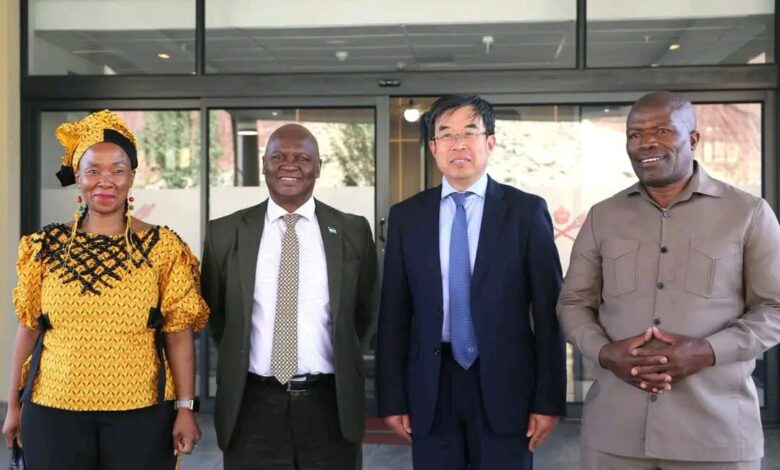
The People’s Republic of China has donated ICT equipment to the Parliament of the Kingdom of Lesotho, reaffirming its continued support for the country’s development and institutional strengthening. The equipment was officially handed over by Ambassador Yang Xiaokun of the People’s Republic of China to Lesotho during a ceremony held at the Senate premises on Thursday. The donation comes as digital technology becomes increasingly important to the way public institutions operate, communicate and provide access to information. For Parliament, improved ICT resources can support more efficient administrative processes and strengthen the institution’s ability to engage with stakeholders. The handover also reflects the long-standing development partnership between Lesotho and China, which covers several sectors of national importance.
China’s development cooperation with Lesotho extends across areas including health, education, agriculture, infrastructure, digital technology and human resource development. Over the years, the partnership has included development projects, technical assistance, capacity-building programmes and the provision of equipment to public institutions. These forms of cooperation are intended to strengthen institutional capacity while supporting Lesotho’s broader development priorities. The latest ICT donation adds to this relationship by focusing on technology that can help modernise the operations of one of the country’s key democratic institutions. It also demonstrates how international partnerships can provide practical resources that support the functioning of public institutions.
The donation comes at a time when digital transformation is becoming increasingly important in public administration and governance. Modern ICT systems can improve how information is stored, shared and accessed while helping institutions communicate more effectively with citizens and other stakeholders. Within Parliament, appropriate technology can support administrative work, communication, documentation and other processes that contribute to the institution’s daily operations. Better access to digital tools can also help public institutions respond to growing demands for timely and accessible information. The equipment donated by China is therefore expected to contribute to efforts to modernise parliamentary operations and strengthen institutional efficiency.
The importance of technology within governance has grown as governments and public institutions increasingly adopt digital systems. Parliament requires reliable information and communication systems to support its legislative, administrative and oversight responsibilities. ICT equipment can assist staff in managing documents, communicating with stakeholders and maintaining information more efficiently. It can also support the broader transition from traditional processes towards more integrated digital systems. As Lesotho continues to pursue digital transformation, strengthening ICT capacity within Parliament can contribute to a more modern and responsive public sector.
China’s support for Lesotho is not limited to digital technology, as infrastructure has also been an important area of bilateral cooperation. Chinese assistance has contributed to major public facilities and development projects, providing resources and technical support for infrastructure needs. Infrastructure development can have a wider impact on economic activity by improving access to services and creating conditions for investment and growth. The cooperation demonstrates the breadth of the relationship between the two countries and their interest in working across different areas of national development. The latest parliamentary ICT donation forms part of this broader pattern of cooperation rather than representing an isolated initiative.
Education has also remained an important component of Lesotho-China relations. Cooperation in this area has created opportunities for Basotho students and professionals to pursue studies, training and skills development in China. Such programmes can contribute to human capital development by exposing participants to different academic environments, technologies and professional practices. The skills acquired through international education and training can later be applied within Lesotho’s institutions and industries. Education and capacity building therefore complement equipment-based assistance by helping ensure that people have the knowledge required to use new technologies and implement development initiatives effectively.
Health cooperation between Lesotho and China has also provided practical support to the country’s healthcare system. Chinese medical teams have worked in Lesotho as part of bilateral medical cooperation, while other forms of assistance have supported healthcare services. Medical cooperation can contribute to knowledge sharing and capacity development while helping strengthen healthcare delivery. It also creates opportunities for professionals from both countries to exchange expertise and experiences. The health partnership demonstrates how the relationship extends beyond infrastructure and equipment to include direct cooperation between people and institutions.
Agriculture represents another area in which China and Lesotho have maintained cooperation. Chinese technical expertise and development support have been used to promote agricultural productivity, food security and livelihoods. Agriculture remains important to many communities in Lesotho, making technical assistance and knowledge transfer valuable components of development cooperation. Support in this area can help introduce improved approaches and technologies while strengthening local capacity. When combined with investment in education, infrastructure and digital technology, agricultural cooperation can contribute to broader efforts to improve economic opportunities and community resilience.
Digital transformation has increasingly emerged as an important area of cooperation between the two countries. ICT development can support economic activity, education, public administration and access to information while creating opportunities for skills development. Technology can also help institutions improve how they deliver services and interact with citizens. However, successful digital transformation requires more than providing equipment, as institutions also need skilled personnel, appropriate systems, maintenance and effective policies. China’s broader cooperation in digital technology and skills transfer can therefore complement the latest donation by supporting the development of the human and institutional capacity needed to benefit from ICT investments.
The relationship between Lesotho and China is also supported by long-standing diplomatic ties and people-to-people exchanges. Bilateral cooperation has developed through government partnerships, educational programmes, technical initiatives and interactions between citizens and institutions. These relationships provide a foundation for both countries to identify areas where cooperation can contribute to shared development objectives. The focus on mutual benefit and practical development support has allowed the partnership to evolve across different sectors. The parliamentary ICT donation provides another example of how these diplomatic relations can translate into tangible support for national institutions.
For the Parliament of Lesotho, the new ICT equipment could provide practical benefits in its ongoing efforts to improve institutional operations. Parliament plays an important role in the country’s democratic system, and its ability to manage information and communicate effectively is essential to its work. Reliable technology can support staff and officials as they handle increasingly complex volumes of information and engage with different stakeholders. Digital systems can also contribute to more efficient workflows when they are properly integrated into institutional processes. The donation therefore has the potential to support both day-to-day operations and longer-term efforts to modernise parliamentary administration.
The handover ceremony at the Senate premises also provided an opportunity for Lesotho and China to reaffirm their commitment to continued cooperation. Ambassador Yang Xiaokun’s presentation of the equipment highlighted the practical nature of the partnership and China’s continued engagement with Lesotho’s development priorities. For Lesotho, international partnerships can provide access to financial resources, technical expertise, equipment and opportunities for skills development that may otherwise be difficult to mobilise. Such cooperation can be particularly valuable as the country works to strengthen public institutions and accelerate digital transformation. The effectiveness of these partnerships will ultimately depend on how successfully the resources and expertise provided are integrated into long-term national development plans.
The donation of ICT equipment to the Parliament of the Kingdom of Lesotho represents more than the transfer of technology. It reflects China’s continued commitment to supporting Lesotho’s institutional capacity while strengthening a bilateral relationship that spans infrastructure, education, health, agriculture, digital development and human resources. As Lesotho works towards greater digitalisation and improved public service delivery, reliable technology and skills will remain important to the effectiveness of public institutions. The partnership with China provides opportunities to access equipment, expertise and capacity-building support that can contribute to these objectives. The latest handover therefore strengthens Parliament’s digital capabilities while providing another concrete example of the enduring cooperation between Lesotho and China and their shared interest in advancing development for the people of both countries.
Join 'Lesotho News' WhatsApp Channel
Get breaking Lesotho news — delivered directly to your WhatsApp.
CLICK HERE TO JOIN