Lesotho Joins the United Nations Water Convention in a Major Step Towards Strengthening Transboundary Water Cooperation
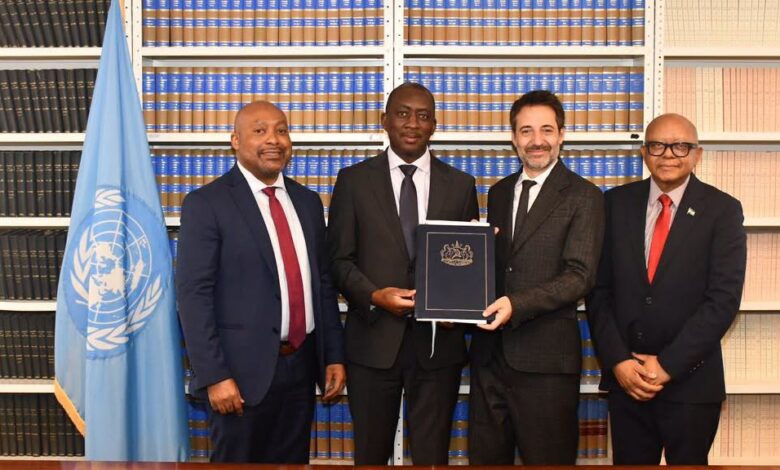
The Kingdom of Lesotho has taken an important step towards strengthening international water cooperation and sustainable water management following its accession to the United Nations Water Convention on Friday, 13 November 2026. The historic development marks Lesotho’s commitment to promoting the responsible management, protection and sustainable use of shared water resources. The formal deposit of the country’s instrument of accession took place at the United Nations Office of Legal Affairs, Treaty Section. The ceremony was attended by His Excellency Ambassador Matete Paul Nena, Permanent Representative of the Kingdom of Lesotho to the United Nations, and Mr David Nanopoulos, Chief of the Treaty Section. This development represents an important milestone for Lesotho’s environmental governance, regional cooperation and participation in international efforts to address water-related challenges.
The United Nations Water Convention, formally known as the Convention on the Protection and Use of Transboundary Watercourses and International Lakes, was adopted in Helsinki on 17 March 1992. It provides an international legal framework for countries that share rivers, lakes and other water resources to work together in protecting and managing them. The Convention promotes cooperation between countries to prevent, control and reduce transboundary impacts on water resources. It also encourages the sustainable use of shared waters through coordinated policies, joint monitoring, information exchange and effective water management arrangements. Its central objective is to ensure that countries manage shared water resources responsibly while protecting the environment and supporting the needs of present and future generations.
Lesotho’s accession is particularly significant because of the country’s geographical position and its importance as a source of water in Southern Africa. The country is entirely surrounded by South Africa and contains the headwaters of the Senqu River, which forms part of the Orange-Senqu River Basin. This river system is one of the region’s important shared water systems, supporting communities, agriculture, industries and ecosystems across national borders. Water resources originating in Lesotho contribute to the wider regional water supply and play an important role in economic development and water security. By joining the United Nations Water Convention, Lesotho strengthens its participation in international efforts to improve cooperation over shared rivers and other transboundary water resources.
The Convention establishes important principles that guide countries in managing shared water resources. These include the prevention, control and reduction of transboundary impacts, the equitable and reasonable use of shared waters and the protection of water ecosystems. Countries that become parties commit to developing appropriate agreements and institutional arrangements for cooperation with neighbouring countries. They are also encouraged to exchange relevant information, undertake joint monitoring and assessments and consult one another on activities that could affect shared water resources. These measures help reduce the possibility of disputes while creating opportunities for countries to address water challenges through dialogue, cooperation and coordinated planning.
For Lesotho, joining the Convention provides an opportunity to strengthen existing regional water cooperation and improve the governance of its water resources. The country has a long history of cooperation with South Africa through shared water management arrangements, including the Lesotho Highlands Water Project. This project demonstrates the importance of cooperation in developing water infrastructure that supports economic and social development across national borders. However, sustainable water management requires more than infrastructure development, as countries must also address water quality, environmental protection, climate change and the needs of communities. The Convention offers an additional international framework through which Lesotho can strengthen its capacity to address these interconnected challenges.
The accession process reflects a series of national efforts to secure Lesotho’s participation in the international agreement. The process began in August 2024 when the Minister responsible for Natural Resources submitted a letter of intent to the Convention Secretariat. An inter-ministerial committee, supported by a technical working group, helped coordinate the necessary national preparations. The process involved several government institutions, including those responsible for natural resources, foreign affairs, finance and justice. Cabinet approved accession on 31 March 2026, followed by parliamentary approval in September 2026, paving the way for the formal deposit of the instrument at the United Nations.
The deposit ceremony on 13 November 2026 formally communicated Lesotho’s decision to become a party to the Convention. His Excellency Ambassador Matete Paul Nena represented the Kingdom of Lesotho in his capacity as Permanent Representative to the United Nations. Mr David Nanopoulos, Chief of the Treaty Section at the United Nations Office of Legal Affairs, received the instrument as part of the United Nations treaty depositary process. Depositing an instrument of accession is an important legal step because it communicates a country’s formal consent to be bound by an international treaty. Under the Convention’s provisions, Lesotho’s accession will enter into force on 11 February 2027, three months after the deposit date.
On the same day, Lesotho also deposited its instrument of acceptance of the amendments to Articles 25 and 26 of the Convention. These amendments were important in opening the Convention to accession by countries outside the United Nations Economic Commission for Europe region. This development transformed the Convention from a primarily regional agreement into a global framework for transboundary water cooperation. It created opportunities for countries in Africa, Asia, the Middle East and Latin America to participate in its activities and benefit from its institutional support. Lesotho’s acceptance of the amendments therefore reinforces the significance of its accession and demonstrates its commitment to participating in a wider international system of water governance.
The country’s participation also comes at an important time for international water cooperation. Water scarcity, pollution, growing populations, changing weather patterns and the effects of climate change are increasing pressure on water resources in many parts of the world. These challenges are particularly important for countries that depend on shared rivers and lakes. Effective cooperation can help governments identify risks, exchange information and develop practical responses before water-related challenges become sources of tension. Through the Water Convention, Lesotho will have access to an international platform for sharing experiences, strengthening institutional capacity and learning from the approaches adopted by other participating countries.
Climate change presents an additional challenge for sustainable water management in Lesotho and the wider Southern African region. Changes in rainfall patterns, prolonged droughts, extreme weather events and fluctuations in river flows can affect water availability and the reliability of water infrastructure. These conditions require governments to improve water planning and develop management strategies that account for environmental and economic uncertainties. International cooperation can support these efforts by encouraging scientific information exchange, coordinated assessments and the development of climate-resilient water management policies. Lesotho’s accession provides an opportunity to strengthen its contribution to these discussions while advancing the protection of water resources for future generations.
The Convention can also support broader development priorities, particularly those linked to the United Nations Sustainable Development Goals. Sustainable Development Goal 6 focuses on ensuring the availability and sustainable management of water and sanitation for all. Its targets include improving water quality, increasing water-use efficiency, protecting water-related ecosystems and strengthening international cooperation over shared water resources. Lesotho’s accession reinforces the country’s participation in international efforts to achieve these objectives. It also highlights the relationship between responsible water management, environmental sustainability, public health, food security and economic development.
For communities in Lesotho, effective water governance has direct implications for everyday life. Reliable access to clean water supports households, schools, healthcare facilities, agricultural activities and businesses. Protecting rivers and other water sources also helps maintain ecosystems and reduces the risks associated with pollution and environmental degradation. Stronger cooperation with neighbouring countries can contribute to better planning and management of shared resources, particularly where water-related decisions in one country may affect another. The long-term value of accession will therefore depend not only on international commitments but also on how these commitments translate into practical policies, institutional improvements and benefits for communities.
Lesotho’s accession also strengthens the growing participation of African countries in the United Nations Water Convention. Several African countries have already joined the agreement, reflecting increasing recognition of the importance of international legal frameworks for managing shared water resources. Countries such as Namibia, Nigeria, Senegal, Togo, Zambia and Zimbabwe are among those participating in the Convention. Their involvement demonstrates the growing relevance of transboundary water cooperation across the continent, where many major river basins and lakes are shared by several countries. Lesotho’s decision adds further momentum to these efforts and reinforces the importance of regional partnerships in achieving sustainable water security.
The accession of the Kingdom of Lesotho to the United Nations Water Convention on 13 November 2026 is an important development for the country, Southern Africa and the international water cooperation community. The formal deposit of the instrument by Ambassador Matete Paul Nena, in the presence of Mr David Nanopoulos, marks the culmination of a national process involving government institutions and parliamentary approval. It demonstrates Lesotho’s commitment to strengthening the protection and sustainable management of transboundary water resources. The country’s participation creates opportunities to improve cooperation, exchange technical knowledge and address shared water challenges through established international principles and mechanisms. As Lesotho prepares for the Convention to enter into force for the country on 11 February 2027, the focus will turn to translating this commitment into effective action that supports water security, environmental protection and sustainable development.
Join 'Lesotho News' WhatsApp Channel
Get breaking Lesotho news — delivered directly to your WhatsApp.
CLICK HERE TO JOIN