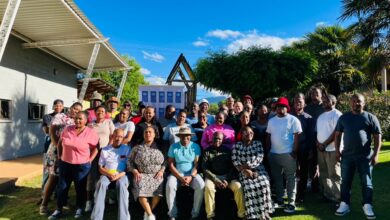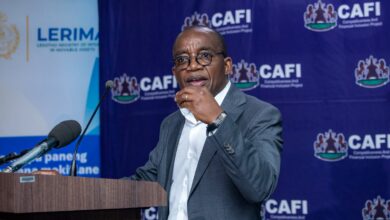
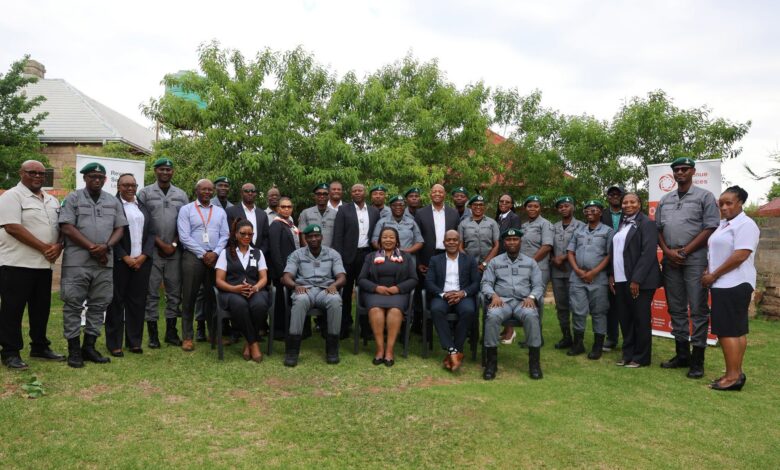
Revenue Services Lesotho (RSL) is hosting a delegation from the Nigeria Customs Command and Staff College as part of the Africa Study Tour for students enrolled in Senior Course 15. The visit provides an opportunity for customs professionals from Nigeria to engage with their counterparts in Lesotho, exchange knowledge and explore approaches to improving customs administration across Africa. The study tour forms part of the college’s research-based training programme, which exposes participants to the experiences of other African customs administrations and the challenges affecting their operations. This year’s programme is held under the theme, “The Role of Customs in Protecting Society through Vigilance and Commitment in Africa.” Through discussions with RSL and relevant stakeholders, the Nigerian delegation is expected to gain practical insights that will support its research and contribute to a broader understanding of the role of customs in protecting society.
The Africa Study Tour is an important component of professional development for customs officers, offering participants opportunities to examine how different administrations manage their responsibilities. Customs institutions operate in an increasingly complex environment shaped by international trade, cross-border movement, revenue collection and the need to prevent illegal activities. Studying the experiences of other countries can help officers understand different operational approaches and identify practices that may be relevant to their own administrations. The programme also encourages professional dialogue on shared challenges, including border security, trade facilitation and the enforcement of customs laws. By engaging with customs authorities across Africa, participants can broaden their understanding of how regional cooperation contributes to effective customs management.
The Nigeria Customs Command and Staff College plays a role in developing the professional knowledge and leadership capabilities of customs personnel through structured training. For students of Senior Course 15, the study tour provides an opportunity to connect classroom learning with practical experiences from other African countries. Engagement with institutions such as Revenue Services Lesotho can help participants examine how customs administrations organise their work, address operational challenges and contribute to national priorities. Research conducted during these visits can also provide a basis for analysing differences in policy, procedures and institutional practices. These insights can support informed discussions about strengthening customs operations and improving professional standards across the continent.
This year’s study tour theme highlights the importance of customs vigilance and commitment in protecting society. Customs authorities have responsibilities that extend beyond collecting duties and taxes on imported and exported goods. Their work can also support efforts to prevent the movement of prohibited and restricted goods, detect customs offences and enforce applicable trade regulations. Effective customs controls help protect public interests while supporting the lawful movement of goods across national borders. Achieving these objectives requires trained personnel, reliable information, appropriate technology and cooperation with other law enforcement and regulatory institutions.
Vigilance is particularly important because international trade involves complex supply chains and large volumes of goods moving through different entry points. Customs officers must assess risks, identify irregularities and apply the relevant laws without creating unnecessary delays for legitimate traders. This requires a balance between effective enforcement and efficient trade facilitation. Strong risk management procedures can help customs administrations focus attention on higher-risk consignments while allowing compliant businesses to move goods more efficiently. Professional training and the exchange of operational experiences can help officers understand how different administrations approach these responsibilities.
Commitment is equally important in maintaining the integrity and effectiveness of customs services. Customs officials are expected to apply the law consistently, carry out their duties professionally and protect public revenue. Their decisions can affect government income, business operations and public confidence in border management. Ethical conduct, accountability and appropriate oversight are therefore important elements of effective customs administration. By examining practices in different countries, participants in the Africa Study Tour can explore how customs institutions strengthen professional standards and maintain public trust.
During their visit to Lesotho, the Nigerian delegation will engage with Revenue Services Lesotho and relevant stakeholders to exchange knowledge and experiences. These interactions are intended to provide practical insights into customs administration within the Lesotho context. Discussions between the two sides may help participants understand how institutional arrangements, national priorities and operating conditions influence customs work. They also provide an opportunity to share professional perspectives on common challenges facing African customs administrations. The value of this engagement lies in encouraging mutual learning rather than assuming that one country’s practices can be transferred directly to another without considering local circumstances.
Cooperation between customs administrations is increasingly important as African countries seek to strengthen trade relationships and improve cross-border operations. Customs authorities often face similar challenges, including the detection of illegal trade, the protection of public revenue and the need to process legitimate shipments efficiently. Sharing knowledge can help administrations identify practical solutions, improve staff capabilities and understand emerging risks. Professional exchanges can also strengthen working relationships that may support future cooperation between institutions. Although each country operates under its own laws and procedures, common learning opportunities can contribute to more effective customs services across the region.
For Lesotho, hosting the delegation offers an opportunity to share its customs administration experience while learning from Nigeria’s institutional practices. Nigeria and Lesotho have different economic and operational contexts, but both rely on customs functions to support revenue collection, regulate cross-border trade and enforce relevant laws. Exchanges between their customs professionals can help identify shared priorities and areas where further dialogue may be useful. They can also broaden participants’ understanding of how customs institutions respond to the demands of international commerce and public protection. Such engagement supports the wider objective of strengthening professional cooperation among African customs administrations.
Revenue Services Lesotho’s welcome to the visiting delegation reflects the importance of regional engagement in professional training and institutional development. Study tours can create opportunities for participants to examine how policies are implemented, how operational responsibilities are organised and how institutions respond to changing demands. They also allow officials to ask questions, compare experiences and consider lessons that may inform future research. For the visiting students, the information gathered during the programme can contribute to a deeper understanding of customs administration and its role in protecting society. For the host institution, the exchange provides an opportunity to share its experiences and learn from the perspectives of fellow African customs professionals.
The visit also highlights the connection between customs administration, public safety and economic development. Effective customs controls can help protect communities from prohibited goods while supporting the collection of revenue needed to fund public services. At the same time, efficient procedures can reduce unnecessary costs and delays for businesses engaged in lawful trade. Customs administrations must therefore work to maintain effective controls without placing avoidable burdens on compliant traders. Professional development, improved procedures and cooperation with relevant stakeholders can help institutions manage these responsibilities more effectively.
The Africa Study Tour for Senior Course 15 represents an opportunity to strengthen professional knowledge and encourage cooperation between customs administrations in Africa. Through its engagement with Revenue Services Lesotho, the Nigerian delegation will be able to gather insights, exchange experiences and support its research into the role of customs in protecting society. The programme’s focus on vigilance and commitment reinforces the importance of professional conduct, effective enforcement and cooperation in modern customs operations. RSL’s welcome to the delegation also demonstrates the value of regional learning in addressing shared challenges and improving institutional capabilities. Continued exchanges of this nature can help African customs administrations build stronger professional relationships and contribute to secure borders, effective revenue collection and more efficient trade across the continent.
Join 'Lesotho News' WhatsApp Channel
Get breaking Lesotho news — delivered directly to your WhatsApp.
CLICK HERE TO JOIN