ORASECOM Chairperson Mohlomi Moleko Strengthens Regional Water Cooperation During Namibia Visit

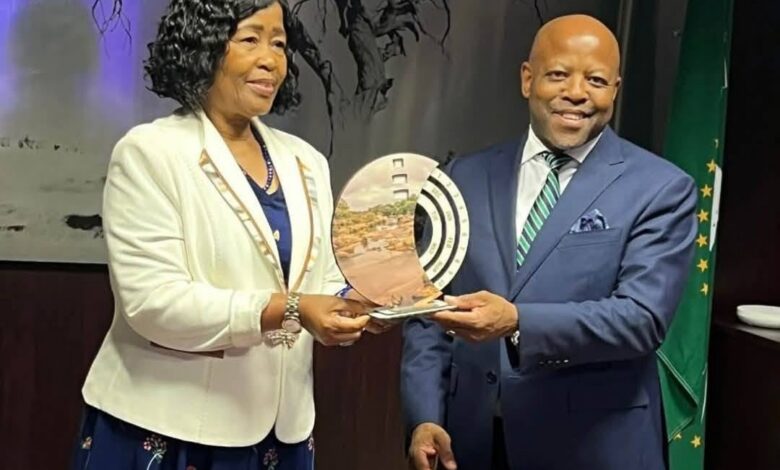
The Chairperson of the Orange-Senqu River Commission (ORASECOM), Lesotho’s Minister of Natural Resources Honourable Mohlomi Moleko, has reaffirmed the importance of regional cooperation in securing sustainable water resources during a high-level visit to Windhoek, Namibia. Moleko paid a courtesy visit to Honourable Inge Zaamwani, Namibia’s Minister of Agriculture, Fisheries, Water and Land Reform, for discussions on shared priorities within the Orange-Senqu River Basin. The meeting focused on strengthening cooperation among member states, mobilising strategic investments and advancing joint initiatives to improve long-term water security. The visit also included a tour of the Goreangab Wastewater Reclamation Plant, where Moleko gained insights into Namibia’s experience in wastewater reclamation. The engagement highlights the growing importance of collaborative water management, innovative technologies and sustainable development in a region facing increasing pressure on its water resources.
The Orange-Senqu River Basin is an important shared water system in Southern Africa, supporting communities, agriculture, industry and ecosystems across national borders. Its water resources connect countries with different economic needs, climatic conditions and development priorities, making cooperation essential for effective management. Decisions taken within one part of a shared river basin can affect water availability and environmental conditions elsewhere, which makes regular dialogue between governments particularly important. ORASECOM provides a framework through which its member states can cooperate on matters relating to the development, management and protection of the basin. Strengthening this cooperation helps countries address shared challenges while working towards a more reliable and sustainable water future.
The discussions between Moleko and Zaamwani placed regional collaboration at the centre of efforts to improve water security. Both leaders emphasised the urgent need to strengthen cooperation, mobilise strategic investments and advance collective initiatives that support sustainable development across member states. These priorities reflect the scale of the challenges facing countries that depend on shared water resources for economic activity and public welfare. Effective water management requires more than national planning, as countries also need to coordinate their approaches to conservation, infrastructure development and the responsible use of water. Continued high-level engagement can help maintain political commitment and identify areas where joint action could deliver lasting benefits.
Strategic investment is particularly important because water security depends on reliable infrastructure, sound management systems and the ability to respond to changing conditions. Governments and regional institutions need resources to maintain water supply networks, improve monitoring systems, protect river ecosystems and develop suitable water treatment technologies. Investment decisions must also consider the needs of rural communities, growing urban populations, farmers and industries that rely on consistent water supplies. Regional cooperation can help identify shared priorities and encourage investment in projects that benefit more than one country. By focusing on strategic financing and collective initiatives, ORASECOM member states can strengthen their ability to manage water resources while supporting broader economic and social development.
Climate change and recurring drought conditions make these efforts increasingly important across Southern Africa. Many parts of the region experience highly variable rainfall, while rising temperatures can increase evaporation and place additional pressure on available water supplies. Population growth, urban expansion and economic development can also increase demand for water in households, agriculture and industry. These pressures make it necessary for governments to consider a wider range of water management solutions rather than relying solely on conventional freshwater sources. Stronger regional cooperation can support the exchange of technical knowledge and help countries develop approaches that improve resilience during periods of water stress.
Moleko’s visit to the Goreangab Wastewater Reclamation Plant provided a practical opportunity to examine one such approach. Wastewater reclamation involves treating used water to a quality suitable for a defined purpose, including certain applications that may involve returning highly treated water to the drinking water supply under strict controls. The process can help communities recover a valuable resource that would otherwise require further treatment or disposal. Namibia has gained international recognition for its experience in direct potable water reclamation in Windhoek, where advanced treatment processes have helped supplement water supplies in an arid environment. The Goreangab facility therefore offers an important example of how investment in water treatment technology can support water security when conventional supplies face pressure.
Wastewater reclamation can play an important role in improving water resilience, particularly in dry regions where rainfall is unreliable and freshwater resources are limited. By treating and reusing water, communities can reduce pressure on rivers, dams and groundwater sources while making more efficient use of existing supplies. However, successful reclamation depends on appropriate technology, rigorous quality monitoring, skilled operators and effective public health safeguards. Treatment systems must meet strict standards for their intended use, with reliable testing and oversight throughout the process. The lessons gained from Namibia’s experience can inform regional discussions about whether similar approaches could be suitable in other communities across the Orange-Senqu River Basin.
The Goreangab visit also highlighted the value of exchanging practical knowledge between countries facing similar water challenges. Namibia’s experience can provide useful insights into infrastructure planning, treatment operations, water quality management and the institutional arrangements required to support water reuse. Other countries in the region may have different technical capacities, financial resources and water supply conditions, so solutions need to reflect local circumstances. Nevertheless, learning from established projects can help governments evaluate available options and identify approaches that may improve their own water management systems. Such exchanges can also encourage cooperation between technical experts, policymakers and water authorities.
Speaking during the visit, Moleko emphasised the shared responsibility of ORASECOM member states to manage and protect transboundary water resources. He described these resources as a responsibility that countries must approach collectively and stressed the importance of continued dialogue and mutual learning. His remarks underline the principle that shared rivers require cooperation, trust and a long-term commitment to sustainable management. Effective collaboration can help countries balance development needs with environmental protection and the interests of communities that depend on the basin. Moleko also reaffirmed his commitment to working with regional partners to promote a water-secure and sustainable future for the wider region.
Protecting transboundary water resources involves both managing water availability and safeguarding the ecosystems that sustain river systems. Pollution, unsustainable water use and damage to river environments can affect water quality and reduce the long-term value of shared resources. Governments therefore need to consider environmental protection alongside infrastructure development, agricultural needs and industrial demand. Coordinated monitoring and information sharing can help countries better understand conditions across the basin and respond to emerging challenges. A cooperative approach also creates opportunities to develop shared priorities for conservation and responsible water use.
The engagement in Windhoek reinforces the importance of continued cooperation between Lesotho and Namibia on regional water issues. Through ORASECOM, member states have a platform to discuss shared concerns, exchange knowledge and pursue initiatives that support sustainable water management. High-level visits can strengthen these relationships by creating opportunities to discuss priorities directly and explore practical areas for collaboration. The emphasis on investment, wastewater reclamation and collective action also reflects the need to combine political commitment with technical expertise and adequate resources. Continued engagement will be important as countries seek solutions that address immediate water needs while protecting resources for future generations.
Mohlomi Moleko’s visit to Namibia highlights the role of regional diplomacy, innovative water technologies and strategic investment in strengthening water security across Southern Africa. His discussions with Inge Zaamwani focused on the need for closer cooperation and coordinated initiatives to support sustainable development throughout the Orange-Senqu River Basin. The tour of the Goreangab Wastewater Reclamation Plant further demonstrated the value of learning from Namibia’s experience in developing water reuse solutions for an arid environment. While each country must adapt water management approaches to its own needs and resources, cooperation can help them make better-informed decisions and build greater resilience. By deepening dialogue and supporting practical initiatives, ORASECOM member states can work towards a future in which shared water resources are managed responsibly, protected effectively and used to support the wellbeing of communities across the region.
Join 'Lesotho News' WhatsApp Channel
Get breaking Lesotho news — delivered directly to your WhatsApp.
CLICK HERE TO JOIN