Lesotho and Tajikistan Establish Diplomatic Relations at the 81st UN General Assembly

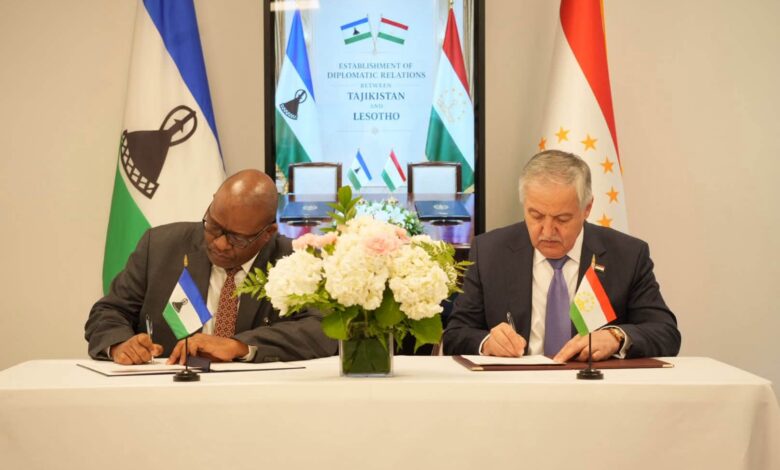
New York witnessed an important diplomatic development as the Kingdom of Lesotho and the Republic of Tajikistan established formal diplomatic relations on the margins of the 81st Session of the United Nations General Assembly. The agreement marks a new chapter in relations between the two countries and creates a foundation for greater friendship, cooperation and sustainable development. The establishment of diplomatic ties reflects the growing importance of international partnerships that connect countries across different regions. For Lesotho and Tajikistan, the new relationship creates opportunities to explore shared interests while strengthening their engagement within the international community. The development in New York signals the beginning of a new diplomatic horizon that could lead to practical cooperation in several areas of mutual interest.
The diplomatic agreement was reached during a meeting between senior representatives of the two governments in New York during the high-level UN General Assembly period. The discussions provided an opportunity for Lesotho and Tajikistan to explore ways of strengthening bilateral relations and developing areas of practical cooperation. The two sides identified several sectors with potential for closer engagement, including economic relations, trade, industry, tourism, water resources and energy. These areas are important to the development priorities of both countries and provide a broad foundation for future bilateral programmes. The signing of the agreement formally establishes the framework through which the two nations can develop regular diplomatic and government-to-government engagement.
The decision to establish diplomatic relations is significant because Lesotho and Tajikistan are geographically distant and belong to different regional political and economic environments. Lesotho is a Southern African kingdom surrounded by South Africa, while Tajikistan is a Central Asian republic bordered by Afghanistan, China, Kyrgyzstan and Uzbekistan. Despite their different geographic settings, both countries have interests in sustainable economic growth, responsible management of natural resources and stronger international cooperation. Their new diplomatic relationship provides an opportunity to exchange experiences and identify areas where cooperation can produce mutual benefits. The relationship also demonstrates how countries from different parts of the world can establish partnerships around common development priorities.
Economic cooperation is expected to be an important component of the new relationship between Lesotho and Tajikistan. Establishing diplomatic ties can make it easier for government institutions, businesses and other organisations to identify opportunities for trade and investment. Greater communication between the two countries could also help them understand each other’s markets and economic priorities. Cooperation in industry could create opportunities for technical exchanges, business partnerships and the sharing of knowledge and experience. As diplomatic engagement develops, both countries can explore practical measures that encourage stronger commercial and economic connections.
Trade is another area that could benefit from the establishment of formal diplomatic relations. Lesotho and Tajikistan can use their new diplomatic channels to explore opportunities for increasing the exchange of goods and services. Government-to-government dialogue can help identify barriers to trade and create a better understanding of regulatory and commercial requirements. Business communities in both countries could also benefit from greater access to information about potential markets and investment opportunities. Although diplomatic relations do not automatically result in increased trade, they provide an important institutional foundation for developing stronger economic links.
Tourism presents another potential avenue for cooperation between the two countries. Lesotho is known for its mountainous landscapes, cultural heritage and distinctive traditions, while Tajikistan is recognised for its mountains, natural scenery and historic cultural heritage. Greater interaction between the two countries could encourage tourism organisations and travel operators to explore opportunities for cultural and tourism exchanges. Increased awareness of each country’s attractions could also contribute to stronger people-to-people connections. Cooperation in tourism could therefore support economic activity while helping citizens of both countries gain a deeper understanding of each other’s cultures.
Water resources are particularly relevant to the new diplomatic relationship because both Lesotho and Tajikistan place significant importance on the management and development of water resources. Water plays an essential role in agriculture, energy production, environmental sustainability and the livelihoods of communities. Cooperation could provide opportunities for the exchange of technical knowledge, policy experience and approaches to sustainable water management. Both countries could also explore opportunities for institutional cooperation involving specialists, government agencies and research organisations. Such engagement could contribute to broader discussions about responsible water management and sustainable development.
Energy is another sector with potential for meaningful cooperation between Lesotho and Tajikistan. Both countries have interests in developing reliable and sustainable energy systems that can support economic growth and improve living conditions. Discussions between the two governments could create opportunities to share knowledge about energy infrastructure, renewable energy and the efficient use of natural resources. Cooperation in this area could also support wider efforts to promote sustainable development and strengthen energy security. As the diplomatic relationship develops, energy could become one of the practical areas where cooperation produces long-term benefits.
The establishment of diplomatic relations during the 81st United Nations General Assembly also carries broader international significance. The UN General Assembly brings together governments from around the world and provides an important platform for diplomatic dialogue and international cooperation. New York therefore offered a suitable setting for Lesotho and Tajikistan to formalise their relationship while their leaders and senior officials were engaged in wider multilateral discussions. The timing allowed the two countries to connect their bilateral priorities with the broader international agenda. It also demonstrates the role of multilateral gatherings in creating opportunities for countries to establish new partnerships and strengthen existing relationships.
The new relationship could also contribute to stronger South-South cooperation. Countries in Africa and Central Asia have different political, economic and geographic circumstances, but they often face common development challenges. These challenges include economic diversification, infrastructure development, climate resilience, sustainable agriculture, energy security and effective management of natural resources. Lesotho and Tajikistan can use their new diplomatic relationship to exchange experiences and explore solutions that are relevant to their respective national circumstances. Such cooperation can complement relationships with other international partners while giving both countries additional opportunities to share knowledge and expertise.
Sustainable development provides a broad framework for the future of Lesotho-Tajikistan relations. Economic development increasingly requires countries to consider environmental sustainability, resource efficiency and the long-term wellbeing of their populations. Cooperation in water, energy, agriculture, tourism and industry can therefore be designed to support economic growth while addressing environmental and social considerations. The two countries can also explore cooperation that strengthens institutional capacity and encourages the responsible use of natural resources. Their new diplomatic relationship provides a platform for turning these shared interests into concrete programmes and initiatives over time.
The establishment of diplomatic relations can also encourage greater people-to-people contact between Lesotho and Tajikistan. Diplomatic ties can create opportunities for academic exchanges, cultural programmes, professional cooperation and institutional partnerships. Universities, businesses, tourism organisations and civil society institutions could eventually play a role in strengthening connections between the two populations. These relationships can help build greater awareness and understanding between people who may previously have had limited contact with one another. Stronger social and institutional links can also provide additional support for the long-term development of bilateral relations.
For Lesotho, the new relationship expands its diplomatic engagement with Central Asia and creates another avenue for international cooperation. For Tajikistan, the agreement establishes a formal relationship with a Southern African kingdom and opens additional opportunities for engagement with the African continent. Both countries can use their diplomatic missions and official channels to maintain regular dialogue and identify areas where cooperation can deliver practical results. The relationship can also provide opportunities for the two governments to support each other in international forums where their interests and priorities overlap. This broader engagement can strengthen the foundation of their partnership beyond the initial agreement signed in New York.
The establishment of diplomatic relations between Lesotho and Tajikistan is therefore more than a formal diplomatic announcement. It represents the beginning of a relationship that can develop across trade, investment, tourism, industry, water, energy and sustainable development. The agreement creates an institutional foundation for continued dialogue and gives both countries an opportunity to identify projects that can benefit their people. Its long-term importance will depend on how effectively the two governments transform their diplomatic commitment into practical cooperation and lasting partnerships. As Lesotho and Tajikistan begin this new chapter, their relationship offers an opportunity to build stronger connections between Southern Africa and Central Asia while pursuing shared interests in friendship, cooperation and sustainable development.
Join 'Lesotho News' WhatsApp Channel
Get breaking Lesotho news — delivered directly to your WhatsApp.
CLICK HERE TO JOIN