Princess Senate Seeiso Visits Sebopi UniPod at Lerotholi Polytechnic to Champion Youth Innovation and Sustainable Development in Lesotho

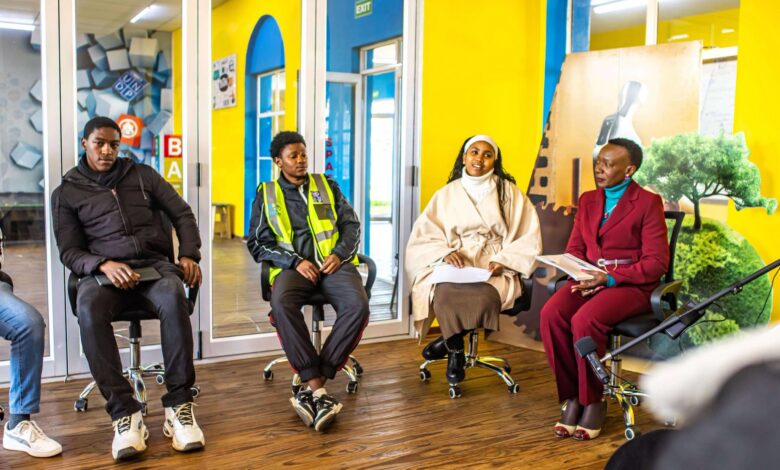
Her Royal Highness Princess Senate Seeiso has highlighted the importance of innovation, technology and skills development during a visit to the Sebopi UniPod at Lerotholi Polytechnic in Lesotho. The visit formed part of her work as the United Nations Development Programme National Goodwill Ambassador for Equality and Sustainable Development in Lesotho. It provided an opportunity for Her Royal Highness to learn more about initiatives designed to empower young Basotho and support their participation in the country’s development. During the visit, she explored the UniPod’s facilities and engaged directly with young innovators working with technology, design and creative problem-solving. Her presence at the facility brought greater attention to the role that youth innovation can play in creating practical solutions and supporting sustainable development in Lesotho.
The Sebopi UniPod at Lerotholi Polytechnic provides young people with an environment where they can learn, experiment, create and develop ideas into practical solutions. The facility forms part of efforts supported by the UNDP to strengthen opportunities for young people through innovation, technology and skills development. Such spaces can give aspiring innovators access to an environment where they can test ideas, develop technical abilities and work through challenges in creative ways. The focus on practical learning also allows young people to move beyond theoretical knowledge and explore how their ideas can respond to real needs in their communities. For a country such as Lesotho, creating more opportunities for young people to develop relevant skills can contribute to broader efforts to strengthen innovation and sustainable economic development.
During her visit, Princess Senate Seeiso took time to explore the innovative spaces within the Sebopi UniPod and observe how young people were using the facility. She interacted with youth innovators as they engaged with technology, design and creative problem-solving activities. These interactions gave her an opportunity to gain a closer understanding of the experiences of young people who are developing their skills and exploring innovative ideas. The visit also demonstrated the value of connecting national development initiatives with the interests, talents and ambitions of young Basotho. By engaging directly with the innovators, Her Royal Highness was able to see how technology and creativity can be used to develop solutions with practical applications.
Princess Senate Seeiso expressed surprise at the existence of such a facility at Lerotholi Polytechnic during her visit. Reflecting on what she had seen, she said, “I didn’t know such a facility exists here. I will tell His Royal Highness about it.” Her remarks reflected her interest in sharing what she had learned from the experience and drawing greater attention to the work taking place within the UniPod. The statement also underlined the importance of ensuring that innovative initiatives receive visibility so that more people can understand the opportunities available to young people. Her reaction added a personal dimension to the visit while reinforcing the significance of the facility as a space for youth development.
The visit is particularly relevant to discussions about sustainable development in Lesotho because young people represent an important part of the country’s future workforce and innovation community. Providing young Basotho with opportunities to acquire technical and creative skills can help them participate more actively in solving social and economic challenges. Innovation can take many forms, from developing new technologies to improving existing processes and creating services that respond to community needs. Facilities such as the Sebopi UniPod can provide an environment where young people can turn curiosity and ideas into practical projects. Supporting this type of youth development can therefore form part of wider efforts to build a skilled population capable of contributing to Lesotho’s long-term development.
Technology also has an increasingly important role in expanding opportunities for young people. Digital tools can support education, entrepreneurship, communication, research and the development of new products and services. However, access to technology alone does not guarantee meaningful participation in the digital economy, which is why skills development remains an important part of the process. Young people need opportunities to learn how technology works, understand how it can be applied and develop the confidence to create solutions of their own. The work taking place at the Sebopi UniPod brings these elements together by providing a space where technology, learning, creativity and practical experimentation can interact.
The emphasis on creative problem-solving is another important aspect of the UniPod’s work. Young innovators often need more than technical knowledge to develop successful ideas, because identifying a problem, understanding its causes and designing a useful response also require creativity and critical thinking. A collaborative environment can encourage young people to share ideas, learn from one another and improve their projects through experimentation. This approach can help create a culture where young people see challenges as opportunities to develop solutions rather than problems that cannot be addressed. By encouraging practical creativity, innovation spaces can contribute to the development of skills that remain valuable across different careers and industries.
Princess Senate Seeiso’s role as UNDP National Goodwill Ambassador for Equality and Sustainable Development in Lesotho provides an important platform for drawing attention to development issues affecting the country. Her engagement with youth-focused initiatives allows her to connect her public role with programmes that seek to expand opportunities for young people. Equality and sustainable development require participation from different parts of society, including young people who will shape the country’s future. Giving greater visibility to youth innovation can help demonstrate why investment in skills, technology and creative capacity matters. The visit to Sebopi UniPod therefore connects youth empowerment with broader conversations about inclusion, opportunity and sustainable development.
The presence of a national goodwill ambassador at a youth innovation facility can also encourage young people to recognise the value of their work. Direct engagement with innovators can provide an opportunity for their experiences and ideas to be acknowledged at a national level. Recognition does not replace access to resources, training or markets, but it can help create greater awareness of the potential that exists within youth communities. It can also encourage wider conversations about how institutions, businesses and development partners can support young people as they move from developing ideas to implementing them. Continued attention to these initiatives can help strengthen the connection between youth innovation and national development priorities.
The visit to Lerotholi Polytechnic also highlights the importance of educational institutions in creating pathways for innovation and skills development. Polytechnic institutions can play a valuable role in connecting education with practical skills that young people can apply in workplaces, businesses and community projects. When students have access to spaces where they can experiment and develop ideas, their learning can extend beyond conventional classroom activities. This can encourage a stronger connection between technical education, entrepreneurship and innovation. The Sebopi UniPod provides an example of how an educational environment can support young people as they explore technology and develop solutions to practical challenges.
For Lesotho, strengthening youth innovation can contribute to a broader effort to prepare young people for a changing economy. New technologies continue to influence the way people work, communicate and create businesses, making adaptable skills increasingly important. Young people who develop technical knowledge alongside creativity and problem-solving abilities can be better positioned to explore different opportunities as economic conditions change. Supporting innovation can also encourage young people to become creators of solutions rather than relying solely on traditional employment pathways. The development of spaces such as Sebopi UniPod can therefore form part of a wider ecosystem that supports skills development, entrepreneurship and technological advancement.
Princess Senate Seeiso’s visit to the Sebopi UniPod at Lerotholi Polytechnic has brought attention to an important area of Lesotho’s development agenda: empowering young people through innovation, technology and practical skills. Her interaction with youth innovators provided an opportunity to see how young Basotho are using creative thinking and technology to explore solutions and develop their capabilities. The UniPod offers a space where ideas can be tested, skills can be strengthened and innovation can be encouraged in a practical setting. As Lesotho continues to pursue sustainable development, initiatives that equip young people with relevant skills and opportunities can play an important role in shaping the country’s future. The visit ultimately reinforced the value of investing in young Basotho and creating environments where their ideas, creativity and technical abilities can contribute to the sustainable development of Lesotho.
Join 'Lesotho News' WhatsApp Channel
Get breaking Lesotho news — delivered directly to your WhatsApp.
CLICK HERE TO JOIN