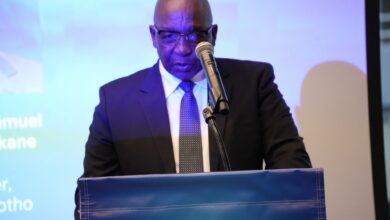
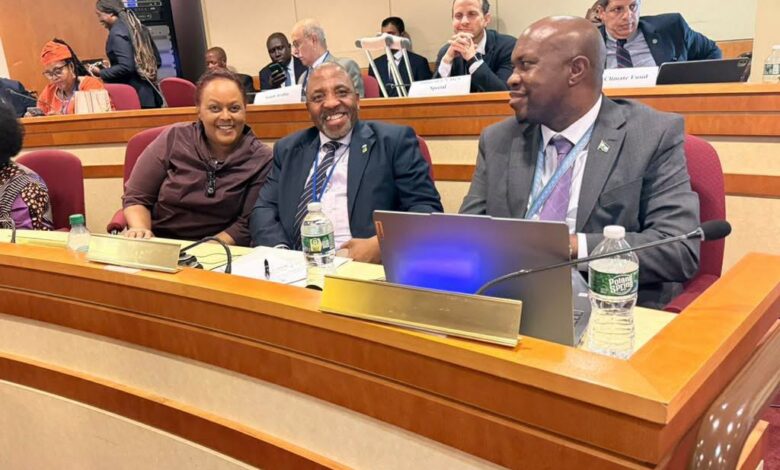
Lesotho has reaffirmed its commitment to water security and sustainable development through high-level participation in an international dialogue on water investment held on the sidelines of the 81st Session of the United Nations General Assembly. Prime Minister of the Kingdom of Lesotho, The Right Honourable Ntsokoane Samuel Matekane, attended the International High-Level Panel on Water Investment for African and Global Cooperation alongside the Minister of Foreign Affairs and International Relations, Honourable Limpho Tau. The event was hosted by the Permanent Mission of the Republic of Namibia to the United Nations at the Observer Mission of the African Union to the United Nations. The gathering brought together leaders and stakeholders to discuss the growing need for stronger investment and cooperation around water resources. Lesotho’s participation placed the country’s water priorities within a broader African and global discussion on sustainable development and water security.
The high-level panel focused on mobilising commitments towards the UN 2026 Water Conference, the 2030 Sustainable Development Goals and the African Water Vision 2063. These frameworks provide important platforms for countries to address water-related challenges while linking water management to broader economic and social development objectives. For African countries, reliable access to water remains closely connected to agriculture, public health, food security, energy, industry and the livelihoods of communities. Discussions at the panel therefore considered the need for stronger partnerships and greater investment to improve water infrastructure and management systems. The emphasis on cooperation also recognised that water challenges often extend beyond national borders and require countries to work together.
Investment in water infrastructure emerged as an important area of discussion during the high-level dialogue. Many communities across Africa depend on infrastructure such as dams, water treatment facilities, distribution networks and irrigation systems to support households, businesses and agricultural production. Expanding and maintaining this infrastructure requires long-term financing, technical expertise and effective planning. Sustainable investment can also help countries strengthen their ability to respond to water shortages, changing weather patterns and growing demand for water. The discussions highlighted the importance of bringing governments, development partners, financial institutions and other stakeholders together to support projects that can deliver lasting benefits.
The panel also placed sustainable water management at the centre of discussions about Africa’s development. Water resources need to be managed carefully to ensure that present needs can be met without undermining the ability of future generations to access reliable supplies. This requires cooperation between countries as well as coordination across sectors that depend on water. Agriculture, for example, requires dependable water supplies for crop production and livestock, while communities need safe water for domestic use and sanitation. Strengthening water governance and investment can therefore contribute to wider development goals while improving resilience in communities that face water-related challenges.
For Lesotho, participation in the dialogue provides an opportunity to engage with international partners on issues that are important to the country’s development priorities. The country’s water resources have strategic importance both domestically and within the wider Southern African region. Cooperation around water can support economic development while encouraging responsible management of shared and valuable resources. By participating at a high-level international forum, Lesotho was able to contribute to discussions on how investment and partnerships can strengthen water security. The presence of Prime Minister Matekane and Minister Tau also demonstrated the importance the country places on international engagement around sustainable development.
The discussions also connected water investment with the broader objectives of the 2030 Sustainable Development Goals. Progress on water and sanitation can influence several areas of development, including poverty reduction, health, education, food security and economic growth. Meeting these objectives requires countries to move beyond short-term responses and develop sustainable systems capable of serving growing populations and changing needs. Greater investment can help address infrastructure gaps while strengthening institutions responsible for managing water resources. International cooperation can further support countries by creating opportunities to share knowledge, technology, financing models and practical experience.
The African Water Vision 2063 provides another important framework for strengthening the continent’s approach to water resources. Its focus reflects the broader need for Africa to treat water as a key component of long-term development and regional cooperation. Sustainable water management can support agricultural production, industrial development and improved living conditions while helping communities become more resilient to environmental pressures. Achieving these objectives will require sustained political commitment as well as financial and technical resources. The high-level panel provided a platform for stakeholders to discuss how these commitments can be translated into stronger partnerships and practical investment.
Lesotho’s involvement in the international water dialogue also reflects the importance of ensuring that smaller and water-dependent countries have a voice in global discussions about water security. International cooperation can create opportunities for countries to address infrastructure and development challenges through partnerships rather than working in isolation. It can also encourage the sharing of knowledge and expertise between countries facing similar challenges. As preparations and commitments around the UN 2026 Water Conference continue, discussions such as this can help maintain attention on the need for meaningful investment. The success of these efforts will depend on whether commitments are followed by practical action and sustained cooperation.
Lesotho’s participation in the International High-Level Panel on Water Investment for African and Global Cooperation reinforced its commitment to water security, sustainable development and international cooperation. The discussions highlighted that investment in water infrastructure is not only an environmental priority but also an important part of economic and social development. Stronger partnerships can help countries improve water management, expand infrastructure and build greater resilience for communities and economies. For Lesotho, continued engagement in these discussions can support its efforts to advance national priorities while contributing to wider African water goals. The dialogue at UNGA 81 therefore underscored the importance of collective action in building more secure and sustainable water systems for current and future generations.
Join 'Lesotho News' WhatsApp Channel
Get breaking Lesotho news — delivered directly to your WhatsApp.
CLICK HERE TO JOIN