Lesotho Commends FAO Representative Dr. Patrice Talla for His Contribution to Agrifood Transformation

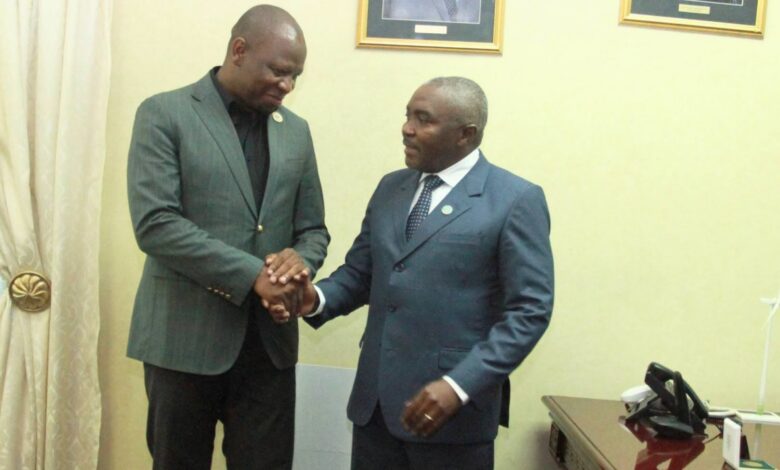
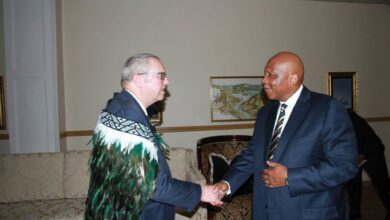
The Acting Minister of Foreign Affairs and International Relations, Hon. Lejone Mpotjoane, has commended the contribution of Dr. Patrice Talla Takoukam to Lesotho’s agricultural development during a farewell courtesy call held yesterday. Dr. Talla, who served as the Food and Agriculture Organization of the United Nations (FAO) Subregional Coordinator for Southern Africa and Lesotho Country Representative, met with Minister Mpotjoane following the completion of his tour of duty. His departure marks the end of a period of close collaboration between FAO and the Government of Lesotho. Since taking up his responsibilities in 2020, Dr. Talla has played an important role in supporting programmes focused on food security, agricultural productivity and rural development. His work has contributed to efforts to build more resilient and sustainable agrifood systems in Lesotho.
Dr. Talla’s tenure coincided with growing efforts to transform the country’s agricultural sector and address challenges affecting food and nutrition security. Through its partnership with the Government of Lesotho, FAO supported initiatives designed to improve agricultural value chains, strengthen livelihoods and create opportunities for communities involved in food production. These interventions have placed greater attention on modernising agriculture while ensuring that farmers, young people and rural communities can participate meaningfully in the sector. The collaboration also recognised the need to make Lesotho’s food systems more resilient to economic, environmental and climate-related pressures. This approach has made agricultural transformation an important part of the country’s broader development agenda.
One of the key programmes supported during Dr. Talla’s tenure was the Accelerated Agri-Food Systems Transformation Programme. The initiative reflects the need to move beyond traditional agricultural production and develop food systems that can generate greater economic and social benefits. Agrifood systems include activities ranging from farming and food processing to distribution, marketing and consumption, making their transformation important for food security and economic development. Strengthening these systems can help improve productivity while creating opportunities for farmers and other participants across agricultural value chains. FAO’s support through this programme therefore formed part of wider efforts to establish a more productive, inclusive and sustainable agricultural sector in Lesotho.
The Sustainable Potato Value Chain Development initiative was another notable area of cooperation between FAO and the Government of Lesotho. Potato production can provide opportunities for farmers through both local markets and related activities such as processing, transportation and distribution. Developing a stronger value chain requires attention to production practices, access to inputs, market connections, post-harvest handling and opportunities for farmers to increase their earnings. Support for the potato sector therefore contributes to more than crop production because it can strengthen links between farmers and other businesses involved in the food economy. The initiative formed part of efforts to diversify agricultural opportunities and improve the performance of important value chains.
Youth participation in agriculture also received attention through the Youth-Led Vegetable Value Chains initiative. Creating meaningful opportunities for young people in agriculture remains important for the long-term sustainability of rural economies and food production. Youth-led value chains can give young people opportunities to participate not only as producers but also in areas such as processing, marketing, distribution and agricultural services. Such initiatives can help make agriculture more attractive to younger generations by connecting farming with entrepreneurship, technology and commercial opportunities. The programme therefore aligned with the broader objective of creating sustainable livelihoods while strengthening food production and agricultural enterprise.
FAO’s cooperation with Lesotho also extended into urban development through the Green Cities Initiative. The initiative recognises the role that agriculture and green development can play in improving urban food systems and supporting healthier communities. Urban and peri-urban agriculture can contribute to local food availability while creating opportunities for households and small-scale producers. Green approaches can also support better use of available land and resources in growing urban areas. Through this area of work, FAO’s engagement with Lesotho extended beyond traditional rural farming and addressed the wider relationship between agriculture, cities, food security and sustainable development.
Digital technology and artificial intelligence also featured among the areas supported during Dr. Talla’s tenure. FAO provided support for Digital Agriculture and AI-assisted agricultural extension services, reflecting the growing role of technology in improving how farmers access information and technical guidance. Digital agricultural services can help extension systems reach farmers more efficiently and provide information that supports better decision-making. AI-assisted tools also have the potential to strengthen the delivery of agricultural advice when they complement the work of trained extension officers and respond to local farming conditions. The focus on digital agriculture demonstrated the importance of technology in modernising agricultural support systems and improving access to knowledge.
Another important area of intervention was the strengthening of Lesotho’s sustainable aquaculture and fisheries sector. Aquaculture can contribute to food security by increasing access to fish while creating opportunities for income generation and rural enterprise. Developing the sector sustainably requires appropriate production practices, responsible management of aquatic resources and stronger technical capacity. Support for fisheries and aquaculture can also help diversify livelihoods in communities where agricultural opportunities may be limited. The inclusion of this sector in FAO’s work demonstrates the broader scope of food system development and the importance of using different sources of food production to strengthen national food security.
The range of initiatives supported during Dr. Talla’s service highlights the depth of cooperation between FAO and the Government of Lesotho. The programmes addressed different parts of the agricultural economy, from crops and youth enterprise to digital technology, urban agriculture and aquatic food production. Together, these areas reflect an approach that seeks to strengthen food systems rather than focusing on individual agricultural activities in isolation. Continued collaboration between national institutions and development partners will remain important as Lesotho works to build resilience and improve opportunities for farming communities. Strong partnerships can help ensure that successful initiatives continue to develop and deliver practical benefits for communities.
The Ministry of Foreign Affairs and International Relations has expressed its appreciation for Dr. Talla’s dedicated service and contribution to Lesotho’s development agenda. His role as FAO Subregional Coordinator for Southern Africa and Country Representative in Lesotho placed him at the centre of important cooperation between the country and the United Nations food and agriculture agency. The farewell courtesy call provided an opportunity to recognise the work carried out during his tenure and the partnerships strengthened during that period. As Dr. Talla completes his tour of duty, the Government of Lesotho has wished him success in his future endeavours. His contribution will remain part of the broader record of cooperation between Lesotho and FAO in advancing agricultural development, food security and sustainable livelihoods.
Join 'Lesotho News' WhatsApp Channel
Get breaking Lesotho news — delivered directly to your WhatsApp.
CLICK HERE TO JOIN