Prime Minister Matekane Pledges New Woolshed in ’Melikane to Support Livestock Farmers and Rural Development


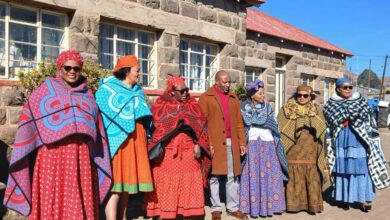
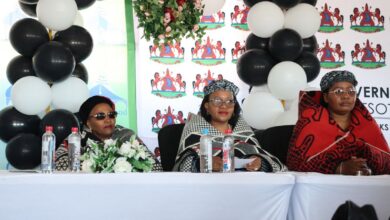
Prime Minister Ntsokoane Matekane has committed to constructing a new woolshed in ’Melikane, a move aimed at easing long-standing challenges faced by livestock farmers in the area. The pledge was made on Thursday during the sod-turning ceremony for the Matlali–Lebakeng road upgrade project, where community concerns about agricultural infrastructure were raised. The announcement directly responds to repeated calls from local leaders who have highlighted the difficulties farmers face due to the absence of nearby shearing facilities. The commitment is expected to improve livestock farming conditions and strengthen rural livelihoods in the region. It also reflects government efforts to link infrastructure development with agricultural support services.
The issue was formally raised during the event by the Member of Parliament for Lebakeng Constituency, Mr. Letsekang Moloi, alongside Nts’upe Community Council Chairperson, Mr. Tefo Lehakoe. Both leaders stressed that farmers in ’Melikane continue to face serious hardships because they must travel long distances to access the Tsoelike woolshed. They explained that livestock farming remains the main source of income for many households in the constituency. With more than 2,000 livestock reported in ’Melikane alone, the demand for a local shearing facility has become increasingly urgent. Their submissions highlighted how infrastructure gaps continue to affect productivity and household income in rural communities.
Responding to these concerns, Prime Minister Matekane confirmed that the government will establish a woolshed in ’Melikane and emphasized that such facilities must be supported by adequate livestock dipping services. He noted that agricultural infrastructure works best when services are integrated, ensuring that farmers receive comprehensive support. The Prime Minister also questioned whether existing dipping facilities in the area were sufficient to meet local needs. He stressed that improving agricultural infrastructure must be done within a clear timeframe to ensure farmers benefit without further delays. His remarks underscored a broader government focus on strengthening rural economic systems through practical interventions.
Mr. Moloi explained that previous discussions with the former Minister of Agriculture, Food Security and Nutrition had already brought the project close to implementation. However, he expressed confidence that the Prime Minister’s direct commitment would accelerate progress. He reiterated that livestock farming is central to the livelihoods of residents in Lebakeng Constituency and that delays in infrastructure development have continued to affect economic stability. Farmers in the area have long relied on distant facilities, increasing transport costs and risks to their animals. The renewed political attention has therefore been welcomed as a turning point for local agricultural development.
Community leaders have also consistently raised concerns about the absence of a local woolshed. Mr. Tefo Lehakoe highlighted that farmers from villages such as Ha Lefaso are forced to travel long distances to reach the Tsoelike facility. He explained that this situation has resulted in the loss of lambs and reduced income for many households, particularly when animals struggle during long journeys. These challenges have had a direct impact on the financial well-being of families who depend heavily on wool and mohair production. His remarks reflected widespread frustration within the community over delayed infrastructure delivery.
Concerns over the woolshed have been raised for several years, including an earlier appeal in September 2025 by ’Melikane Councillor Lehlohonolo Mahase. At the time, he emphasized that disputes had emerged among farmers over access to the Tsoelike woolshed due to limited capacity and scheduling conflicts. The situation escalated when the wool and mohair committee declined to hand over keys before completing its own shearing programme, leaving local farmers without immediate access. These tensions highlighted the urgent need for a dedicated facility within ’Melikane itself. A suitable site for the proposed woolshed had already been identified years earlier, but progress had stalled.
The Prime Minister’s pledge has now renewed hope among farmers in ’Melikane who have long struggled with distance, livestock losses, and limited access to essential agricultural services. Many community members view the commitment as a long-awaited solution to a persistent challenge affecting productivity and income. If implemented effectively, the new woolshed is expected to reduce travel burdens, minimize livestock losses, and improve overall efficiency in wool production. It may also help reduce conflicts over shared facilities in neighboring areas. The development signals a stronger focus on rural infrastructure as a key driver of agricultural growth and community stability in Lesotho.
Join 'Lesotho News' WhatsApp Channel
Get breaking Lesotho news — delivered directly to your WhatsApp.
CLICK HERE TO JOIN