Strengthening Sino-Lesotho Partnerships in Agricultural Education and Youth Empowerment

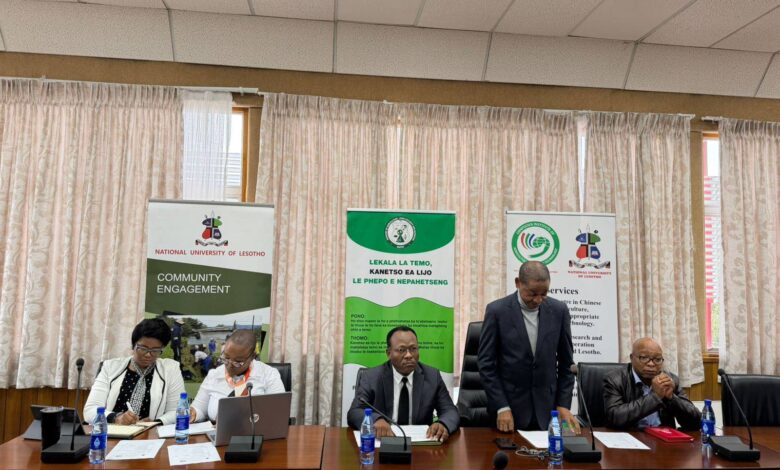
The Confucius Institute of the National University of Lesotho (NUL CI) partnered with the Ministry of Agriculture, Food Security and Nutrition to host a one-day consultative meeting focused on enhancing collaboration in agricultural education, innovation, and youth empowerment. The meeting brought together stakeholders from government, academia, and the private sector to discuss strategies for building sustainable partnerships between Lesotho and China. The event highlighted the importance of international cooperation in advancing Lesotho’s agricultural sector, particularly in the areas of education, research, and practical innovation. By focusing on youth empowerment, the initiative aims to equip the next generation of Lesotho’s agricultural workforce with skills that meet both national and global demands. Attendees emphasized that strengthening these partnerships is crucial for improving food security, creating employment, and promoting sustainable development.
During the consultative meeting, participants examined current challenges facing Lesotho’s agricultural sector, including limited access to modern technology, insufficient research capacity, and a need for practical training programs. The NUL CI presented its role as a centre of excellence in both linguistic and agricultural education, demonstrating how its programs can bridge gaps in technical knowledge and international collaboration. Chinese partners shared insights on best practices in agricultural innovation, technology transfer, and vocational training that have contributed to sustainable agricultural development in their context. Discussions also explored opportunities for joint research projects, student and faculty exchanges, and the introduction of modern farming techniques adapted to Lesotho’s environment. The meeting underscored the potential for collaboration to enhance crop yields, improve supply chains, and stimulate agribusiness initiatives led by young entrepreneurs.
Youth empowerment was a central theme, with participants identifying training programs that integrate theoretical knowledge and practical skills in agriculture. Emphasis was placed on equipping young farmers with competencies in modern farming, agri-technology, and sustainable land management. By involving youth in decision-making and innovation, the partnership aims to create a generation capable of transforming Lesotho’s agricultural sector into a driver of economic growth. The meeting also highlighted the need for mentorship, access to funding, and the creation of incubator programs that enable youth-led agricultural enterprises to thrive. Representatives stressed that building human capital through education and skill development will directly contribute to national food security and employment opportunities.
The partnership also seeks to strengthen research and innovation within Lesotho’s agricultural institutions. By combining the Confucius Institute’s expertise in education with Chinese technological support, Lesotho can develop new methods for crop production, livestock management, and climate-smart agriculture. The collaboration is expected to foster applied research that addresses local challenges while creating opportunities for regional and international cooperation. Participants acknowledged that innovation in agriculture is not limited to technology alone but includes knowledge sharing, policy development, and capacity building. The consultative meeting laid a foundation for continuous engagement, monitoring, and evaluation of initiatives to ensure that partnerships yield tangible results.
The meeting concluded with a shared commitment to advance Sino-Lesotho cooperation in agriculture, focusing on education, innovation, and youth development. Stakeholders agreed on follow-up actions, including establishing joint programs, developing curricula aligned with industry needs, and implementing pilot projects that showcase best practices. The partnership represents a strategic approach to addressing Lesotho’s agricultural challenges while strengthening international ties. By leveraging the expertise of the Confucius Institute and Chinese partners, Lesotho aims to transform its agricultural sector, empower youth, and improve food security nationwide. This initiative demonstrates that targeted collaboration, knowledge transfer, and investment in human capital can drive sustainable growth and position Lesotho as a hub for agricultural innovation in the region.
Join 'Lesotho News' WhatsApp Channel
Get breaking Lesotho news — delivered directly to your WhatsApp.
CLICK HERE TO JOIN