ROLL Project Continues to Improve Livelihoods in Qacha’s Nek Through Livestock Development and Clean Water Access
The Regeneration of Landscapes and Livelihoods (ROLL) Project continued its efforts to improve rural livelihoods in Lesotho on October 15, 2026, through interventions focused on livestock development, access to clean water and environmental restoration in Qacha’s Nek. The activities brought attention to the importance of investing in rural communities while protecting the natural resources that support their daily lives and economic activities. During the visit, the Minister of Environment and Forestry, Honourable Thabo Mofosi, presided over the handover of Merino rams to the Mosuoe-Tsepiso Grazing Association at Ha Tsepiso. The visit also included the distribution of blankets to herders and the handover of a rehabilitated potable water system at Masuoaneng. Together, these interventions demonstrate how the ROLL Project seeks to connect environmental conservation with practical improvements in agriculture, water supply and the livelihoods of rural households.
At Ha Tsepiso in Qacha’s Nek, the handover of Merino rams to the Mosuoe-Tsepiso Grazing Association marked an important intervention aimed at improving livestock quality and supporting wool production. Livestock farming plays an important role in many rural communities in Lesotho, where sheep and wool production provide income opportunities for farmers and households. Improving the quality of breeding animals can help farmers strengthen their flocks and support the production of wool that meets market requirements. The distribution of Merino rams is intended to contribute to these goals by supporting livestock improvement within the grazing association. The long-term results will depend on effective breeding practices, animal health management, suitable grazing conditions and the ability of farmers to maintain and manage their livestock.
The provision of Merino rams also highlights the connection between livestock development and sustainable rangeland management. Sheep farming depends on healthy grazing areas that provide sufficient forage while maintaining soil quality and vegetation cover. When rangelands become degraded through excessive grazing, soil erosion or other pressures, livestock productivity can decline and farmers may face greater difficulties maintaining their herds. Improving livestock quality must therefore go hand in hand with responsible grazing practices and the restoration of the landscapes on which farming communities depend. Through its livestock-related interventions, the ROLL Project aims to support rural producers while contributing to the wider goal of maintaining productive and resilient grazing areas in Lesotho.
The event at Ha Tsepiso also recognised the contribution of herders through the distribution of blankets. Herders play an important role in livestock management because they help guide animals, monitor grazing conditions and care for livestock in the field. Their work can involve spending long periods outdoors in changing weather conditions, particularly in Lesotho’s mountainous and highland environments. Providing blankets acknowledges the practical demands of their work and the importance of the people who help manage livestock and grazing resources. The initiative also draws attention to the relationship between the welfare of rural workers and the sustainable management of the environment.
Herders are closely connected to the condition of local rangelands because their daily responsibilities involve managing livestock movements and observing the availability of grazing resources. Responsible grazing practices can help protect vegetation, reduce pressure on vulnerable areas and support the long-term productivity of pastoral landscapes. Where grazing resources are poorly managed, the effects may include declining pasture quality, soil degradation and reduced capacity to support livestock. Supporting herders and strengthening grazing associations can therefore contribute to broader efforts to improve environmental management. The ROLL Project’s activities at Ha Tsepiso highlight the importance of recognising livestock farmers and herders as participants in both rural economic development and landscape restoration.
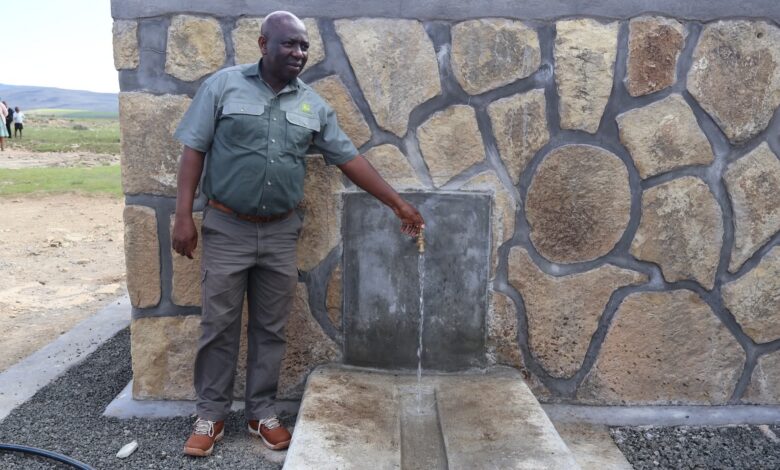
From Ha Tsepiso, Minister Mofosi proceeded to Masuoaneng, where he formally handed over a rehabilitated potable water system to the Ministry of Natural Resources. The ministry is responsible for monitoring water systems in rural areas, making the handover an important step in placing the rehabilitated infrastructure within the relevant institutional framework. Access to safe drinking water is essential for household health, hygiene and daily activities. In rural communities where water points are distant, residents may spend considerable time travelling to collect water, leaving less time for education, work, farming and other responsibilities. The rehabilitated system is expected to reduce this burden for residents of Masuoaneng and improve access to water closer to their homes.
Reliable water infrastructure is especially important in rural areas, where households may face practical challenges accessing essential services. When a water system is functioning properly, residents can spend less time collecting water and may find it easier to maintain household hygiene and carry out daily tasks. However, the lasting benefits of rehabilitation depend on regular maintenance, monitoring and timely repairs when problems arise. Clear responsibility for operating and maintaining water infrastructure can help prevent systems from falling into disrepair and protect the investment made in rural communities. The handover to the Ministry of Natural Resources therefore highlights the importance of combining infrastructure improvements with ongoing oversight and management.
The Masuoaneng water system also illustrates how access to essential services can contribute to wider rural development. Water is necessary for drinking, cooking, cleaning and maintaining basic sanitation, making reliable supply an important part of community well-being. In households where water collection requires long journeys, the task can place additional demands on family members and limit the time available for other productive activities. Improving access can help ease these pressures and make daily life more manageable. Although the exact number of households benefiting from the rehabilitated system was not provided, the project is expected to make water access easier for residents who previously had to travel long distances to obtain it.
The ROLL Project brings together environmental restoration and livelihood improvement, recognising that rural communities depend on healthy landscapes and access to essential resources. Landscape restoration involves efforts to improve the condition of land, vegetation and natural systems so they can continue supporting people, livestock and wildlife. In areas where livelihoods depend heavily on agriculture and natural resources, environmental degradation can threaten household income and reduce the productivity of land. Supporting better livestock management, protecting grazing areas and improving water infrastructure can help address some of these pressures. By combining interventions in agriculture and essential services, the project seeks to strengthen the relationship between environmental sustainability and rural economic development.
Climate resilience is another important consideration for rural communities in Lesotho. Changes in rainfall patterns, periods of drought, soil erosion and other environmental pressures can affect grazing conditions, water availability and agricultural productivity. Communities that depend on livestock and natural resources may be particularly exposed when these resources become less reliable. Efforts to restore landscapes and improve the management of water and grazing areas can contribute to greater resilience by helping communities protect the resources on which their livelihoods depend. The ROLL Project’s interventions in Qacha’s Nek are consistent with this broader objective, although their long-term contribution will depend on continued maintenance, responsible resource management and sustained community participation.
Community involvement is essential to the success of initiatives that seek to improve livelihoods and restore landscapes. Grazing associations can help coordinate livestock management, encourage responsible use of shared grazing areas and support cooperation among farmers. Residents who rely on rural water systems also have an interest in ensuring that infrastructure remains functional and that maintenance needs are addressed. Government institutions and project partners can provide technical guidance, oversight and resources, while communities contribute local knowledge and day-to-day management. This cooperation can help ensure that investments continue delivering benefits after the initial handover activities have been completed.
The interventions in Qacha’s Nek also demonstrate why rural development requires attention to several connected needs rather than a single issue. Livestock farmers need healthy animals, suitable grazing areas and access to markets if they are to improve their income from wool production. Rural households need reliable water infrastructure to support health, hygiene and daily activities. Herders and other community members also need recognition and practical support for the responsibilities they carry in managing livestock and natural resources. By addressing these different needs through the distribution of Merino rams, blankets and the rehabilitation of a potable water system, the ROLL Project is supporting a broader approach to improving rural livelihoods.
The October 15, 2026, visit by Minister of Environment and Forestry Honourable Thabo Mofosi highlighted the ROLL Project’s ongoing work to improve livelihoods in Qacha’s Nek through livestock development, water infrastructure and environmental stewardship. The handover of Merino rams to the Mosuoe-Tsepiso Grazing Association aims to improve livestock quality and support wool production, while the distribution of blankets recognises the role of herders in caring for animals and managing rangelands. At Masuoaneng, the handover of the rehabilitated potable water system is expected to make water more accessible to residents who have faced long journeys to collect it. These interventions reflect the importance of linking environmental restoration with practical support for rural communities. Sustained maintenance, responsible grazing practices and active community participation will be essential to ensuring that the benefits endure and contribute to a more secure, productive and climate-resilient Lesotho.
Join 'Lesotho News' WhatsApp Channel
Get breaking Lesotho news — delivered directly to your WhatsApp.
CLICK HERE TO JOIN