King Letsie III Calls for Global Innovation and Investment to Secure the Future of Food at World Food Forum 2026

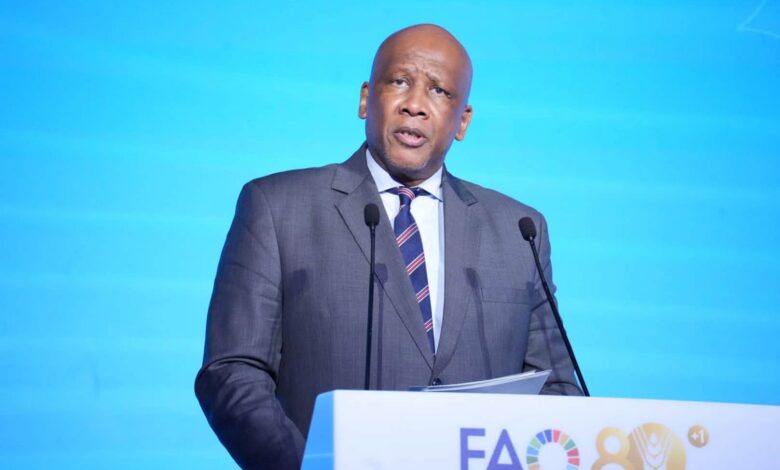
His Majesty King Letsie III, Food and Agriculture Organization of the United Nations (FAO) Special Ambassador for Nutrition, has called for greater global cooperation, innovation and investment to strengthen food security and improve nutrition. Delivering a keynote address at the grand opening of the World Food Forum (WFF) 2026 at FAO Headquarters in Rome, Italy, the King highlighted the importance of building sustainable agrifood systems that can feed current and future generations. He emphasised that the decisions governments, development partners and communities make today will determine the availability of safe, diverse and nutritious food in the years ahead. The World Food Forum runs from 13 to 17 October 2026 under the theme, “Fostering Innovation for Food Security and Nutrition.” The event brings attention to the urgent need for practical solutions that address hunger, malnutrition, climate change and the challenges facing agricultural production around the world.
King Letsie III stressed that the future of food security depends on investments that strengthen agricultural productivity while protecting the environment and supporting the livelihoods of farmers. He explained that innovation must extend beyond modern technology to include traditional knowledge, locally adapted farming methods, effective policies, accessible financing and stronger connections between farmers and markets. According to the King, these different approaches must work together to help countries build resilient food systems that can withstand economic, environmental and social pressures. He also warned that scientific and technological progress must be guided by a sense of shared responsibility to ensure that its benefits reach the people who need them most. New technologies, he said, should complement rather than replace the knowledge and experience of farmers and local communities.
The King’s address placed Lesotho’s experience at the centre of the wider discussion about agricultural development, nutrition and the fight against hunger. As a country where agricultural production depends heavily on rainfall, Lesotho faces significant challenges from changing weather patterns and limited resources. King Letsie III explained that innovation in Lesotho and across Africa must help farmers use land and water more efficiently, restore degraded landscapes, improve soil health and reduce food losses. These measures are increasingly important as unpredictable climate conditions threaten crop production and household food supplies. By strengthening local agricultural practices and investing in sustainable production, countries can improve their capacity to provide reliable access to food while protecting the natural resources on which farming depends.
The King also highlighted the increasingly complex global food security situation since the previous World Food Forum meeting. Climate-related disasters, geopolitical tensions, trade disruptions, economic uncertainty and constrained development resources continue to place pressure on food production and distribution. These challenges can increase food prices, disrupt supply chains and make nutritious food less accessible to vulnerable households. For countries that rely on imported agricultural inputs and services, international disruptions can create additional risks for farmers and consumers. King Letsie III called for stronger cooperation and coordinated responses to these pressures, emphasising that food security requires action across national borders and throughout the agrifood value chain.
Lesotho faces an additional challenge in 2026 as the country prepares for the effects of El Niño, a climate phenomenon associated with changes in rainfall and temperature patterns in many parts of the world. The King noted that Lesotho’s dependence on rain-fed agriculture makes its farming sector particularly vulnerable to adverse weather conditions. Reduced rainfall can affect crop yields, weaken household food security and undermine efforts to increase national food self-sufficiency. Dependence on imported agricultural inputs and services can further expose farmers to external economic pressures, limiting their ability to respond to climate shocks. These risks demonstrate why climate adaptation, agricultural investment and effective early planning are essential for protecting rural livelihoods and strengthening the country’s food systems.
King Letsie III emphasised that the risks associated with El Niño extend beyond Lesotho to the wider Southern African region. Previous El Niño events have demonstrated how severe weather conditions can affect agricultural production, water availability, electricity generation and food markets. Droughts, floods and heat stress can place pressure on farmers, disrupt economic activity and reduce the availability of essential resources for households and businesses. These effects can also increase the need for emergency assistance and place additional demands on governments and development partners. The King therefore underscored the importance of regional cooperation, climate-resilient agriculture and coordinated efforts to protect communities from the effects of increasingly unpredictable weather.
The King’s message also highlighted the need to rethink how innovation is introduced and used within agricultural communities. While digital tools, scientific research and modern farming technologies can improve productivity, their benefits depend on whether farmers can access and apply them effectively. Many agricultural communities require affordable financing, practical training, reliable infrastructure and suitable technologies that respond to local conditions. Innovation must also address everyday challenges such as soil degradation, limited irrigation, post-harvest losses and difficulties connecting producers with markets. King Letsie III’s position reinforces the need to combine scientific advances with local experience to develop solutions that are practical, affordable and sustainable.
Youth participation was another major priority in the King’s keynote address. He called for greater investment in practical education, technical skills, access to land and finance, digital connectivity and mentorship to help young people participate meaningfully in agrifood systems. Across Africa, millions of young people need opportunities to build stable livelihoods, develop businesses and contribute to economic growth. Agriculture and related industries can provide employment opportunities, but this requires a shift in how the sector is perceived, financed and managed. Young people need more than encouragement to enter agriculture. They also need access to resources, modern skills, markets and decision-making processes that allow them to turn their ideas into sustainable economic activities.
King Letsie III argued that investing in young people is essential for building food systems that can respond to future challenges. Youth-led innovation can help expand the use of digital agricultural services, improve food processing, reduce waste and develop new approaches to farming and distribution. However, these opportunities depend on whether young people can access training, finance and the infrastructure required to establish viable enterprises. Governments, educational institutions, financial organisations and private businesses all have a role in creating conditions that support youth participation. By treating young people as active partners in agricultural development, countries can strengthen food security while creating more dignified and productive employment opportunities.
The King concluded his address with a call for governments, development partners, research institutions, local authorities, civil society organisations and private sector actors to align their policies, programmes and resources around shared priorities. He stressed the importance of setting measurable targets and establishing accountability to ensure that commitments lead to practical results. These efforts should improve agricultural productivity, strengthen resilience to climate and economic shocks, create decent livelihoods and advance food and nutrition security. Effective cooperation also requires stakeholders to move beyond isolated projects and support long-term strategies that respond to the needs of farmers, rural communities and vulnerable households. The King’s message was clear that global commitments must translate into tangible improvements in people’s lives.
FAO Director-General Dr Qu Dongyu also addressed the opening ceremony, reflecting on the organisation’s mission to eliminate hunger. He noted that when the Food and Agriculture Organization was established 80 years ago, its mandate was to free humanity from hunger, a mission that remains urgent today. Conflict, climate change and economic shocks continue to drive food insecurity and malnutrition in many parts of the world. These challenges often overlap, creating conditions that make it harder for households to obtain sufficient food and maintain healthy diets. Dr Qu stressed that transforming agrifood systems requires sustained international cooperation and practical action to address the underlying causes of hunger.
Dr Qu highlighted three pillars of the World Food Forum 2026: Youth, Science and Innovation, and Investment. These priorities reflect the need to bring together the energy of young people, the potential of scientific progress and the financial resources required to scale effective solutions. Youth participation is particularly important because the decisions made today will shape the agricultural sector, food supply chains and environmental conditions that future generations inherit. Scientific research can help improve crop varieties, farming practices, food safety and nutrition, while investment can make successful innovations more widely available. Together, these pillars provide a framework for developing agrifood systems that are more productive, inclusive and resilient.
Food loss and waste also featured prominently in the World Food Forum’s message for 2026. Under the spotlight theme, “Zero Waste, Full Taste: Innovate Today, Nourish Tomorrow,” the forum calls for practical approaches to reducing the amount of food lost or discarded throughout the supply chain. Dr Qu highlighted the scale of the challenge, noting that approximately one-third of food produced globally is lost or wasted. This represents a significant loss of resources, including the land, water, energy, labour and investment used to produce food. Reducing food waste requires improvements in harvesting, storage, transportation, processing, retail practices and household consumption. Turning food waste into value can also create opportunities for businesses and communities while helping make food systems more efficient.
The Food and Agriculture Organization plays a central role in international efforts to defeat hunger and improve nutrition. As a specialised agency of the United Nations, FAO works with governments and partners to support sustainable agriculture, strengthen rural livelihoods and improve food security. Its work also addresses challenges linked to climate change, natural resource management, agricultural development and access to nutritious food. The World Food Forum provides a platform for bringing together policymakers, researchers, young leaders, investors and other stakeholders to discuss solutions to these interconnected issues. Its 2026 theme places innovation at the centre of efforts to build food systems that can meet present needs without compromising the ability of future generations to meet their own.
King Letsie III’s participation as FAO Special Ambassador for Nutrition reinforces the importance of connecting agricultural development with better nutrition and stronger community health. Producing more food does not automatically guarantee that everyone has access to a balanced and nutritious diet. Food systems must also support the availability, affordability and distribution of diverse foods that meet people’s nutritional needs. This requires coordinated action across agriculture, education, public policy, markets and community development. By linking food production with nutrition objectives, countries can make progress towards reducing hunger while supporting healthier and more resilient populations.
The World Food Forum 2026 highlights a shared responsibility to address hunger, improve nutrition and strengthen the sustainability of global agrifood systems. King Letsie III’s keynote address places particular emphasis on the need to combine innovation with traditional knowledge, climate resilience, youth empowerment and practical investment. His message also highlights the importance of regional solidarity as Lesotho and other Southern African countries confront climate-related risks that threaten agricultural production and food supplies. Dr Qu Dongyu’s remarks reinforce the need to mobilise young people, scientific expertise and financial resources while reducing food loss and waste. As the forum continues from 13 to 17 October 2026, its central challenge is to turn these priorities into measurable action. The future of food security will depend on the choices made today, the partnerships established across countries and sectors, and the commitment to ensure that no person or community is left behind.
Join 'Lesotho News' WhatsApp Channel
Get breaking Lesotho news — delivered directly to your WhatsApp.
CLICK HERE TO JOIN