
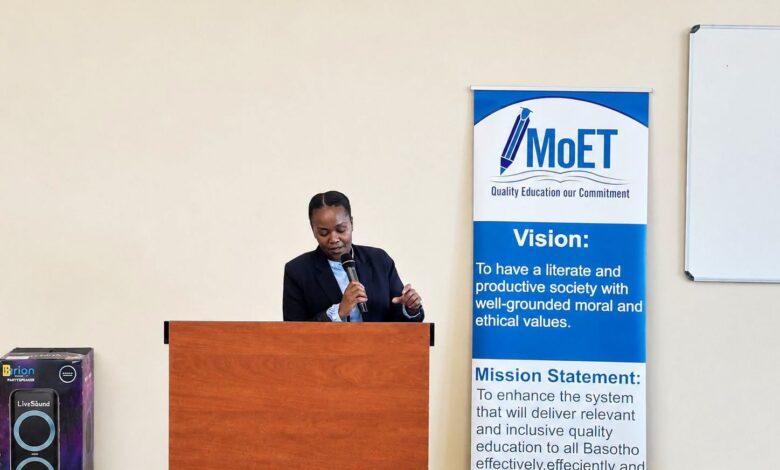
Lesotho must do more to align education and skills development with the demands of its growing economic sectors if the country wants economic investment to translate into meaningful employment for Basotho. This message was delivered by World Bank Junior Professional Associate Ms. Mphonyane Marialetta Telukhunoana during the Lesotho Skills Acceleration Project stakeholder consultation workshop on Monday. The discussions highlighted the close relationship between education, human capital development and the country’s ability to create sustainable livelihoods. While economic growth can create new opportunities, those opportunities will have limited impact if local workers do not have the skills required to fill emerging jobs. The World Bank’s message therefore points to an urgent need for Lesotho to strengthen foundational education while developing specialised skills that match the needs of priority industries.
Ms. Telukhunoana said education remains a key driver of employment and income, but gaps in foundational skills continue to constrain Lesotho’s human capital development. Higher levels of education are generally associated with improved employment prospects and higher earnings, making investment in learning an important part of economic development. She noted that each additional year of schooling is associated with an estimated 10 percent increase in wages. This demonstrates the potential economic value of keeping learners in education and ensuring that they acquire meaningful skills throughout their schooling journey. However, the benefits of additional education depend heavily on the quality of learning and whether students leave the education system with skills that can be applied effectively in the workplace.
The World Bank has raised particular concern about basic literacy and numeracy among children in Lesotho. According to figures presented by Ms. Telukhunoana, only 45 percent of children between the ages of seven and 14 are proficient in reading in either English or Sesotho. About half of children in the same age group possess basic numeracy skills, highlighting weaknesses in two areas that form the foundation for further education and employment. Children who struggle with reading, writing and basic mathematics can face difficulties across almost every stage of their education and later working lives. Strengthening these foundational competencies is therefore essential if Lesotho wants future generations to benefit from opportunities created by economic growth and investment.
The figures also show why education reform cannot focus only on university qualifications and advanced technical training. A strong skills development system must begin with ensuring that children acquire basic abilities that allow them to continue learning effectively. Literacy and numeracy influence a person’s ability to understand instructions, manage information, solve problems and perform many routine workplace tasks. Without these foundations, learners can struggle to transition successfully into secondary education, technical training or higher education. Continued investment in early and basic education is therefore necessary to build the human capital base that Lesotho will need to support its economic ambitions.
Ms. Telukhunoana stressed that continued investment and support in education will be necessary to strengthen human capital and enable citizens to secure decent and sustainable livelihoods. Investment should not only focus on physical infrastructure but also on teaching quality, learning materials, teacher development and systems that help learners remain engaged in education. It should also address the different needs of learners who may require alternative pathways into employment and further training. A more responsive education system can help ensure that young people leave school with skills that provide realistic opportunities for further learning or entry into the labour market. This would make education a stronger bridge between childhood learning and economic participation.
World Bank Human Development Specialist Ms. Tengehle Tsabedze said Lesotho’s economic growth presents opportunities for job creation, provided the country develops a workforce equipped with skills required by priority sectors. She noted that services, manufacturing and agriculture all recorded positive growth during the last financial year. Employment is also relatively evenly distributed across these three sectors, making them important areas for future workforce planning. Economic expansion in these industries could create more jobs if businesses can access workers with the technical, professional and practical abilities they require. This makes coordination between education institutions, employers and Government increasingly important.
Tsabedze stressed that infrastructure and other major investments must be accompanied by appropriate workforce development. Large projects can create substantial economic activity, but their employment benefits may be reduced if companies have to look outside the country for workers with specialised skills. Developing local expertise in advance can help ensure that Basotho are prepared to participate in new projects and emerging industries. Workforce planning should therefore happen alongside investment planning rather than after projects have already begun. This approach would give training institutions more time to prepare learners and workers for the specific occupations expected to be in demand.
The energy sector provides a clear example of the employment potential associated with major investment. Tsabedze said an estimated US$4.4 billion is expected to be invested in Lesotho’s energy sector over the next decade, mainly through grid expansion, solar household connections and hybrid systems. These projects have the potential to improve energy access while also creating demand for workers with technical and specialised skills. Modelling presented at the workshop indicates that the investments could generate approximately 18,590 jobs over the next 10 years. Grid storage, hydropower and solar energy are among the areas expected to benefit from this investment, creating a clear need for Lesotho to prepare its workforce before the opportunities expand.
The projected energy investment demonstrates why skills planning must be closely connected to economic development strategies. If Lesotho trains sufficient numbers of electricians, technicians, engineers, project managers and other specialists, more of the employment generated by energy projects could benefit local workers. The same principle applies to other sectors where new investment is expected to increase demand for specialised labour. Identifying future skills requirements early allows universities, colleges and TVET institutions to adjust their programmes accordingly. It also gives young people clearer information about which qualifications and technical skills could lead to employment opportunities in growing industries.
Tsabedze called for a shift away from general education towards what she described as “education for employability.” The concept places greater emphasis on ensuring that qualifications provide learners with skills that employers actually need. A mismatch between the qualifications produced by education institutions and the requirements of the labour market can leave graduates struggling to find work despite having completed formal education. Employers, training institutions and policymakers therefore need stronger mechanisms for identifying skills shortages and responding to changes in the economy. Education for employability does not mean reducing education to immediate job preparation, but it does require institutions to ensure that learners develop relevant knowledge, practical abilities and adaptable skills.
Technical and vocational education and training will have an important role in addressing this challenge. Tsabedze said TVET and higher education should be structured to produce specialised skills for priority sectors such as water, manufacturing and energy. These industries require workers with practical technical abilities as well as professionals capable of managing complex projects and systems. Strengthening TVET could also provide young people with alternatives to traditional academic pathways while preparing them for occupations where demand is expected to increase. A stronger connection between TVET institutions and employers could ensure that training programmes reflect current technologies, workplace standards and industry requirements.
The World Bank specialist also advocated for different pathways for different groups of learners. This includes basic skills and job-training opportunities for primary school dropouts alongside advanced technical training for people pursuing higher levels of education. A single education pathway cannot meet the needs of every learner, particularly in a country where some young people leave school before completing their basic education. Alternative training routes can help people acquire practical skills and improve their chances of entering the labour market. Providing opportunities for lifelong learning and skills development can also help workers adapt as technology and economic demands change.
The stakeholder consultation for the Lesotho Skills Acceleration Project is therefore focused on strengthening the connection between education, skills and employment. The consultation provides an opportunity for Government, development partners, education institutions, employers and other stakeholders to examine weaknesses in the existing skills development system. It also creates space to consider how education and training can respond more effectively to the needs of Lesotho’s economy. Stronger coordination between these groups could help identify skills shortages before they become major barriers to investment and job creation. The ultimate objective is to create a system in which economic development and workforce development reinforce each other.
Lesotho’s challenge is not simply to produce more graduates, but to develop people with the skills required to participate meaningfully in the country’s changing economy. Strong foundational literacy and numeracy must remain a priority because they provide the basis for further learning and employment. At the same time, specialised training must expand in sectors such as energy, manufacturing, agriculture and water where investment and growth can create new opportunities. Better labour market information can help education providers understand what employers need while helping young people make informed decisions about their education and careers. This combination of foundational learning, specialised skills and stronger links between education and industry could significantly improve the employment impact of economic investment.
The World Bank’s message at the Lesotho Skills Acceleration Project stakeholder consultation highlights a central challenge for the country’s development agenda. Economic growth and major investments can create opportunities, but those opportunities will not automatically translate into jobs for Basotho without a workforce prepared to meet demand. Strengthening literacy and numeracy, expanding TVET, improving higher education and developing targeted training for priority sectors can help close the gap between qualifications and employment. The projected US$4.4 billion investment in the energy sector and potential creation of approximately 18,590 jobs demonstrate the scale of the opportunity ahead. Lesotho’s ability to align education and skills development with these emerging demands will be critical to ensuring that economic growth produces decent employment, stronger incomes and more sustainable livelihoods for its people.
Join 'Lesotho News' WhatsApp Channel
Get breaking Lesotho news — delivered directly to your WhatsApp.
CLICK HERE TO JOIN