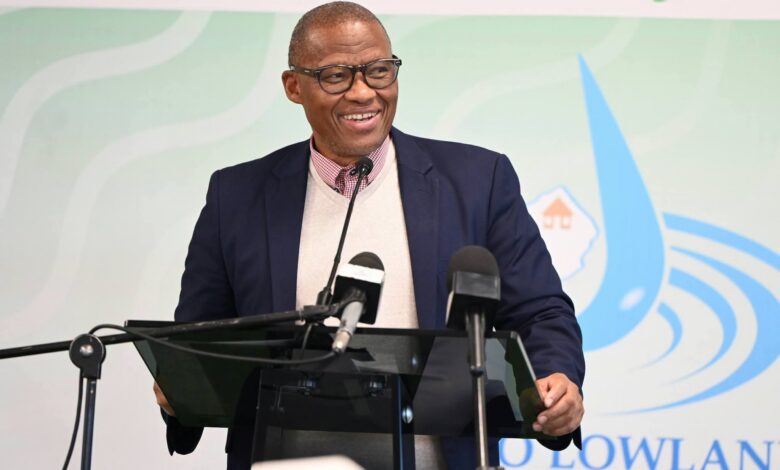
The Government of Lesotho has announced a large-scale education infrastructure programme aimed at improving learning conditions in primary schools across the country. Minister of Education Professor Ntoi Rapapa confirmed that new classrooms and sanitation facilities will be constructed at 52 primary schools spread across all 10 districts. The initiative is designed to address long-standing infrastructure challenges that affect teaching and learning in many rural and urban schools. It also reflects the government’s continued focus on strengthening basic education as a foundation for national development. The announcement has been welcomed as a step toward improving access to safe and functional learning environments for Basotho children.
Professor Rapapa explained that the project will focus on upgrading essential school infrastructure, including classrooms and latrines, to create more conducive learning spaces. Many schools in Lesotho continue to face overcrowding and inadequate sanitation facilities, which directly affect learner performance and attendance. The government’s intervention aims to reduce these barriers by ensuring that schools have the basic facilities needed for effective teaching. The minister emphasized that the programme is part of a broader effort to improve the quality of education at primary level. He also noted that better infrastructure supports both learners and teachers by creating safer and more organised school environments.
The distribution of the project across districts reflects an effort to ensure balanced development in the education sector. Thaba-Tseka will receive the highest allocation with 10 schools benefiting from new infrastructure. Mohale’s Hoek follows with eight schools, while Butha-Buthe will have six schools included in the programme. Maseru and Mafeteng will each benefit with five schools, and Mokhotlong, Leribe, Berea and Quthing will each receive upgrades at four schools. Qacha’s Nek will have two schools included in the rollout. This distribution highlights the government’s attempt to reach both densely and sparsely populated regions with equal commitment.
Several schools have already been identified as beneficiaries of the programme. These include Thaba-Phechela Primary School in Constituency No. 48 in Mafeteng, Hloahloeng Primary School in Constituency No. 64 in Mohale’s Hoek, and Thaba-Putsoa Primary School in Constituency No. 40 in Maseru. The selection of these schools forms part of a broader assessment of infrastructure needs across the country. Officials have indicated that priority was given to schools facing urgent structural and sanitation challenges. The inclusion of these institutions signals a targeted approach to addressing critical gaps in the education system.
The government has set a clear implementation timeline for the project, with completion and official handover expected between July and August 2026. This schedule is intended to ensure proper planning, construction quality and timely delivery of facilities. Professor Rapapa stated that the initiative is part of ongoing efforts to ensure that learners and teachers have access to safe, functional and accessible learning environments. He added that improving infrastructure is directly linked to improving education outcomes across the country. The project is also expected to support long-term improvements in school attendance and learner performance.
Education officials have stressed that investing in school infrastructure is essential for strengthening the foundation of the national education system. Many schools continue to operate under challenging conditions that limit effective teaching and learning. By addressing these gaps, the government aims to create more equitable access to quality education for all children, regardless of location. Improved sanitation facilities are also expected to enhance health and hygiene standards in schools, reducing absenteeism among learners. The programme reflects a broader recognition that infrastructure plays a key role in shaping educational success.
The announcement of this nationwide school upgrade programme marks an important step in the government’s education reform efforts. By focusing on both classrooms and sanitation facilities, the initiative addresses two of the most pressing needs in primary schools. It also demonstrates a commitment to ensuring that every child has access to a safe and supportive learning environment. As the project moves forward, communities across Lesotho are expected to benefit from improved school conditions and better educational outcomes. The long-term impact is expected to contribute to stronger foundational learning and a more resilient education system for future generations.
Join 'Lesotho News' WhatsApp Channel
Get breaking Lesotho news — delivered directly to your WhatsApp.
CLICK HERE TO JOIN