European Union and Lesotho Strengthen Partnership for Sustainable Local Development

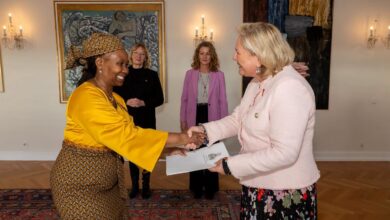
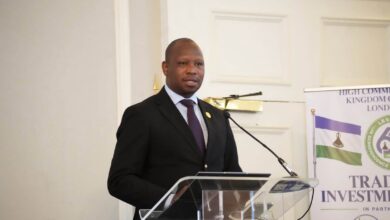
The European Union has reaffirmed its commitment to supporting sustainable development in Lesotho through stronger collaboration with local government institutions and community leadership. This commitment was highlighted during a recent meeting between the Head of the European Union Delegation to Lesotho, H.E. Mette Sunnergren, and the Minister of Local Government and Chieftainship, Hon. Nkhethoa Seetsa. The discussions focused on aligning their shared vision for inclusive growth, effective decentralisation and improved governance that benefits communities across the country. Although the European Union does not currently implement direct bilateral projects with the Ministry, both sides recognized the ministry’s central role in supporting many development initiatives funded by the EU. The meeting reflected a shared understanding that sustainable progress depends on strong partnerships between national institutions, local authorities and development partners.
Local government remains one of the most important pillars of development in Lesotho because it connects national policies with the needs of communities at the grassroots level. Community councils, district authorities and traditional leaders play a significant role in implementing programmes that improve livelihoods, protect natural resources and expand access to essential services. The European Union acknowledged that these local structures are critical to the success of many of its development programmes, even where direct cooperation agreements do not exist. By strengthening decentralisation, local governments are better positioned to respond to community priorities while ensuring that development initiatives are implemented effectively. This collaborative approach helps ensure that projects produce lasting benefits for the people they are designed to serve.
One of the key areas highlighted during the meeting was the ongoing success of the ReNOKA programme and the United Nations Capital Development Fund’s LoCAL mechanism. These initiatives have demonstrated how coordinated action between development partners and local authorities can produce meaningful environmental and social outcomes. Through this partnership, community councils were empowered to restore more than 443 hectares of degraded land during 2025 alone. Land restoration contributes to healthier ecosystems, improved agricultural productivity and greater resilience against climate change, all of which are essential for Lesotho’s long term development. The achievement also illustrates how decentralised governance enables communities to take ownership of environmental conservation while improving local livelihoods.
Climate resilience continues to be a major priority for both the European Union and the Government of Lesotho. Environmental degradation, soil erosion and changing weather patterns remain significant challenges that affect agriculture, water security and rural livelihoods across the country. Programmes such as ReNOKA are helping communities restore landscapes while promoting sustainable land management practices that protect natural resources for future generations. By involving local government structures and community councils, these initiatives encourage greater public participation and create stronger local ownership of environmental projects. This approach ensures that conservation efforts are not only effective in the short term but also sustainable over many years.
Water security was another important issue discussed during the engagement between the European Union and the Ministry of Local Government and Chieftainship. Through the Metsi a Lesotho programme, local councils and traditional authorities continue to play an essential role in ensuring that clean and reliable water reaches rural communities. Access to safe drinking water remains a fundamental requirement for public health, education, agriculture and economic development. Effective local leadership helps maintain water infrastructure, resolve community challenges and encourage responsible management of water resources. The continued involvement of traditional leaders and local councils strengthens the sustainability of these efforts while improving service delivery in remote areas.
The European Union emphasized that its relationship with the Ministry extends beyond conventional development projects. Rather than focusing solely on standalone programmes, the partnership is integrated into community based initiatives that rely on collaboration between government institutions, local leaders and residents. This grassroots approach allows development programmes to respond more effectively to local needs while promoting accountability and inclusive decision making. By working alongside community councils and traditional authorities, the European Union helps strengthen governance systems that empower local communities to participate in shaping their own development. Such partnerships create opportunities for more sustainable and inclusive growth across Lesotho.
The meeting also highlighted the importance of decentralisation as a foundation for effective governance and national development. Strong local government institutions are better equipped to deliver services, coordinate development activities and address the specific challenges facing individual communities. Decentralisation encourages greater citizen participation and ensures that decision making is informed by local knowledge and priorities. The European Union’s support for decentralised governance complements Lesotho’s efforts to strengthen public institutions while improving transparency and accountability. These initiatives contribute to more responsive governance that supports economic growth, environmental sustainability and social development.
The discussions between H.E. Mette Sunnergren and Hon. Nkhethoa Seetsa reaffirmed the shared commitment of the European Union and Lesotho to building resilient communities through strong local partnerships. Their engagement demonstrated that meaningful development is achieved through cooperation that reaches communities where it is needed most rather than through isolated projects alone. By supporting decentralisation, land restoration, climate resilience and improved water governance, the European Union continues to contribute to Lesotho’s long term development goals. The achievements already recorded through initiatives such as ReNOKA, the LoCAL mechanism and Metsi a Lesotho show the value of coordinated action between development partners, government institutions and local communities. As this partnership continues to grow, it is expected to deliver even greater benefits for communities across Lesotho while promoting sustainable development that leaves no one behind.
Join 'Lesotho News' WhatsApp Channel
Get breaking Lesotho news — delivered directly to your WhatsApp.
CLICK HERE TO JOIN