Lesotho is taking an important step toward strengthening its future workforce by encouraging students to apply for admission and scholarship opportunities at the Ethiopian Institute of Textile and Fashion Technology (EiTEX), a renowned institution operating under Bahir Dar University in Ethiopia. The call has been issued through the Embassy of the Kingdom of Lesotho in Ethiopia, with a particular focus on students interested in textiles, apparel manufacturing, fashion technology, leather engineering, merchandising and industrial design. The initiative comes at a time when Lesotho is seeking to deepen industrialisation and improve the competitiveness of one of its most important economic sectors. By encouraging young Basotho to pursue specialised education abroad, the Embassy hopes to equip a new generation of professionals with the skills needed to drive innovation and growth within the country’s textile and apparel industry. The opportunity is viewed not only as an educational pathway but also as a strategic investment in Lesotho’s long-term economic development.
EiTEX has built a strong reputation as one of Africa’s leading institutions dedicated to textile, garment, fashion and leather education. Established in 1963, the institute has decades of experience in training professionals and researchers who contribute to the development of the textile and fashion sectors across the continent. Through its undergraduate, master’s and doctoral programmes, students gain access to comprehensive training in textile engineering, textile chemical processing, fashion engineering, apparel merchandising, leather product engineering, fashion design and several related disciplines. The institution also hosts advanced research centres that focus on textile science, sustainable fashion, indigenous textiles and leather technologies. These specialised areas of study provide students with practical and theoretical knowledge that can be applied directly to industry and entrepreneurship.
The Embassy believes the scholarship and admission opportunities arrive at a critical moment for Lesotho. The textile and apparel industry remains one of the country’s largest employers and export contributors, making it a cornerstone of the national economy. While Lesotho has achieved success in attracting foreign investment into the sector over many years, national leaders increasingly recognise the need to develop local expertise that can support sustainable growth. Expanding the pool of skilled professionals in areas such as engineering, technology, design and manufacturing management is viewed as essential for ensuring that Basotho play a larger role throughout the industry’s value chain. Investing in education and specialised training is therefore seen as a practical way to strengthen local industries while creating opportunities for future generations.
The initiative aligns closely with the goals of the Government of Lesotho and the Lesotho National Development Corporation through the Letsema Strategy. This national strategy focuses on accelerating economic transformation through industrial growth, innovation, entrepreneurship and skills development. By encouraging students to pursue specialised training in textile and fashion-related fields, the Embassy hopes to support the creation of a workforce capable of driving industrial expansion and economic diversification. The strategy places significant emphasis on developing human capital as a foundation for national progress. Programmes such as those offered by EiTEX provide an opportunity for Basotho students to gain internationally recognised qualifications while acquiring practical skills that can contribute directly to Lesotho’s economic objectives.
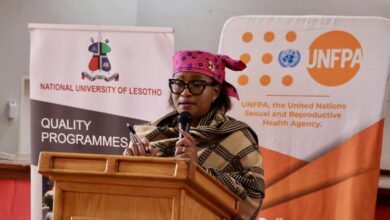
Lesotho’s Ambassador to Ethiopia, H.E. Ntsiuoa Sekete, highlighted the importance of building local expertise within the textile and apparel sector. According to the Ambassador, the next phase of Lesotho’s industrial development must focus on localisation of skills, management expertise, industrial technology and innovation. She stressed the need for more Basotho engineers, designers, merchandisers, technologists and entrepreneurs who can lead the industry at every level, from production facilities to executive leadership positions. Her remarks reflect a broader vision of empowering local professionals to take ownership of the sector’s future development. By investing in education and specialised training, Lesotho hopes to build a stronger foundation for sustainable industrial growth.
Ambassador Sekete also emphasised that human capital development remains one of the most valuable investments any nation can make. She described scholarships and specialised training opportunities as nation-building initiatives that can have far-reaching benefits beyond individual career advancement. Every graduate trained in fields such as textile engineering, apparel technology and fashion innovation has the potential to contribute to solutions for unemployment, industrial competitiveness and economic diversification. Skilled professionals can help introduce new technologies, improve manufacturing processes and create innovative products that strengthen Lesotho’s position in global markets. Their expertise can also help develop local businesses and support the growth of emerging industries.
The Ambassador’s commitment to strengthening educational cooperation between Lesotho and Ethiopia is reflected in her ongoing collaboration with Bahir Dar University and EiTEX. Over the past two years, she has participated in academic engagements, knowledge exchange initiatives and international conferences hosted by the university. These interactions have helped showcase the Kingdom of Lesotho while highlighting opportunities for cooperation in research, innovation and skills development. Such partnerships are increasingly important as African countries seek to strengthen their industrial capabilities through shared knowledge and expertise. The engagements have also reinforced the role of education and research in creating globally competitive textile industries across the continent.
EiTEX itself has gained recognition for supporting Ethiopia’s industrialisation agenda and for maintaining strong partnerships with industry stakeholders, research institutions and development organisations. The institute regularly hosts international conferences that bring together experts, researchers and industry leaders to discuss emerging trends and technological advancements. Its programmes are designed to produce graduates who can contribute directly to manufacturing productivity, product development, technology transfer and entrepreneurship. This practical approach ensures that students graduate with skills that are relevant to real-world industry needs. As a result, EiTEX continues to attract students from across Africa who seek specialised training in textile and fashion-related disciplines.
Ambassador Sekete further noted that Lesotho’s future competitiveness will increasingly depend on home-grown expertise and innovation. She explained that localisation is not intended to replace investors but rather to ensure that Basotho participate meaningfully across the entire textile and apparel value chain. The goal is to move beyond garment production and toward innovation, specialised textile manufacturing, research and the creation of African brands capable of competing internationally. Developing local talent in these areas can help create a more resilient and diversified industrial sector. It can also open new opportunities for entrepreneurship and export growth within the broader manufacturing industry.
The Embassy believes that greater participation by Basotho students in specialised programmes such as those offered by EiTEX could have a transformative impact on Lesotho’s industrial ecosystem. Graduates returning home with advanced technical knowledge can help improve productivity within existing factories while supporting the growth of small and medium-sized enterprises. Their expertise can contribute to product innovation, improved operational efficiency and stronger business competitiveness. A skilled workforce can also encourage greater local participation in manufacturing and create pathways for new businesses to emerge. These developments would support broader economic growth while strengthening Lesotho’s position within regional and international markets.
Interested students are encouraged to follow admission announcements and scholarship opportunities released by EiTEX and Bahir Dar University. The Embassy of the Kingdom of Lesotho in Ethiopia has also invited prospective applicants to seek guidance regarding academic opportunities available in the country. For many students, the scholarships represent a chance to gain specialised education that may otherwise be difficult to access. More importantly, they provide an opportunity to contribute to Lesotho’s long-term development upon returning home. As Ambassador Ntsiuoa Sekete has emphasized, the future of Lesotho’s textile and apparel industry will be shaped not only by technology and infrastructure but also by skilled Basotho men and women equipped with the knowledge, vision and determination to lead Africa’s next phase of industrial transformation.
Join 'Lesotho News' WhatsApp Channel
Get breaking Lesotho news — delivered directly to your WhatsApp.
CLICK HERE TO JOIN