
Lesotho Becomes Founding Member of World Artificial Intelligence Cooperation Organization

Lesotho has taken an important step in shaping the future of global artificial intelligence by becoming one of the founding members of the World Artificial Intelligence Cooperation Organization, also known as WAICO. On July 18, 2026, the Minister of Foreign Affairs and International Relations, Honourable Limpho Tau, signed the Agreement on the Establishment of WAICO in Shanghai, China. The agreement marks Lesotho’s commitment to working alongside other nations to promote responsible, inclusive and sustainable artificial intelligence development. The move reflects the country’s growing interest in embracing emerging technologies while ensuring that innovation benefits people across different sectors of society. As artificial intelligence continues to influence economies, education, healthcare and public services around the world, Lesotho’s participation in this international initiative positions the country to contribute to important global discussions and benefit from future technological cooperation.
The establishment of WAICO represents a significant milestone in international efforts to strengthen collaboration on artificial intelligence governance. Lesotho joins 28 other founding countries in creating an intergovernmental organization focused on encouraging cooperation among nations in the development and use of AI technologies. The organization’s objectives include ensuring that artificial intelligence is developed in a fair, safe and beneficial manner while addressing challenges related to ethics, security and responsible innovation. With AI becoming increasingly integrated into everyday life, governments across the world are recognizing the importance of creating shared standards and cooperative frameworks. WAICO aims to provide a platform where countries can exchange knowledge, develop common approaches and work together to maximize the benefits of artificial intelligence while reducing potential risks.
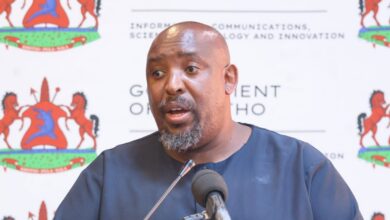
The signing ceremony took place in Shanghai during a series of international engagements focused on artificial intelligence and digital transformation. At the same time, the Minister of Information, Communications, Science, Technology and Innovation, Honourable Nthati Moorosi, participated in the High-Level Meeting on Global AI Governance. This gathering brought together government representatives, policymakers and technology leaders from around the world to discuss the opportunities and challenges presented by AI. The meeting focused on strengthening international cooperation, promoting responsible AI development and ensuring that technological progress supports sustainable development across both developed and developing nations. Lesotho’s participation highlighted its commitment to being actively involved in conversations that will shape the future of global technology governance.
One of Lesotho’s key messages during the high-level meeting was the need for stronger international partnerships that support developing countries in building artificial intelligence skills and institutions. The country emphasized that many developing nations still face significant challenges in accessing advanced technologies, technical expertise and research opportunities. Without targeted support, these countries risk falling behind as AI becomes an increasingly important driver of economic growth and innovation. Lesotho therefore called for global cooperation that focuses on knowledge sharing, capacity building and investment in education and digital infrastructure. Such partnerships can help ensure that developing countries are not left behind in the rapidly evolving artificial intelligence landscape.
Building AI skills is becoming increasingly important because artificial intelligence is expected to transform nearly every sector of the economy. From agriculture and healthcare to education, finance and manufacturing, AI technologies have the potential to improve productivity, enhance decision making and create new economic opportunities. However, these benefits can only be realized if countries have skilled professionals, strong institutions and supportive policies that encourage responsible innovation. Lesotho’s call for international cooperation reflects an understanding that developing AI capabilities requires long-term investment in education, research and workforce development. By participating in global partnerships, countries can accelerate learning, share best practices and build stronger foundations for future technological growth.
Another important issue raised by Lesotho during the meeting was the need for an international framework that helps countries transform fragmented data into secure, trusted and AI-ready digital resources. Data serves as the foundation for artificial intelligence systems because AI relies on large volumes of accurate and reliable information to learn, make predictions and generate insights. In many developing countries, valuable data remains scattered across different institutions, government departments and private organizations, making it difficult to use effectively. Creating secure systems for organizing and managing this information can significantly improve the quality and effectiveness of AI applications. Lesotho’s proposal recognizes that data governance must be strengthened alongside advances in artificial intelligence technology.
The emphasis on secure and trusted digital resources also highlights growing concerns about privacy, cybersecurity and responsible data management. As governments increasingly rely on digital technologies, protecting sensitive information becomes essential for maintaining public trust and ensuring compliance with legal and ethical standards. Effective data governance requires clear regulations, secure digital infrastructure and transparent policies that balance innovation with privacy protection. International cooperation can help countries develop common standards that support both technological progress and the protection of individual rights. Lesotho’s contribution to these discussions demonstrates its awareness that successful AI development depends not only on advanced algorithms but also on strong governance systems.
For Lesotho, becoming a founding member of WAICO could create opportunities to strengthen national digital transformation efforts over the coming years. Membership provides access to international networks, technical expertise and collaborative initiatives that may support research, innovation and policy development. Participation in global AI discussions can also help the country stay informed about emerging technologies, international regulations and best practices that can be adapted to local needs. As digital economies continue to expand, access to global partnerships will become increasingly valuable for countries seeking to modernize public services and improve economic competitiveness. Lesotho’s involvement signals a willingness to actively participate in shaping the future rather than simply adapting to changes created elsewhere.
Artificial intelligence is already changing how governments deliver services and how businesses operate around the world. AI technologies are helping improve medical diagnosis, increase agricultural productivity, strengthen financial services, enhance transportation systems and support scientific research. Governments are also using AI to improve public administration, analyze large datasets and provide more efficient services to citizens. These developments create enormous opportunities but also introduce challenges related to ethics, employment, regulation and digital inclusion. International organizations such as WAICO can play an important role in helping countries address these issues through dialogue, shared research and coordinated policy development.
Lesotho’s decision to join the World Artificial Intelligence Cooperation Organization reflects its broader commitment to embracing innovation while supporting international cooperation on emerging technologies. By signing the agreement in Shanghai and participating in the High-Level Meeting on Global AI Governance, the country demonstrated its intention to contribute to the development of responsible and inclusive artificial intelligence. Its calls for stronger global partnerships, expanded AI capacity building and improved data governance highlight priorities that are particularly important for developing nations. As WAICO begins its work with its 29 founding member countries, Lesotho now has an opportunity to help shape international AI governance while strengthening its own digital future. The country’s participation marks an important milestone that could support technological progress, economic development and greater collaboration in the years ahead.
Join 'Lesotho News' WhatsApp Channel
Get breaking Lesotho news — delivered directly to your WhatsApp.
CLICK HERE TO JOIN