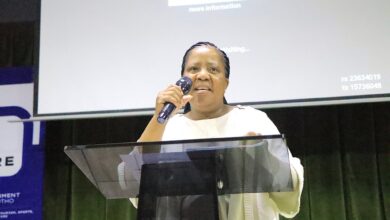
Minister Selibe Mochoboroane Champions Youth-Led Agrifood Systems Transformation in Africa


Lesotho’s Minister of Agriculture and Food Security, Hon. Selibe Mochoboroane, has called for greater investment in young people to accelerate Africa’s agrifood systems transformation and strengthen the continent’s food security. Speaking at the high-level summit titled “Leading from the Front: Africa’s Youth Driving Agrifood Systems Transformation” in Rome, Italy, the Minister stressed that young people must play a central role in shaping the future of agriculture. The meeting took place on the margins of the 6th World Food Forum, where leaders, agricultural stakeholders and young innovators gathered to discuss solutions to food security and nutrition challenges. Mochoboroane urged African countries to act decisively and create opportunities that enable young people to participate meaningfully in modern agriculture. Emphasising the importance of timely action, he reminded delegates that “procrastination is the thief of time,” encouraging leaders to turn commitments into practical results.
Mochoboroane highlighted Africa’s significant youth population as both an opportunity and a responsibility for governments and development partners. Africa is the world’s youngest continent, with a median age of approximately 19 years and around 60 percent of its population under the age of 25. According to the Minister, these demographic realities make youth participation essential to transforming the continent’s agrifood systems. He argued that agricultural development and youth empowerment cannot be treated as separate priorities because the future of food production, processing, distribution and consumption depends heavily on the involvement of younger generations. “Africa’s agrifood systems transformation agenda is a youth agenda. There is no separating the two,” he said, warning that failing to connect the two priorities would be a serious mistake with long-term consequences.
The Minister also drew attention to the responsibility of one generation to create opportunities for the next. Referring to an old African proverb, he said, “It takes one generation to build the road for the next generation to travel on.” His remarks highlighted the need for current leaders to establish the policies, infrastructure and support systems that will allow young Africans to thrive in agriculture. He stressed that young people should not have to choose between pursuing a modern, prosperous future and working in the agricultural sector. Instead, agriculture should offer opportunities for innovation, entrepreneurship, financial independence and professional growth. “Our task is to make sure they can have both,” Mochoboroane said, calling for an agricultural environment that attracts young talent rather than pushing it towards other industries.
A major focus of the Minister’s address was the need to renew agricultural systems by improving young people’s access to essential resources. He identified land, finance, technology, training and markets as key areas requiring sustained attention. Without access to these resources, young people may struggle to establish viable farming businesses, adopt modern agricultural methods or compete in commercial markets. The Minister called for particular consideration of young women and rural youth, who may face additional barriers when trying to access productive assets and business opportunities. He also emphasised that youth empowerment must go beyond training programmes and public consultations to include meaningful participation in decision-making and economic activity. Young people, he explained, are not simply future farmers and entrepreneurs because many are already leading projects, developing innovative solutions and building businesses that contribute to their communities.
Mochoboroane used Lesotho as an example of how governments can translate commitments to youth empowerment into practical agricultural development initiatives. He outlined the country’s efforts to strengthen young entrepreneurs through programmes designed to improve their business knowledge, leadership skills and ability to respond to complex agricultural challenges. These initiatives recognise that successful agrifood systems require more than increased production because farmers and agricultural businesses must also understand markets, manage resources and respond to changing economic conditions. By supporting young people to develop these capabilities, Lesotho aims to improve the sustainability and commercial potential of youth-led agricultural enterprises. The Minister’s remarks underscored the importance of connecting national development priorities with opportunities that young people can access within their own communities.
One of the initiatives he highlighted was the FAO HASTEN project, through which the Government of Lesotho is strengthening the capabilities of young entrepreneurs. The programme supports the development of skills in business growth, systems thinking and inclusive governance. These areas are important because agricultural enterprises operate within interconnected systems involving producers, suppliers, financial institutions, consumers and public authorities. Understanding these relationships can help young entrepreneurs identify business opportunities, manage risks and build enterprises that respond to local needs. Inclusive governance also helps ensure that young people have a voice in decisions affecting agricultural development. Through this approach, Lesotho is seeking to equip emerging entrepreneurs with the knowledge and practical abilities needed to participate more effectively in agrifood systems transformation.
The Minister also highlighted the Smallholder Agriculture Development Project II, commonly known as SADP II, as another important initiative supporting agricultural development in Lesotho. Supported by the World Bank, the Government of Japan and the International Fund for Agricultural Development, the project extends support across all ten districts of the country. Mochoboroane explained that young grantees receive mentorship intended to help them develop commercially viable farming businesses. This support is significant because young farmers often need more than initial funding to establish sustainable enterprises. Business planning, technical guidance, financial management and access to reliable markets can all influence whether an agricultural venture grows and remains profitable. By combining support with mentorship, the project seeks to help young entrepreneurs strengthen their businesses and contribute to agricultural production, employment creation and rural economic development.
Lesotho’s diverse agro-ecological zones also create opportunities for young people to develop agricultural solutions suited to local conditions. The Minister stressed the importance of strengthening connections between communities and mobilising grassroots initiatives across the country. Different areas may have different agricultural resources, production conditions and development needs, making locally informed approaches essential. Supporting community-led initiatives can help young entrepreneurs identify suitable opportunities, share knowledge and respond to challenges affecting farmers in their regions. Stronger connections between local initiatives and national development priorities can also improve coordination and encourage the wider adoption of successful ideas. Mochoboroane explained that this approach would enable Lesotho to turn local priorities into locally led solutions that support the country’s broader development ambitions.
The Minister described meaningful youth engagement as a shift from fragmented efforts towards collective action. He also called for a move from consultation to contribution and from promising ideas to practical results. These principles highlight the importance of involving young people throughout the agricultural development process, from identifying challenges to designing solutions and evaluating outcomes. Youth participation becomes more effective when young people have opportunities to influence decisions, access resources and demonstrate the value of their ideas through real projects. Collaboration between government institutions, development partners, agricultural organisations and young entrepreneurs can help reduce barriers and improve the effectiveness of support programmes. By strengthening these partnerships, Lesotho and other African countries can create more favourable conditions for youth-led agrifood businesses to grow and contribute to long-term food security.
The wider discussion at the Rome summit reinforced the importance of placing young people at the centre of Africa’s agricultural transformation. In his opening remarks, FAO Assistant Director-General and Regional Representative for Africa, Dr. Abebe Haile-Gabriel, stressed that the gathering was talking to young people rather than simply talking about them. His statement highlighted the need to recognise young Africans as active participants in shaping agricultural policies, developing innovations and addressing food system challenges. He encouraged young leaders to continue taking initiative and contributing to the development of their communities. “Keep leading from the front. Africa needs your energy, your ideas and your courage. Do not wait for permission to transform your communities,” he told them. His message complemented Mochoboroane’s call for stronger investment in youth leadership and practical opportunities across the agrifood sector.
Haile-Gabriel also recognised the contributions young people are making to environmental protection, agricultural innovation and food security. These efforts include restoring degraded landscapes, improving soil health and reducing food loss. Such activities are important because sustainable agricultural production depends on maintaining healthy soils, protecting natural resources and making better use of harvested food. Young innovators are also exploring ways to turn food waste into nutritious products through the Zero Waste, Full Taste challenge. These initiatives demonstrate how creative approaches can help reduce waste while identifying additional value in resources that might otherwise be discarded. Young people are also using digital tools to connect farmers with markets, helping improve access to information and commercial opportunities. Together, these efforts reflect the potential of youth-led innovation to address interconnected challenges affecting agriculture, nutrition and environmental sustainability.
The summit also aligned with the World Food Forum’s theme, “Fostering Innovation for Food Security and Nutrition.” Innovation in agrifood systems can take many forms, including improved farming practices, digital market platforms, more efficient food processing and better approaches to managing agricultural resources. However, innovation requires an enabling environment where young people can test ideas, develop technical skills and access the resources needed to expand successful solutions. Governments and development partners have an important role in creating this environment through supportive policies, training, finance and stronger market connections. Agricultural institutions must also recognise that young entrepreneurs can contribute to solutions that are relevant to local communities and responsive to changing food system demands. The experiences discussed at the summit highlighted the value of combining youth leadership with institutional support to advance food security and nutrition across Africa.
For Lesotho, continued investment in young people offers opportunities to strengthen agricultural productivity, expand rural businesses and improve access to economic opportunities. Effective implementation of initiatives such as the FAO HASTEN project and SADP II can help young entrepreneurs develop the skills and business foundations needed to operate sustainable enterprises. Access to land, finance, appropriate technology and markets remains important, particularly for young women and those living in rural communities. Stronger partnerships can also help connect local initiatives with wider commercial opportunities and national development goals. These efforts require sustained commitment, clear priorities and attention to the practical challenges young people face when entering the agricultural sector. By addressing these barriers, Lesotho can create more opportunities for young people to participate in building a resilient and commercially viable agrifood system.
Mochoboroane concluded by urging the young leaders attending the summit to leave with stronger connections, clearer commitments and a shared determination to turn Africa’s youth potential into tangible opportunities. His message was that youth empowerment must deliver measurable benefits rather than remain an aspiration expressed at conferences and policy meetings. Young people need practical support to establish businesses, adopt appropriate technologies, improve production and reach reliable markets. Governments, development institutions and private sector partners must work together to ensure that agricultural opportunities are accessible and sustainable. As Africa seeks to strengthen food security, improve nutrition and expand economic prosperity, youth participation will remain central to achieving lasting progress. As the Minister emphasised, investing in young people is not only an investment in the next generation, but also an investment in the transformation needed today and in Africa’s food security, prosperity and resilience tomorrow.
Join 'Lesotho News' WhatsApp Channel
Get breaking Lesotho news — delivered directly to your WhatsApp.
CLICK HERE TO JOIN