Minister Mochoboroane Tours Azienda Agricola Giancarlo D’Angelo: How Buffalo Farming Could Transform Lesotho’s Dairy Industry

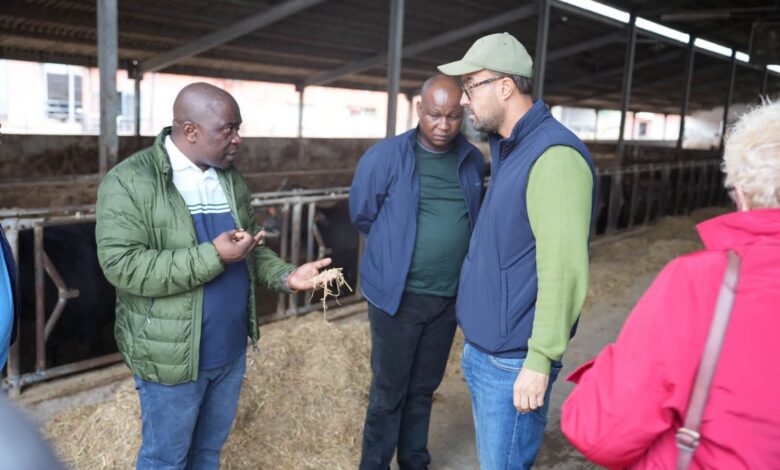
Lesotho’s Minister of Agriculture and Food Security, Selibe Mochoboroane, has gained valuable insight into the potential of buffalo farming during a visit to Azienda Agricola Giancarlo D’Angelo, a dairy farm and cheese production facility in Italy. The visit offered an opportunity to explore how Italian farmers rebuilt their dairy businesses after devastating losses caused by Foot and Mouth Disease (FMD). By turning to water buffalo and producing mozzarella cheese, farmers developed a specialised dairy industry with significant commercial value. For Lesotho, which aims to strengthen local milk production, create agricultural jobs and reduce dependence on imported dairy products, the Italian experience could provide useful lessons. The visit has also raised questions about how the country can improve its dairy sector and rethink the future of the Lesotho National Dairy Board following the dissolution of its board.
The story of the D’Angelo family illustrates how agricultural businesses can respond to severe setbacks through adaptation and changes in production. According to farm manager Filippo D’Angelo, his family has been involved in farming for approximately 100 years. His father previously kept 200 cattle, but the herd was lost during an outbreak of Foot and Mouth Disease. The devastating experience forced the family to reconsider its approach to dairy farming and find a way to rebuild its livelihood. Instead of returning immediately to conventional cattle farming, the family started again with just 30 buffalo, establishing the foundation for a different type of dairy enterprise.
Italy’s experience with Foot and Mouth Disease in the early 1990s forms an important part of this story. The supplied account identifies a serious Type O outbreak in 1993 that resulted in substantial livestock losses and severe financial pressure on affected farmers. Disease control measures can require the slaughter of infected animals and, under certain circumstances, other animals exposed to the disease. Such measures can have far-reaching consequences for farming families, particularly when livestock represents their primary source of income and the result of years of investment. The account also describes European Union support that helped farmers obtain another opportunity to rebuild their businesses, including through the purchase of buffalo. Although the precise details of the assistance and the extent of the livestock losses require independent verification, the broader lesson remains important: agricultural recovery often depends on financial support, effective disease management and viable alternatives for farmers.
Water buffalo became an important alternative for the D’Angelo family because their milk is particularly suitable for mozzarella production. Buffalo milk generally contains more fat and protein than conventional cow’s milk, making it well suited to producing rich, creamy cheeses. These characteristics contribute to the texture, flavour and composition of mozzarella made from buffalo milk. In Italy, mozzarella di bufala is a recognised speciality that has established a strong position in the country’s food culture and dairy market. Its value comes not only from the milk itself but also from the processing methods, product quality and consumer demand associated with the finished cheese. For farmers, this creates an opportunity to earn income from a specialised dairy product rather than relying exclusively on the sale of raw milk.
The D’Angelo farm’s operations demonstrate the importance of building a business around the full value of agricultural production. Filippo D’Angelo explained that the family now milks its buffalo twice daily, with the working schedule extending from approximately 5 a.m. to 7 p.m. This routine reflects the daily demands of managing a dairy herd and maintaining a consistent supply of milk for processing. By linking livestock production with cheese manufacturing, a farm can capture more value from its raw materials and potentially reach customers through several sales channels. However, successful buffalo farming requires careful attention to animal nutrition, breeding, veterinary care, milking hygiene and milk handling. Cheese production also requires appropriate equipment, reliable refrigeration, skilled workers and consistent quality standards. These requirements are essential considerations for any country hoping to adapt the Italian model to its own agricultural conditions.
During his tour of Azienda Agricola Giancarlo D’Angelo, Minister Mochoboroane described the experience as an eye-opener. The visit gave him an opportunity to observe how a family farm had rebuilt its operations following the loss of its cattle and developed a business focused on buffalo milk and mozzarella cheese. His interest extends beyond the livestock itself to the wider potential for agricultural development in Lesotho. He is considering how lessons from the Italian experience could inform efforts to improve the country’s dairy industry, particularly following the dissolution of the Lesotho National Dairy Board’s board. The visit therefore represents an opportunity to examine alternative approaches to dairy production, processing and market development. Any future reforms, however, would need to consider Lesotho’s existing farming systems, available resources, local consumer demand and the institutional challenges facing the dairy sector.
For Lesotho, reducing dependence on imported milk and dairy products could offer economic benefits if local producers can supply the market at competitive prices. Imported products help meet consumer demand, but they can also expose the domestic market to international prices, exchange-rate movements and supply disruptions. Strengthening local dairy production could allow more of the money spent on dairy products to remain within the national economy. It could also create employment in livestock management, milk collection, transport, food processing, packaging and retail distribution. Farmers may benefit from more reliable markets if local processors establish long-term purchasing arrangements and pay prices that cover production costs. Nevertheless, import substitution depends on more than increasing the number of dairy animals. Local producers must deliver sufficient quantities of safe, consistent and competitively priced products to meet consumer expectations.
Minister Mochoboroane has highlighted the possibility of adapting mozzarella production to Lesotho’s conditions, including by considering the use of local cattle breeds. This proposal raises an important distinction between buffalo farming and cheese production using cow’s milk. Buffalo milk has a different composition from cow’s milk, so the resulting cheese may differ in richness, texture and yield. Cow’s milk can also be used to produce mozzarella-style cheese, although the production process and finished product may differ from traditional mozzarella di bufala. Before investing in a large processing operation, Lesotho would benefit from testing locally produced milk, evaluating cheese quality and measuring production costs. Pilot projects could help determine which products local consumers prefer and whether restaurants, supermarkets and other buyers would purchase them at prices that support farmers and processors. A carefully designed approach would allow the country to develop practical evidence before committing significant public or private resources.
The suggestion that buffalo are more tolerant of certain diseases should also be examined carefully. Water buffalo can differ from cattle in their susceptibility to particular diseases, but they are not immune to Foot and Mouth Disease. Buffalo can become infected with the virus, and some animals, particularly African buffalo, can play a role in maintaining the virus in certain environments. The disease risks associated with water buffalo also depend on the species, the local disease situation and the management system. Lesotho’s ambition to remain free of Foot and Mouth Disease must therefore remain central to any decision about introducing new livestock or changing farming practices. Importing animals would require appropriate veterinary risk assessments, movement controls, quarantine arrangements and compliance with national and international animal health requirements. Diversification may strengthen a farming business, but it cannot replace sound biosecurity and effective disease prevention.
The future of the Lesotho National Dairy Board is another important part of the discussion. A stronger dairy sector requires clear institutional responsibilities, sound financial management and effective coordination between farmers, processors, government departments and retailers. The dissolution of the board creates an opportunity to assess the existing system and identify the changes needed to support sustainable milk production. Lessons from Italy could help inform discussions about farmer cooperatives, milk collection networks, processing facilities and partnerships between agricultural producers and food manufacturers. However, a successful Italian family farm cannot simply be replicated through a change in government policy. Lesotho would need to establish whether its production volumes, infrastructure, technical skills and access to markets can support a comparable business model. A new or restructured dairy institution should also have clear performance targets and transparent accountability so that public resources deliver measurable benefits to farmers and consumers.
Training and investment would be essential if Lesotho decides to expand domestic dairy processing. Farmers need practical knowledge of animal health, breeding, feeding, milk quality and farm business management. Processors need the technical skills to turn raw milk into safe, consistent products while minimising waste and controlling costs. Reliable electricity, clean water, cold storage and transport are also important because milk can spoil quickly when it is not handled at the correct temperature. Small-scale processing facilities could provide a starting point for testing local demand before businesses expand into larger production operations. Government support, private investment and partnerships with experienced dairy producers could help reduce the financial and technical barriers facing farmers. The most effective programme would combine livestock development with processing capacity, marketing support and reliable routes to market.
The Italian experience offers Lesotho an opportunity to think more broadly about agricultural resilience and rural economic development. The D’Angelo family rebuilt its dairy operation after losing its cattle, demonstrating the importance of finding a viable path forward after a major setback. Its focus on buffalo milk and mozzarella shows how specialised food products can create value beyond the production of raw agricultural commodities. For Lesotho, the priority is to determine which elements of this approach can work under local conditions and how farmers can benefit from a stronger domestic dairy value chain. This will require careful research, pilot projects, veterinary safeguards and effective institutions rather than an immediate large-scale shift to a new livestock system. If these foundations are established, the country could create new opportunities for farmers, develop local food-processing businesses and reduce some of its reliance on imported dairy products.
Minister Mochoboroane’s visit to Azienda Agricola Giancarlo D’Angelo highlights the value of learning from international agricultural experience while adapting proven ideas to local needs. Italy’s buffalo dairy industry demonstrates how livestock production, traditional food processing and market demand can work together to support a specialised business. Lesotho now has an opportunity to assess whether similar principles can strengthen its own dairy sector and help guide the future of the Lesotho National Dairy Board. Protecting animal health, supporting farmers and ensuring that locally produced dairy products remain affordable must be central to that effort. With sound planning, practical investment and careful evaluation, Lesotho could build a more resilient dairy industry that creates jobs, expands local production and delivers greater value to farming communities. The lasting lesson from the D’Angelo family is not that buffalo farming offers a universal solution, but that innovation, adaptation and sound business decisions can help farmers recover from adversity and create new opportunities for growth.
Join 'Lesotho News' WhatsApp Channel
Get breaking Lesotho news — delivered directly to your WhatsApp.
CLICK HERE TO JOIN