From Darkness to Opportunity: How Solar Power Is Transforming Education at St Martins High School

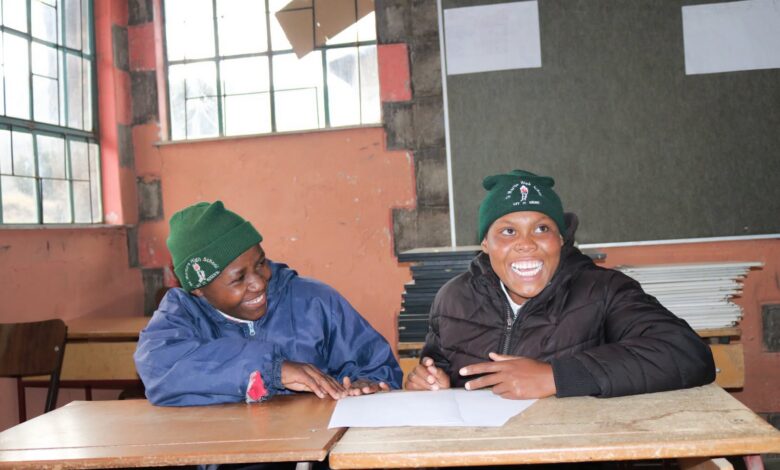
At 4:00 a.m., while much of Makhiseng village in Mokhotlong remains asleep and darkness covers the surrounding mountains, Reekelitsoe Moseli and Tsobotsi Selialia begin their journey to school. The two girls walk for about an hour from their community to St Martins High School in Mahala Mathaba, determined to make the most of every opportunity to learn. Their journey begins in a community that still does not have electricity and ends at a school where solar power has changed the learning environment. Since St Martins was connected to solar power in October 2025, learners have been able to study before sunrise and remain at school after daylight fades. For these two learners, access to electricity has turned additional hours into valuable time for education and academic preparation.
For Reekelitsoe, a Grade 11 learner at St Martins, the additional study time has already made a noticeable difference in her academic performance. She understands that Grade 11 is an important stage in preparing for the next step of her education, particularly as she hopes to qualify for university and secure a scholarship. “Because I am now in Grade 11, I have to work hard so that my marks qualify me for university next year and hopefully help me get a scholarship,” she says. She explains that arriving early and leaving late has significantly improved her marks because the school now has enough light for learners to study. Her experience shows how something as basic as reliable lighting can directly affect the amount of time a learner has available for revision, reading and preparation.
Before the school received solar power, opportunities for early-morning and afternoon study were restricted by natural daylight. Learners could not easily remain at school for extended periods once darkness arrived, while early arrivals before sunrise were also limited by the absence of adequate lighting. The introduction of solar energy has changed that routine by allowing learners to use the school facilities for longer periods. Reekelitsoe and Tsobotsi can now arrive early, study before normal lessons begin and remain at school beyond the regular school day. The change has created more flexibility for learners who are willing to dedicate additional time to improving their academic performance.
The transformation is also visible from the perspective of the school leadership. St Martins High School has 170 pupils, including 46 boys and 124 girls, and Principal Manthati Khotlisi says the arrival of electricity has improved learners’ performance and given the school greater flexibility in managing its time. She says learners can now come early for morning study and stay beyond school hours for afternoon study because there is light. This has created a learning environment in which the school is no longer completely dependent on daylight to determine when academic activities can take place. The additional hours give both teachers and learners more room to organise their work and make better use of the school facilities.
The benefits of electricity at St Martins extend beyond simply providing lights in classrooms. Solar power has also allowed the school to make greater use of digital resources and the internet, opening access to information and educational materials that were previously unavailable. Teachers can now use their laptops more easily, making their work more efficient and expanding the ways they can support learners. The school can also conduct experiments online, giving learners opportunities to explore educational content through digital platforms. These changes are helping to connect learners with information beyond what is available in traditional textbooks and making technology a more practical part of the learning process.
The introduction of internet access has also changed what learners can do when they are inside the classroom. Instead of depending only on the information contained in textbooks, learners can explore additional material, conduct research and access educational resources online. Teachers can use digital tools to support lessons and provide learners with information that can strengthen their understanding of different subjects. Online experiments also give learners opportunities to engage with educational activities that may not have been possible before the school had reliable electricity. In this way, solar energy is supporting not only longer study hours but also a broader and more flexible approach to learning.
Yet one of the most significant changes at St Martins remains the simplest one: there is now light when the school needs it. That light allows learners to read, revise and complete schoolwork when darkness would previously have brought their study time to an end. For Reekelitsoe and Tsobotsi, who leave Makhiseng at around 4:00 a.m., the availability of light makes their long journey worthwhile. Their decision to reach school before sunrise reflects the determination of young people who are prepared to make significant sacrifices in pursuit of a better education. Their story also shows how access to basic infrastructure can amplify the commitment and ambition that learners already bring to their education.
The contrast between Makhiseng and St Martins is particularly striking because the two places are connected by the girls’ daily journey. The community they leave behind still lacks electricity, yet they walk through the darkness to reach a school where solar power has transformed the learning environment. At one end of their journey is a community still waiting for access to electricity, while at the other is a school where renewable energy is helping to extend the hours available for education. This contrast illustrates the wider importance of energy access and its relationship with education, opportunity and community development. It also demonstrates that the benefits of electricity can become especially visible in places where learners previously had limited opportunities to study after sunset.
The impact of solar energy at St Martins therefore goes far beyond switching on classroom lights. It has created additional time for learners to study before lessons and after the normal school day. It has enabled teachers to use laptops and allowed the school to make greater use of internet-based learning resources and online experiments. It has also given learners more opportunities to research information and continue learning beyond the limits of a textbook. For students preparing for important academic milestones, these additional opportunities can make a meaningful difference to how they use their time and prepare for the future.
The school is also thinking about what must happen to ensure that the benefits of solar power continue for years to come. For Principal Khotlisi, sustainability and maintenance are important considerations now that the school has become dependent on the new infrastructure. As part of the installation, the contractor trained members of the school community to carry out basic maintenance of the solar system. This training gives the school members some of the knowledge needed to help manage and maintain the infrastructure. Having local capacity to respond to basic maintenance needs can help the school protect the investment and keep the system useful over time.
St Martins also has access to additional technical support through one of its former students. The former learner has since graduated from Lerotholi Polytechnic as an electrical engineer and has offered to assist the school with maintenance and technical matters when needed. This provides the school with a useful connection to technical expertise within its wider community. It also shows how the impact of education can come full circle when former learners use their skills to support the institution that helped educate them. Such support can be valuable as the school continues to manage and maintain its solar energy infrastructure.
The school is also exploring practical ways to generate money that can contribute towards future maintenance of the solar system. According to Principal Khotlisi, members of the surrounding community are allowed to charge their mobile phones and other electrical devices at the school for a small fee. The income generated from this service will contribute towards the future maintenance of the solar system. Although the approach is small in scale, it provides an example of how the school is looking beyond the initial installation and considering ways to support the long-term sustainability of the infrastructure. It also creates an opportunity for the community to benefit from the availability of electricity while contributing to the continued operation of the system.
The experience of St Martins demonstrates why access to clean and reliable energy is closely linked to education and opportunity. A solar installation begins as physical infrastructure, but its real value can be seen in what learners and teachers are able to do because of it. At St Martins, solar power means learners can arrive before sunrise and study under proper lighting. It means teachers can work with digital resources, use laptops and conduct online experiments while learners can access information beyond their textbooks. It also means students can continue reading, revising and completing schoolwork after sunset.
For Reekelitsoe, the effect of this transformation can already be seen in her marks. Her determination to leave Makhiseng at 4:00 a.m. and walk for about an hour to reach school shows the importance she places on education and her goal of qualifying for university and potentially securing a scholarship. Tsobotsi’s shared journey reflects the same commitment to making use of the opportunities available at St Martins. Their daily walk also brings attention to the unequal access to electricity that still exists between the community and the school. Their experience shows that when energy access improves in an educational institution, it can create opportunities that extend well beyond lighting.
The transformation at St Martins High School forms part of the broader impact of the Renewable Lesotho: Access to Affordable and Renewable Energy Project, known as RL: AARE, in Lesotho. The project is funded by the European Union, UNDP and the Irish Government, while UNDP Lesotho implements it in collaboration with the Ministry of Energy and Mining through the Department of Energy. At St Martins, the results of renewable energy access are being experienced directly by learners and teachers rather than remaining an abstract development objective. The school now has more time for learning, greater access to digital resources and improved opportunities to use technology as part of education. The experience provides a clear example of how investment in renewable energy can support practical improvements in the daily lives of learners.
For the learners at St Martins, solar energy is no longer simply a development project or a piece of infrastructure. They experience its impact every day through the extra hours available for study, the technology they can use and the information they can access. For teachers, electricity has made it easier to use laptops, access online resources and introduce new learning activities. For the school, it has created a more flexible environment where academic work can continue beyond the limitations imposed by daylight. For Reekelitsoe and Tsobotsi, it has helped turn their early-morning journey into more time and opportunity to pursue their education.
At 4:00 a.m., Reekelitsoe and Tsobotsi begin walking from Makhiseng while much of the village is still asleep. They make their way through the darkness toward St Martins High School, where solar-powered lights are already making it possible for learning to begin before sunrise. Their journey captures both the challenges that learners still face and the opportunities that reliable energy can create. It shows that electricity can influence something as fundamental as the amount of time a young person has to learn and prepare for the future. When a school is energised, the opportunity to learn no longer has to end when the sun goes down.
Join 'Lesotho News' WhatsApp Channel
Get breaking Lesotho news — delivered directly to your WhatsApp.
CLICK HERE TO JOIN