Parliament and Auditor General Call for Stronger Accountability in Managing Public Funds

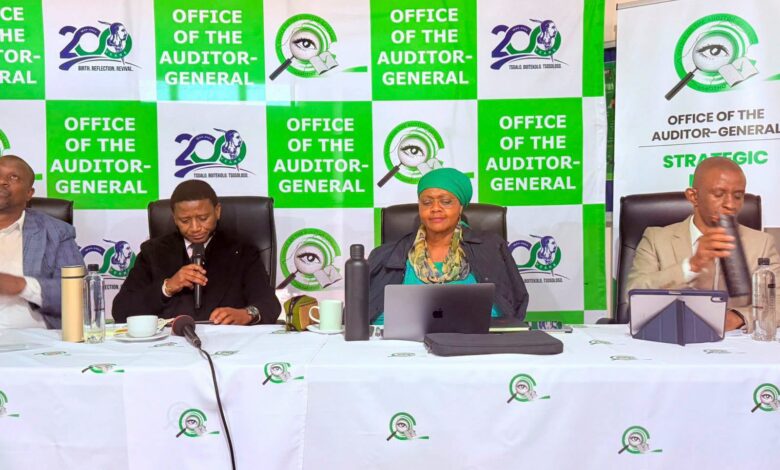
Parliament and the Office of the Auditor General have renewed calls for stronger collaboration between oversight institutions and law enforcement agencies to improve accountability in the management of public funds. The appeal comes amid growing recognition that audit findings must lead to meaningful action rather than simply being documented in reports. Leaders from both institutions emphasized that effective governance depends on ensuring that recommendations are implemented and that individuals responsible for the misuse of public resources are held accountable. The discussion took place during the launch of the Office of the Auditor General Strategic Plan 2026 to 2031, an initiative designed to strengthen public financial oversight over the coming years. The event highlighted the shared responsibility of Parliament, government ministries and oversight institutions in promoting transparency, improving service delivery and protecting taxpayers’ money.
Speaking at the launch, Public Accounts Committee member Dr. Tšeliso Moroke stressed that Parliament has a constitutional obligation to oversee the Executive and ensure that government institutions respond effectively to audit findings. He described the Office of the Auditor General as one of the country’s most important institutions for safeguarding financial accountability and promoting responsible public administration. According to Dr. Moroke, the Office plays a vital role in ensuring that public resources are managed lawfully, efficiently and in the best interests of citizens. He noted that independent audits provide valuable information that enables Parliament to monitor government performance and identify areas requiring improvement. Without effective oversight, he warned, opportunities for wasteful expenditure and financial mismanagement become significantly greater.
Dr. Moroke explained that while the Public Accounts Committee has a central responsibility in examining audit reports, every parliamentary portfolio committee also has an important oversight role. He argued that committees responsible for supervising individual ministries should actively monitor the implementation of recommendations contained in Auditor General reports. By ensuring that ministries address identified weaknesses, Parliament can contribute to stronger governance and improved public service delivery. He emphasized that oversight should not be viewed as the responsibility of a single committee but rather as a shared commitment across the entire parliamentary system. This coordinated approach would help ensure that audit recommendations receive the attention they deserve.
The Public Accounts Committee member also highlighted the importance of holding accounting officers personally accountable for implementing audit recommendations within their respective ministries and departments. He explained that effective oversight requires more than identifying shortcomings because it must also establish clear expectations, measurable timelines and meaningful consequences for repeated non compliance. Without these elements, audit recommendations risk remaining unimplemented while the same weaknesses continue to affect public institutions. Dr. Moroke stated that accountability mechanisms should encourage government officials to address problems promptly and responsibly. He argued that stronger implementation processes would ultimately improve public confidence in government institutions.
According to Dr. Moroke, strengthening the Office of the Auditor General should be viewed as a long term investment in good governance rather than simply an administrative requirement. A well resourced and effective audit institution can help prevent wasteful expenditure, reduce opportunities for corruption and improve the overall quality of public services. He noted that early identification of financial weaknesses enables corrective action before problems become more serious or costly. Strong audit systems also encourage greater financial discipline among public institutions by promoting compliance with laws and financial regulations. These benefits contribute directly to better governance and more efficient use of national resources.
Public Accounts Committee member Mr. Lephoi Makara also addressed the gathering, focusing on the need to strengthen systems for following up on audit findings. He revealed that Parliament is considering constitutional amendments together with other reforms aimed at improving oversight and accountability mechanisms. According to Mr. Makara, although cases involving the misuse of public funds are often referred to law enforcement agencies, many fail to progress as expected. This situation, he explained, demonstrates the need for more effective monitoring systems that ensure investigations are completed and appropriate action is taken. Improving follow up procedures would help close the gap between identifying financial irregularities and achieving meaningful accountability.
Mr. Makara further proposed expanding the powers of the Public Accounts Committee to strengthen its ability to monitor implementation of audit recommendations. He suggested that enhanced monitoring authority would allow the committee to track progress more effectively and ensure that government institutions respond to identified weaknesses. Stronger oversight powers would also make it easier to determine whether accounting officers have fulfilled their responsibilities or failed to act on important recommendations. Such reforms could improve Parliament’s ability to enforce accountability while supporting better financial management across government. He emphasized that stronger monitoring is essential if audit findings are to produce lasting improvements.
Responding to the concerns raised by Members of Parliament, Deputy Auditor General Mr. Paul Letlela clarified the constitutional role of the Office of the Auditor General. He explained that under the Constitution and the Audit Act, the Office is responsible for conducting independent audits, identifying areas of non compliance and recommending corrective measures. The responsibility for implementing those recommendations, however, rests with accounting officers within government ministries and departments. The Office then conducts follow up assessments to determine whether agreed corrective actions have been implemented. This distinction ensures that the Office maintains its independence while allowing government institutions to address the issues identified during audits.
Mr. Letlela acknowledged that previous follow up mechanisms had not always been sufficiently effective in ensuring compliance with audit recommendations. To address this challenge, he announced that the Office is introducing automated monitoring systems designed to improve the tracking of recommendations and strengthen accountability. These technological improvements will enable more efficient monitoring of progress while providing better information about implementation across government institutions. Enhanced digital systems are expected to reduce delays and improve the consistency of follow up activities. By modernizing its monitoring processes, the Office aims to strengthen its contribution to public financial accountability.
The Deputy Auditor General also highlighted the importance of collaboration between oversight institutions and agencies responsible for investigation and enforcement. He explained that in 2025 the Office signed a memorandum of understanding with several governance and law enforcement institutions to strengthen cooperation when addressing issues identified through audits. According to Mr. Letlela, this partnership has already improved coordination while respecting the distinct constitutional responsibilities of each participating institution. He emphasized that although the Office of the Auditor General does not investigate criminal offences or prosecute suspects, stronger institutional cooperation ensures that matters requiring further action are referred to the appropriate authorities. The launch of the Strategic Plan 2026 to 2031 therefore represents more than a new policy document, as it reflects a shared commitment to strengthening accountability, improving governance and ensuring that public funds are managed responsibly for the benefit of all citizens.
Join 'Lesotho News' WhatsApp Channel
Get breaking Lesotho news — delivered directly to your WhatsApp.
CLICK HERE TO JOIN