IWPG Launches Women’s Peace Leadership and Partnership Network to Strengthen Peacebuilding in Lesotho


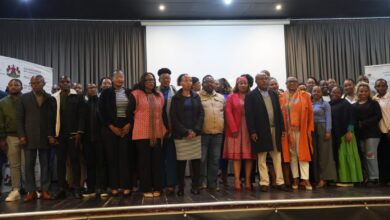
The International Women’s Peace Group (IWPG) has officially launched its Women’s Peace Leadership and Partnership Network in Lesotho, marking an important milestone in the country’s efforts to strengthen peacebuilding through women’s leadership and community collaboration. The launch took place on Monday during the Women’s Peace Leadership Forum in Maseru, where government representatives, civil society organisations and women leaders gathered to discuss strategies for promoting sustainable peace and national development. The initiative seeks to create stronger partnerships among women-led organisations while encouraging greater cooperation between communities, policymakers and development partners. It also reinforces the growing recognition that women play a critical role in conflict prevention, dialogue and community development. By establishing this network, IWPG aims to build a more coordinated and inclusive approach to peacebuilding that supports long-term stability across Lesotho.
Speaking during the forum, IWPG Southern Africa Regional Coordinator Ms. Faith Van Eyk emphasised that sustainable peace cannot be achieved through government action alone. She explained that lasting peace depends on meaningful collaboration between public institutions and grassroots communities working toward common goals. According to Ms. Van Eyk, local communities possess valuable knowledge and experience that should inform national peacebuilding strategies. She stressed that when governments, civil society and local leaders work together, they are better positioned to prevent conflict, strengthen social cohesion and address the root causes of instability. Her remarks highlighted the importance of ensuring that community voices remain central to peacebuilding efforts.
A key message presented during the forum was IWPG’s commitment to what it describes as a “two-track” approach to peacebuilding. This model combines legal and policy reforms at the national level with community-based initiatives led by women at the local level. While legislation and government policies provide institutional support for peace, sustainable change also requires active participation from families, schools and communities. Community-led programmes encourage dialogue, reconciliation and education that help prevent conflict before it escalates. By integrating national reforms with grassroots action, IWPG believes that societies can establish stronger foundations for lasting peace and inclusive development.
Ms. Van Eyk also highlighted the international reach and credibility of the organisation. She noted that IWPG holds consultative status with the United Nations Economic and Social Council (ECOSOC), allowing the organisation to contribute to global discussions on peace, human rights and sustainable development. Operating in 122 countries, IWPG serves as a bridge between local communities and international policy platforms, ensuring that experiences from the grassroots level help shape broader peacebuilding strategies. This international network allows member organisations to exchange knowledge, share successful initiatives and strengthen cooperation across borders. Such global partnerships also create opportunities for countries like Lesotho to benefit from international experience while showcasing their own peacebuilding achievements.
The forum further explored the importance of combining institutional support with peace education to build stronger and more resilient communities. Ms. Van Eyk explained that legislation alone cannot guarantee peaceful societies unless people also embrace values of dialogue, respect and cooperation within their daily lives. Peace education encourages individuals to resolve differences constructively while promoting understanding across communities. Families, schools and community organisations all have important roles in nurturing these values from an early age. By encouraging peaceful attitudes alongside supportive public policies, societies are better equipped to reduce conflict and strengthen social harmony.
Addressing delegates during the event, the Chairperson of Lesotho Women in Dialogue, Mrs. ‘Mats’epo Ramakoae, described the launch as an important recognition of the contribution women have made to peacebuilding for generations. She observed that women have traditionally served as mediators, caregivers and community leaders in villages throughout Lesotho, often resolving disputes before they developed into larger conflicts. Despite these longstanding contributions, their efforts have frequently gone unnoticed and lacked sufficient institutional support. Mrs. Ramakoae argued that formally recognising women’s role in peacebuilding creates new opportunities to strengthen community resilience and national development. Her remarks reinforced the importance of placing women at the centre of peace initiatives rather than treating them solely as beneficiaries.
Mrs. Ramakoae also encouraged women-led organisations to unite around a shared vision of peace and development while maintaining their individual missions and areas of expertise. She stressed that collaboration enables organisations to maximise resources, expand their reach and achieve greater collective impact. Rather than working in isolation, organisations can strengthen one another through partnerships, knowledge sharing and coordinated action. She further called for increased investment in women’s peacebuilding initiatives, noting that sustainable programmes require adequate financial and institutional support. Such investment, she explained, would allow women leaders to expand their work and deliver lasting benefits to communities across the country.
An important theme emerging from the forum was the close relationship between peace, environmental sustainability and economic wellbeing. Mrs. Ramakoae explained that communities cannot thrive economically without peaceful conditions that allow businesses, schools and public services to function effectively. She also noted that environmental stability contributes significantly to social harmony by supporting livelihoods, food security and access to natural resources. Where communities experience instability or environmental pressures, economic development often becomes more difficult. Recognising these connections encourages more comprehensive development strategies that address social, economic and environmental challenges together. This broader understanding reflects the growing view that sustainable development depends upon peaceful and resilient communities.
IWPG Lesotho Founding Member Mrs. Malineo Mots’epe shared the organisation’s progress since introducing the peace movement to Lesotho in 2019. She explained that IWPG has expanded its activities to all 10 districts of the country, demonstrating growing public interest in community-based peacebuilding. The organisation continues to promote peace through outreach programmes, leadership training and educational activities designed to encourage dialogue and understanding. Among its notable initiatives are children’s peace art competitions, which help introduce young people to the values of cooperation, respect and peaceful conflict resolution from an early age. By engaging both adults and children, IWPG seeks to cultivate a lasting culture of peace that can benefit future generations.
Mrs. Mots’epe also highlighted the strong partnerships that have supported IWPG’s growth in Lesotho. She noted that the organisation enjoys the support of Her Majesty Queen ‘Masenate Mohato Seeiso, whose involvement has helped raise awareness of the importance of peacebuilding initiatives. In addition, IWPG maintains close relationships with its headquarters in the Republic of Korea as well as other regional peace networks. These partnerships provide opportunities for knowledge exchange, capacity building and collaboration on international peace initiatives. Such support strengthens the organisation’s ability to implement meaningful programmes while connecting Lesotho to wider global peacebuilding efforts.
The Women’s Peace Leadership Forum concluded with a strong call for women, civil society organisations and development partners to deepen their collaboration in advancing peace, dialogue and sustainable development throughout Lesotho. The launch of the IWPG Women’s Peace Leadership and Partnership Network represents more than the creation of a new organisation. It establishes a platform that brings together women leaders, communities and institutions to work toward shared national goals. By promoting cooperation, leadership development, peace education and stronger partnerships, the initiative aims to strengthen both local communities and national development efforts. As IWPG continues expanding its work across Lesotho, the network has the potential to empower women, encourage inclusive dialogue and contribute meaningfully to building a more peaceful, resilient and prosperous future for the country.
Join 'Lesotho News' WhatsApp Channel
Get breaking Lesotho news — delivered directly to your WhatsApp.
CLICK HERE TO JOIN