Lesotho Urges Calm as Minister Thabo Mofosi Explains El Niño Outlook for the 2026/2027 Rainy Season

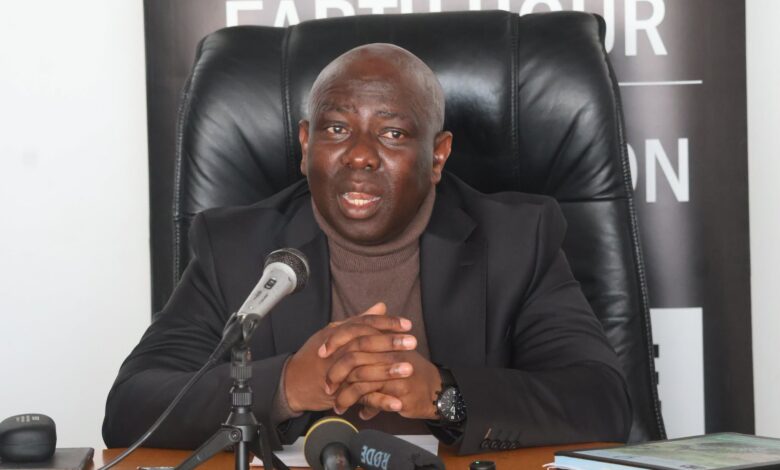
The Government of Lesotho has urged the public to remain calm following forecasts related to the upcoming 2026/2027 rainy season, emphasizing that the presence of El Niño does not automatically mean the country will experience drought. Speaking during a media briefing in Maseru, the Minister of Environment and Forestry, Hon. Thabo Mofosi, explained that weather patterns are influenced by several interconnected factors rather than a single climate event. He stressed that while El Niño can increase the likelihood of below-normal rainfall, it should not be interpreted as a guarantee that drought conditions will occur. The Minister encouraged Basotho to rely on scientific information and official weather updates instead of speculation or rumours. His message was intended to reassure communities while highlighting the importance of preparedness and informed decision-making.
During the briefing, Hon. Mofosi explained that El Niño is only one element in a much larger global climate system. According to the Minister, rainfall patterns over Lesotho are also influenced by the conditions of the Indian Ocean and the Atlantic Ocean, global atmospheric circulation and the strength, timing and duration of El Niño itself. These interacting climate systems determine whether rainfall will increase, decrease or remain close to seasonal averages. Because these factors constantly change, forecasting seasonal rainfall involves careful scientific analysis rather than simple assumptions. As a result, the current seasonal outlook represents a probability rather than a definite prediction of what will happen during the rainy season.
The Minister used historical examples to demonstrate why people should avoid assuming that every El Niño event leads to severe drought. He noted that the powerful El Niño events of 1991/92 and 2015/16 resulted in significant drought conditions across Lesotho, affecting agriculture, water supplies and livelihoods. However, he also pointed out that other El Niño years, including 1987/88, 2006/07 and 2018/19, produced normal or even above-normal rainfall in parts of the country. These examples illustrate that the relationship between El Niño and rainfall is not always straightforward. Hon. Mofosi emphasized that while forecasts currently indicate a high probability of below-normal rainfall for the 2026/2027 season, they do not confirm that Lesotho will experience a drought.
Recognizing the uncertainty associated with seasonal weather forecasting, the Ministry of Environment and Forestry is continuing to monitor developments closely. Hon. Mofosi said the Ministry is working alongside the Department of Meteorology to observe El Niño conditions and other meteorological indicators throughout the season. This ongoing monitoring will enable authorities to provide updated information if weather conditions change. The Government intends to keep citizens informed through official weather forecasts and public announcements as new scientific data becomes available. Regular communication is expected to help communities make informed decisions while reducing unnecessary concern caused by misinformation.
The Government is also taking practical steps to strengthen national preparedness for any possible weather-related challenges. Hon. Mofosi said efforts are already underway to improve disaster preparedness and response systems across the country. Authorities are promoting climate-resilient agricultural practices that can help farmers adapt to changing weather conditions while protecting food production. Additional initiatives include encouraging water harvesting, improving water conservation and strengthening partnerships with organizations responsible for disaster management and public nutrition. These proactive measures aim to reduce the potential impact of below-normal rainfall should it occur during the coming season.
Farmers remain at the center of the Government’s preparedness strategy because agriculture is highly dependent on seasonal rainfall. Hon. Mofosi encouraged farmers to adopt drought-tolerant crop varieties that are better suited to uncertain weather conditions. He also promoted environmentally friendly farming methods, efficient irrigation systems that reduce water consumption and greenhouse farming to improve crop resilience. These agricultural practices can help maintain productivity even when rainfall becomes less predictable. By embracing climate-smart farming techniques, producers can improve food security while reducing the risks associated with changing climate conditions.
The Minister also appealed to households, businesses and local authorities to make planning decisions based on verified weather information rather than rumours circulating on social media or through informal channels. Reliable forecasts from the Department of Meteorology provide the most accurate information available and are continuously updated as conditions evolve. Making decisions based on scientific evidence allows communities to prepare appropriately without creating unnecessary panic. Hon. Mofosi emphasized that cooperation between government institutions, local communities and the private sector will play an important role in strengthening national resilience. Responsible communication and public awareness are therefore essential components of effective disaster risk management.
Hon. Thabo Mofosi concluded by reaffirming the Government of Lesotho’s commitment to protecting lives, livelihoods and the natural environment through science-based decision making and early preparedness measures. He assured the public that authorities will continue monitoring weather conditions and will provide timely updates whenever necessary. While the current outlook suggests an increased chance of below-normal rainfall, the Government remains focused on preparation rather than alarm. Through improved disaster readiness, climate-resilient agriculture, water conservation and ongoing public communication, Lesotho aims to strengthen its ability to respond to changing climate conditions. The Minister’s message serves as a reminder that informed planning, cooperation and reliance on scientific evidence are the most effective ways to face the uncertainties of the 2026/2027 rainy season.
Join 'Lesotho News' WhatsApp Channel
Get breaking Lesotho news — delivered directly to your WhatsApp.
CLICK HERE TO JOIN