NUL Court Dispute Over Vice Chancellor Recruitment Raises Governance and Legal Questions

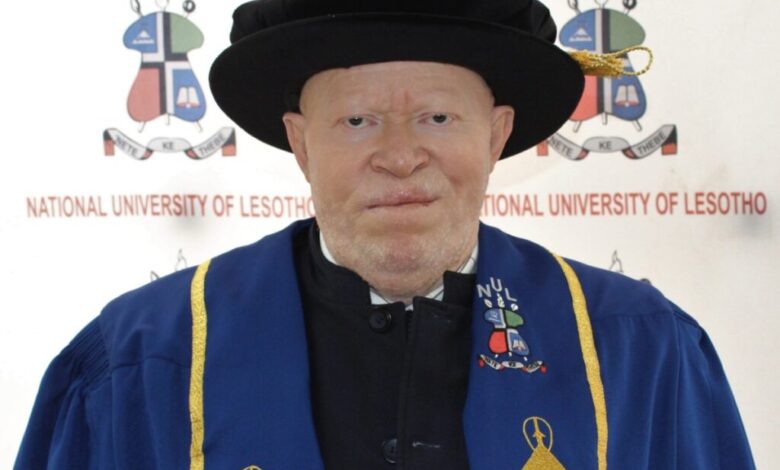
The National University of Lesotho (NUL) has entered a complex legal battle that has placed its leadership structure under intense public scrutiny. The university has filed an application in which it seeks the recusal of all High Court judges from a case involving its Pro-Vice Chancellor and President of the Appeal Court, Professor Kananelo Mosito. The dispute centres on the recruitment process for a new Vice Chancellor, a process that Professor Mosito is actively challenging in court. The matter has quickly escalated into a governance and legal standoff that raises questions about authority, procedure, and institutional stability. At the centre of the case is whether the university acted lawfully when it advertised a senior leadership position.
Advocate Mamello Makau is representing the National University of Lesotho in this matter, while Professor Mosito is represented by Advocate Dominic Metlae. The legal clash follows a series of actions that began after the university council suspended Professor Mosito, citing conduct that allegedly undermined its authority. The suspension has added another layer of tension to an already sensitive leadership dispute within the institution. The case is still pending before the court, but the positions taken by both sides show deep disagreement on how university governance should function. The legal representation on both sides highlights the seriousness of the matter and the potential implications for institutional leadership at NUL.
At the centre of the dispute is the recruitment process for a new Vice Chancellor. The current Vice Chancellor, Professor Olusola Fajana, is expected to leave office in August after confirming that he will not seek a contract renewal. The position was officially advertised on April 10, which triggered objections from Professor Mosito. He argues that advertising the post while the substantive Vice Chancellor is still in office is both unlawful and premature. His position is that the vacancy has not yet formally occurred and therefore recruitment cannot legally proceed at this stage.
Professor Mosito further argues that, according to his interpretation of Section 16 (2) of the NUL Act, the university can only advertise the position once a vacancy exists. He maintains that the council has acted outside its legal powers by initiating the recruitment process early. He also claims that the process threatens his own role within the university structure, as he believes he is entitled to act as Vice Chancellor once Professor Fajana leaves office. As the third most senior official at the institution, he argues that established procedures support his claim to act in an interim capacity. His legal challenge therefore focuses not only on timing but also on succession rights within the university hierarchy.
The university council has defended its actions and strongly opposed the claims made by Professor Mosito. The council issued a statement on April 17 addressing the matter and raising concerns about alleged threats directed at one of its members. According to the council, Professor Vinodh Jaichand, who resides in South Africa and serves on the Joint Committee of Council and Senate responsible for overseeing the recruitment process, received anonymous threats. These threats allegedly included warnings to withdraw from the committee or face reputational harm and even death. The seriousness of these allegations has led to involvement from South African authorities, with the matter also reported to legal representatives.
The council has condemned these threats in strong terms, emphasising that its members serve in voluntary capacities to support the university’s governance and development. It stressed that intimidation or harm directed at council members is unacceptable and undermines the integrity of institutional processes. As a result, the council instructed NUL management to open a police case to ensure the matter is fully investigated. The Director of Information at NUL, Ms ᾽Mamosa Moteete, confirmed that a case has been opened at Roma Police Station. This development adds a security dimension to what is already a highly sensitive governance dispute.
The broader situation reflects deeper tensions within university governance structures, particularly around authority, legal interpretation, and succession planning. The disagreement over whether the Vice Chancellor post can be advertised highlights differing views on how institutional rules should be applied. It also raises questions about how leadership transitions are managed in higher education institutions. The involvement of senior legal and academic figures shows how institutional disputes can quickly evolve into complex legal challenges. The outcome of the case may have long term implications for governance practices at NUL.
The dispute at the National University of Lesotho over the recruitment of a new Vice Chancellor represents a significant legal and governance challenge for the institution. The case involves serious questions about procedure, authority, and compliance with university law. With Professor Mosito contesting the timing and legality of the recruitment process, and the university defending its actions while addressing allegations of threats, the matter has reached a critical point. The court’s decision will likely influence not only the leadership structure at NUL but also how similar institutions manage executive transitions in the future. As the case unfolds, it remains a key issue for higher education governance in Lesotho.
Join 'Lesotho News' WhatsApp Channel
Get breaking Lesotho news — delivered directly to your WhatsApp.
CLICK HERE TO JOIN