Lesotho Pushes Sustainable Transport Through MaZero Project to Cut Carbon Emissions

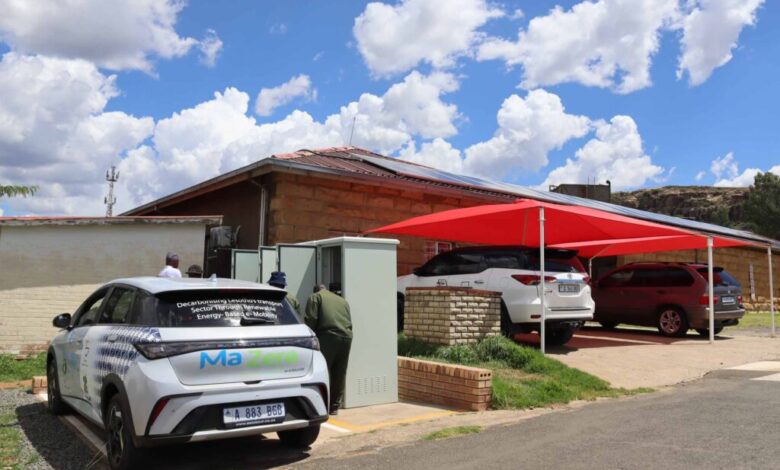
Lesotho is taking a structured step toward cleaner transport systems through the MaZero project, a national initiative focused on sustainable mobility and reducing carbon emissions. The project is being advanced through a workshop held in Maseru by the Lesotho Council of NGOs in collaboration with key stakeholders. It targets one of the fastest growing sources of pollution in the country, the transport sector, which still relies heavily on petrol and diesel vehicles. With climate change already affecting agriculture, water systems, and livelihoods, the shift toward electric mobility is being treated as urgent. The MaZero project is designed to test and promote renewable energy based transport solutions that can support long term environmental resilience.
The MaZero project is implemented by the National University of Lesotho Energy Research Centre under the theme “Piloting renewable energy-based e-Mobility in Maseru to decarbonize the transport sector.” This approach focuses on introducing electric mobility as a practical alternative to fossil fuel transport. Stakeholders involved in the workshop highlighted that environmental pressures in Lesotho are increasing due to rising vehicle emissions. Ms Sebabatso Ntlamelle from the Lesotho Council of NGOs noted that the growing dependence on petrol powered transport is placing serious strain on the environment. She explained that climate change is no longer a distant issue but a present reality affecting communities across the country.
Climate change impacts in Lesotho are already visible and worsening over time. Rising temperatures, irregular rainfall patterns, and frequent droughts are reducing agricultural productivity and threatening food security. These challenges are especially severe for rural communities that depend on subsistence farming for survival. Land degradation and soil erosion are also increasing, reducing the amount of usable agricultural land. Ms Ntlamelle stressed that these environmental changes are not only ecological concerns but also economic and social threats that deepen poverty levels in vulnerable areas. She warned that without immediate action, the situation could become significantly worse in the coming years.
The MaZero project is being positioned as a forward looking solution that encourages a shift toward low emission transport systems. It promotes awareness about electric mobility and supports the transition away from fossil fuel dependence. Ms Ntlamelle explained that such initiatives are important for reducing emissions and protecting the environment. She added that they also contribute to building a climate resilient future for Lesotho. The project is not only about technology but also about changing how communities and institutions think about transport and energy use. This includes promoting cleaner alternatives that align with global environmental goals.
Policy support plays a major role in strengthening the push toward sustainable transport. Mrs ᾽Mantopi Lebofo, Executive Director of Technologies for Economic Development, highlighted that national frameworks already support this transition. The Lesotho Transport Policy 2014 and the Nationally Determined Contributions 2021 both promote energy efficiency in the transport sector through targeted investments and regulations. The National Climate Policy of 2017 also supports low carbon and climate resilient transport systems. These policies collectively aim to reduce emissions while improving transport efficiency across the country.
The transport sector in Lesotho has shown steady growth, with an estimated annual increase of about 2.5 percent between 2000 and 2009. This growth has contributed to rising greenhouse gas emissions, making transport a key area for climate intervention. Mrs Lebofo explained that policy frameworks encourage the adoption of fuel efficient vehicles and improved emissions standards. They also promote the use of green technologies that can reduce environmental impact. These efforts are designed to ensure that transport development does not come at the cost of environmental sustainability.
The MaZero initiative also focuses on collaboration and knowledge sharing among stakeholders. It creates opportunities for experts, policymakers, and institutions to connect and develop joint solutions for e mobility development. Networking is seen as an important part of building capacity and accelerating innovation in the sector. Through shared learning, stakeholders can better understand challenges and identify practical solutions for implementation. This collaborative model is intended to support long term progress in sustainable transport systems.
From a technical perspective, Mr Moruti Kao from the National University of Lesotho Energy Research Centre explained the basics of e mobility systems. Electric mobility involves the use of electric vehicles to transport people and goods while reducing harmful emissions. He described different types of electric vehicles, including hybrid electric vehicles, plug in hybrid electric vehicles, and battery electric vehicles. Each type has different energy systems, ranging from combined fuel and electricity use to fully electric operation. These technologies offer flexible options for transitioning away from fossil fuels.
Mr Kao also explained key components of electric vehicles, such as batteries, charge ports, and DC converters. The battery provides energy to power the vehicle, while the charge port connects it to external power sources. The DC converter regulates electricity to ensure it is usable by the vehicle’s internal systems. Charging technologies vary from slow to ultra fast systems depending on energy delivery speed. These systems are essential for building a reliable electric mobility network that supports everyday transport needs.
Despite progress, e mobility in Lesotho remains in its early stages. Mr Kao noted that the country currently has only a small number of electric vehicles and limited charging infrastructure. Existing charging stations are located in Roma and at the Institute of Extra Mural Studies in Maseru. This shows that development is still at an initial phase, with significant expansion needed to support wider adoption. Infrastructure development will be critical for scaling up electric transport solutions across the country.
The MaZero project represents an important step in Lesotho’s journey toward sustainable transport and reduced carbon emissions. It brings together policy, research, and community engagement to promote electric mobility as a long term solution. While challenges such as limited infrastructure and funding remain, the initiative demonstrates strong commitment to environmental protection and climate resilience. With continued collaboration between government, researchers, and communities, Lesotho has the potential to gradually transform its transport sector. The success of this transition will depend on sustained investment, awareness, and practical implementation of clean energy technologies.
Join 'Lesotho News' WhatsApp Channel
Get breaking Lesotho news — delivered directly to your WhatsApp.
CLICK HERE TO JOIN