WHO Supports Lesotho in Strengthening Queen ’Mamohato Memorial Hospital Governance and Healthcare Services

The World Health Organization (WHO) is supporting Lesotho’s efforts to improve the governance, management and long-term sustainability of Queen ’Mamohato Memorial Hospital (QMMH), the country’s national referral hospital. A scoping mission led by health experts from the WHO Regional Office for Africa is currently in Lesotho to assist the Ministry of Health in assessing the hospital’s challenges and identifying practical opportunities for improvement. The mission comes at an important time as the government seeks to strengthen the national health system, improve the quality of healthcare and ensure that patients receive efficient and reliable medical services. The assessment will examine key areas affecting the hospital’s performance, including leadership, accountability, financing, staffing and the coordination of patient referrals. Its findings are expected to inform recommendations that can help place QMMH on a stronger operational footing and support better health outcomes for people across Lesotho.
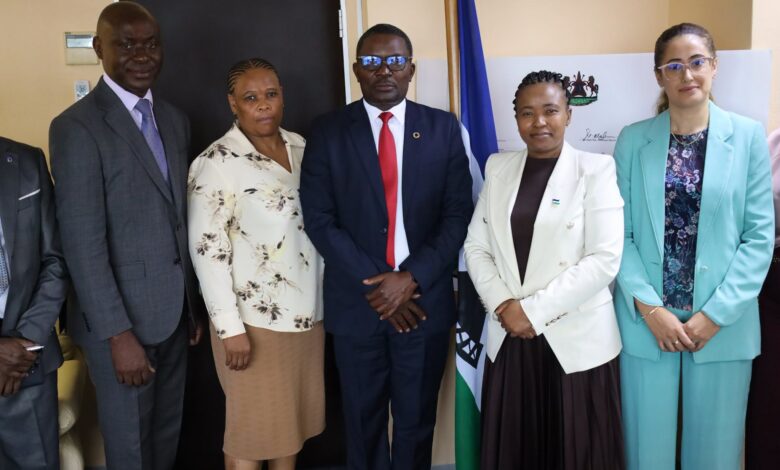
The mission began with briefing sessions led by Dr Innocent Nuwagira, the WHO Representative to Lesotho, who facilitated meetings with the Minister of Health, Honourable ’Mamokete Ntšekhe, and her senior management team. The discussions provided an opportunity to review the challenges facing Queen ’Mamohato Memorial Hospital and clarify the objectives of the WHO technical support mission. They also allowed government officials and health experts to discuss the government’s vision for the hospital’s future and the changes needed to improve its performance. Establishing a shared understanding of the hospital’s difficulties is an important step towards developing realistic recommendations that reflect the needs of patients, healthcare workers and the wider health system. The engagement also highlights the importance of cooperation between the Ministry of Health and international health partners when addressing complex healthcare management issues.
Minister of Health Honourable ’Mamokete Ntšekhe welcomed WHO’s continued technical assistance and expressed appreciation for the timing of the mission. She emphasised that the support would contribute to the government’s efforts to strengthen Lesotho’s health system and improve the quality and efficiency of healthcare services. “We are grateful to WHO for the timely technical assistance provided to the Ministry. This support comes at a critical moment as we work to strengthen our health system and improve the quality and efficiency of health services for all Basotho,” she said. Her remarks reflect the government’s recognition that effective hospital management is essential to delivering dependable healthcare services. The planned restructuring of Queen ’Mamohato Memorial Hospital is part of a broader effort to address institutional challenges and improve the way health services are organised and delivered.
Queen ’Mamohato Memorial Hospital plays an important role in Lesotho’s healthcare system because it serves as the national referral hospital for patients who need specialised medical attention. Referral hospitals manage complex cases that may require advanced diagnostic services, specialist doctors, specialised equipment and coordinated treatment. Their performance can affect the entire health system because district hospitals and other healthcare facilities depend on effective referral arrangements when patients need more advanced care. Challenges in hospital management, staffing, financing or service coordination can therefore create difficulties for patients and healthcare workers beyond the hospital itself. Strengthening QMMH’s governance and operations could help improve coordination between different levels of healthcare and support more consistent access to specialised treatment.
One of the main areas under review is hospital governance and accountability. Strong governance establishes clear leadership responsibilities, decision-making processes and systems for monitoring performance. These arrangements help ensure that hospital resources are used appropriately, operational problems receive timely attention and management decisions support patient care. Accountability is equally important because healthcare institutions need transparent processes for assessing results, addressing weaknesses and ensuring that staff and managers fulfil their responsibilities. By examining these areas, the WHO scoping mission can help identify opportunities to strengthen oversight and improve the hospital’s ability to meet its responsibilities within the national health system.
The mission will also examine organisational effectiveness, which is closely linked to how hospital departments coordinate their work and use available resources. A well-organised hospital needs clear reporting structures, effective communication and practical procedures for managing daily operations. When responsibilities are unclear or coordination is weak, patients may experience delays and healthcare workers may struggle to provide services efficiently. Reviewing the hospital’s organisational arrangements can help identify where changes might improve decision-making, reduce administrative barriers and strengthen cooperation between clinical and support departments. Any proposed reforms will need to reflect the hospital’s actual operating conditions and protect the delivery of essential medical services during the improvement process.
Hospital financing is another important issue expected to feature in the assessment. National referral hospitals require substantial resources to maintain buildings, purchase medicines, operate medical equipment, pay staff and provide specialised treatment. Financial pressures can affect the availability of essential supplies and the ability of healthcare teams to deliver services consistently. A review of financing arrangements can help identify how funds are allocated, how expenditure is monitored and whether current systems support the hospital’s main priorities. Improving financial management does not simply mean reducing costs, as it also involves directing available resources towards activities that deliver the greatest benefit to patients while maintaining appropriate standards of care.
Human resources will also be a central consideration during the mission. Hospitals depend on qualified doctors, nurses, pharmacists, laboratory professionals, technicians, administrators and other workers to function effectively. Staffing levels, professional skills, working conditions and staff retention can all influence the quality and availability of medical services. An assessment of human resource arrangements could help identify workforce gaps, training needs and opportunities to improve staff deployment. Addressing these issues is essential to supporting healthcare workers and ensuring that patients can access the right care at the right time.
The assessment will further consider referral systems, which connect patients with the appropriate level of medical care. In Lesotho, effective coordination between primary healthcare facilities, district hospitals and Queen ’Mamohato Memorial Hospital is important for ensuring that patients receive timely treatment. Referral systems need clear procedures for transferring patients, sharing medical information and coordinating follow-up care. When these processes work well, healthcare providers can make better use of available services and reduce unnecessary delays. Strengthening referral arrangements could also help QMMH manage patient demand more effectively by improving coordination across the national health system.
As part of the scoping mission, WHO experts will engage with QMMH management and staff to understand the hospital’s operational realities. These consultations are important because healthcare workers experience daily challenges that may not be fully reflected in administrative reports or formal performance assessments. Staff can provide practical information about service pressures, resource shortages, workflow problems and opportunities to improve patient care. Listening to different professional groups can also help ensure that proposed changes are realistic and responsive to the needs of those responsible for implementing them. Including hospital personnel in the assessment may support stronger cooperation and help build confidence in any future restructuring process.
The mission will also include consultations with the Social Cluster of Parliament and frontline health workers. Engagement with parliamentary representatives can help bring attention to the wider policy and oversight issues affecting the national referral hospital. Frontline health workers, meanwhile, can offer valuable insights into how hospital performance and referral arrangements affect patients at different levels of care. Combining these perspectives can help the assessment consider both institutional management and the practical experience of delivering healthcare services. Broad consultation is particularly important when reforms may affect staffing arrangements, financial priorities, clinical services and the responsibilities of different health institutions.
A tour of Queen ’Mamohato Memorial Hospital will provide the WHO team with an opportunity to observe operational conditions directly. Such a visit can help experts understand how services function, how departments interact and where operational difficulties may arise. Direct observation can complement discussions with management and staff by providing additional context about infrastructure, patient movement, service delivery and the use of available facilities. The tour may also help identify existing strengths that could support future improvements. By combining consultations with firsthand observations, the mission aims to develop a more complete understanding of the hospital’s current situation.
The long-term sustainability of QMMH is another important focus of the assessment. Sustainability involves ensuring that the hospital can continue delivering essential services while managing financial, staffing and operational demands. It also requires planning for future healthcare needs, maintaining infrastructure and ensuring that management arrangements can adapt to changing circumstances. Recommendations that address immediate challenges must therefore be considered alongside the hospital’s long-term role within Lesotho’s health system. A sustainable approach would aim to improve service quality and operational efficiency without undermining access to essential treatment for patients who depend on the national referral hospital.
Patient-centred healthcare will remain an important consideration in efforts to strengthen hospital management. Patients need timely access to treatment, clear communication from healthcare providers, appropriate medical care and respectful treatment throughout their hospital experience. Improvements in governance and administration can contribute to these outcomes when they help reduce delays, improve coordination and ensure that resources reach the services where they are most needed. However, institutional restructuring must also account for the experiences of vulnerable patients and people who face barriers to accessing healthcare. The ultimate measure of progress will be whether changes improve the availability, quality and reliability of services for Basotho.
The WHO scoping mission represents an important step in supporting the Ministry of Health as it considers the future direction of Queen ’Mamohato Memorial Hospital. The findings will inform recommendations aimed at strengthening governance, improving accountability, enhancing service delivery and supporting the long-term sustainability of the institution. The mission itself does not establish that specific reforms have already been approved or implemented, as its purpose is to assess current conditions and identify appropriate actions. The effectiveness of any recommendations will depend on subsequent government decisions, available resources and the ability of relevant stakeholders to carry out agreed changes. Continued collaboration between WHO, the Ministry of Health, hospital leadership, healthcare workers and other stakeholders will be important as the process develops.
WHO’s engagement also reflects its broader commitment to helping Lesotho strengthen its health system and advance access to quality healthcare for all Basotho. Improving the performance of the national referral hospital can support progress across the wider health system because specialised services depend on effective coordination, reliable resources and strong institutional management. The scoping mission provides an opportunity to identify practical solutions based on the hospital’s needs and the government’s priorities. By focusing on governance, financing, human resources, referral systems and operational effectiveness, the assessment can help establish a foundation for informed decisions about QMMH’s future. Sustained commitment to implementing appropriate reforms will be essential to translating this technical support into meaningful improvements in healthcare delivery, hospital performance and patient outcomes throughout Lesotho.
Join 'Lesotho News' WhatsApp Channel
Get breaking Lesotho news — delivered directly to your WhatsApp.
CLICK HERE TO JOIN