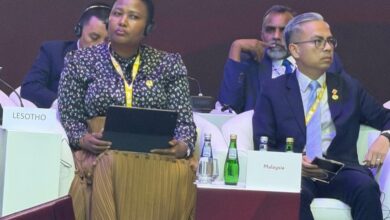
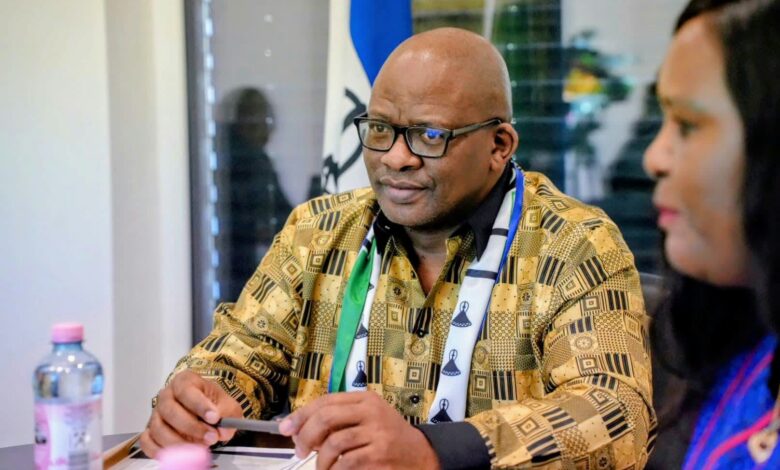
Lesotho is preparing to use the Berlin Global Dialogue 2026 to strengthen international partnerships, attract investment and advance its economic development priorities. The Minister of Foreign Affairs and International Relations, Honourable Limpho Tau, outlined the country’s key objectives during an interview in Berlin, Germany, today. He highlighted the need for African countries to reduce their dependence on external assistance, build stronger economic partnerships and develop strategies that support long-term self-reliance. The discussions are expected to provide Lesotho with an opportunity to engage with international partners on issues affecting economic growth, climate change and investment. Through its participation, the Government of Lesotho aims to strengthen strategic alliances that can create practical opportunities for Basotho and support the country’s development goals.
Honourable Tau emphasised the importance of the Berlin Global Dialogue at a time when many African countries face economic and development challenges. He noted that Africa has historically relied heavily on assistance from other continents, while official development assistance has declined significantly. This reduction presents additional challenges for countries that depend on external funding to support development programmes, strengthen public services and improve economic opportunities. According to the Minister, the Dialogue provides a platform to explore alternative approaches that can help African nations respond to these pressures. He stressed the importance of developing partnerships that encourage greater self-reliance and allow African countries to take a more active role in shaping their economic futures.
The focus on stronger partnerships aligns with the 2026 Berlin Global Dialogue theme, “Advancing Alliances for the New Era.” The theme reflects the importance of international cooperation as countries respond to changing economic conditions, political developments and shared global challenges. For Lesotho, building effective alliances means identifying partners who can contribute to sustainable development through investment, trade, technology and knowledge exchange. Such cooperation can help the country expand its economic base and create opportunities beyond traditional sources of development assistance. Honourable Tau’s remarks highlight the Government’s interest in partnerships that deliver tangible benefits while supporting Lesotho’s long-term economic independence.
Climate-induced mobility is another important issue that Lesotho intends to raise during the Dialogue. Honourable Tau explained that environmental challenges, including soil erosion and drought, are influencing settlement patterns in the country. These pressures can affect agricultural productivity, household livelihoods and the ability of communities to remain in their traditional homes. As conditions become more difficult, some people move to nearby towns and villages in search of better opportunities and a fresh start. The Minister’s comments highlight the connection between environmental pressures, population movement and the need for development strategies that respond to the changing needs of communities.
For Lesotho, addressing climate-induced mobility requires attention to both environmental protection and economic opportunity. Soil erosion can reduce the quality of agricultural land, while drought can place pressure on water supplies, crop production and livestock farming. These challenges can make it harder for rural households to maintain their livelihoods, particularly where farming remains an important source of income. Movement to other settlements may offer access to employment, services and alternative livelihoods, but it can also increase pressure on housing, infrastructure and local resources. Discussions at the Berlin Global Dialogue could therefore help Lesotho explore partnerships that support climate resilience, sustainable agriculture and community development, although specific agreements or commitments would need to be confirmed separately.
The Minister also identified engagement with German businesses as a key priority for Lesotho’s participation in the Dialogue. He said the country intends to use the opportunity to connect with different sectors of the German economy, particularly textiles and agriculture. These industries are relevant to Lesotho’s efforts to expand economic activity, attract investment and create employment. Stronger business relationships could open opportunities for technology transfer, improved production methods, skills development and access to wider markets. By engaging directly with potential investors, Lesotho hopes to identify areas where international business cooperation can support domestic economic priorities and benefit Basotho.
The textile industry is an important area of interest because investment and international trade can help sustain manufacturing activity and employment. Engagement with German companies could allow Lesotho to explore opportunities for stronger commercial links, improved industrial capacity and greater participation in international supply chains. However, the benefits of new partnerships would depend on the nature of the investments, the jobs created and the extent to which local businesses and workers participate. Cooperation could also provide opportunities to improve production standards and develop skills that support the industry’s long-term competitiveness. Honourable Tau’s focus on the textile sector reflects the Government’s broader interest in attracting business partners who can contribute to sustainable economic growth.
Agriculture is another priority area, particularly as Lesotho faces environmental challenges that affect farming and rural livelihoods. Honourable Tau noted that a German company is already involved in the sugar beet sector in Lesotho. This existing business presence provides a starting point for further engagement between the two countries, although the details and scale of the company’s activities were not specified in his remarks. Additional discussions with German agricultural businesses could help identify opportunities in production, processing, agricultural technology and investment. Such cooperation could support efforts to strengthen agricultural productivity, diversify rural economic activity and create new opportunities for local communities.
The Government’s interest in German business engagement also reflects the importance of building relationships that extend beyond individual projects. Sustainable investment can contribute to economic development when it supports local employment, strengthens domestic capabilities and creates lasting commercial links. For Lesotho, this means exploring partnerships that match the country’s development needs with the expertise, capital and market access that international companies may offer. Continued engagement can help establish a clearer understanding of investment conditions, business opportunities and areas where cooperation could produce mutual benefits. The Berlin Global Dialogue provides a setting for these discussions, while any resulting investments or agreements would depend on subsequent negotiations and decisions by the parties involved.
Honourable Tau further emphasised the Government of Lesotho’s commitment to building new strategic alliances in response to changing trends in global politics. International relations are increasingly shaped by shifts in economic power, trade priorities, geopolitical interests and competition for investment. For a country such as Lesotho, maintaining constructive relationships with international partners is important for protecting economic interests and identifying new avenues for development. Stronger cooperation can help the country diversify its partnerships rather than rely too heavily on a limited number of external sources of support. The Minister’s remarks indicate that Lesotho wants to engage proactively with international developments and pursue partnerships that reflect its national priorities.
Strategic alliances can contribute to Lesotho’s development in several ways, including by encouraging trade, supporting private-sector investment and creating opportunities for skills and technology exchange. They can also provide a framework for cooperation on shared concerns such as climate change, food security and sustainable economic development. However, the long-term value of these relationships depends on clear objectives, practical implementation and benefits that reach businesses, workers and communities in Lesotho. This makes continued engagement between government institutions, private companies and international partners important. The Government’s stated approach places economic opportunity and international cooperation at the centre of its efforts to respond to emerging global challenges.
The Berlin Global Dialogue 2026 therefore represents an opportunity for Lesotho to advance several connected priorities, from reducing dependence on external assistance to strengthening climate resilience and expanding business relationships with Germany. Honourable Limpho Tau’s remarks highlight the need for African countries to develop more sustainable economic partnerships as development financing changes and environmental pressures increase. His focus on textiles, agriculture and climate-induced mobility also demonstrates the range of issues that shape Lesotho’s development agenda. Although the outcomes of the Dialogue will depend on the discussions and agreements that follow, the country’s participation provides a platform to present its priorities and explore areas of mutual interest with international partners. By pursuing strategic alliances that support investment, resilience and self-reliance, Lesotho aims to create new opportunities for Basotho and advance its long-term economic development goals.
Join 'Lesotho News' WhatsApp Channel
Get breaking Lesotho news — delivered directly to your WhatsApp.
CLICK HERE TO JOIN