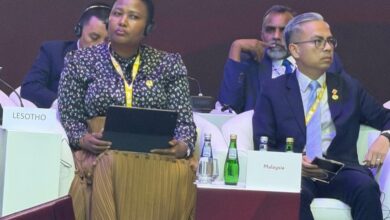
Lesotho Becomes First Country to Apply UN AI Blueprint as Prime Minister Matekane Sets Out Digital and Global Priorities

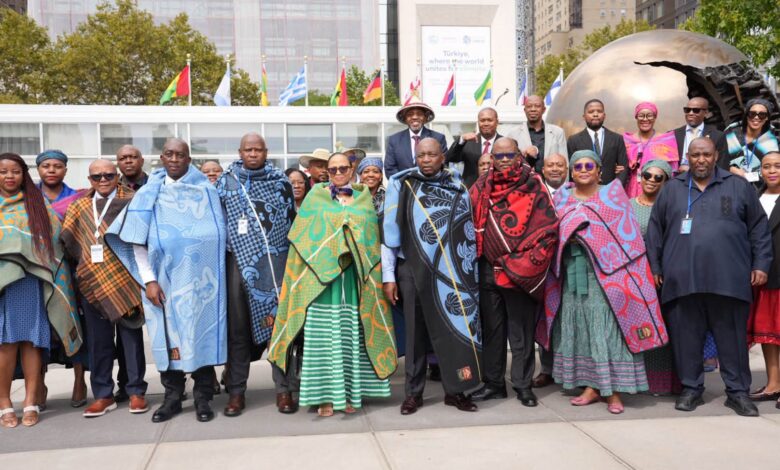
Lesotho has placed artificial intelligence at the center of its development agenda after Prime Minister Sam Matekane announced that the country has become the first nation to apply the United Nations Blueprint for National AI and Data Strategies. The announcement came during the 81st United Nations General Assembly period in New York, where Matekane presented Lesotho’s experience of moving from AI planning toward practical implementation. The United Nations has described Lesotho as the first country to apply the Blueprint, following an implementation-focused process held in Maseru in August 2026. The development gives the Mountain Kingdom an early role in testing a framework designed to help countries build realistic national AI strategies around infrastructure, data, skills, financing and institutional capacity. Matekane’s message was clear: Lesotho wants artificial intelligence to support national development while taking account of the country’s actual resources and needs.
Lesotho did not begin its AI journey from scratch. The government had already developed three digital policies covering areas including artificial intelligence, data management and broadband and shared infrastructure. It also had an operational government data centre and a designated Chief Digital Office, giving the country an existing institutional base for digital transformation. The UN Blueprint process was intended to build on that foundation by identifying what Lesotho needs to develop its computing capacity, data systems, digital infrastructure and human skills. Matekane has emphasized that having a data centre does not automatically mean a country is ready for artificial intelligence. The bigger challenge involves creating the right combination of computing power, reliable infrastructure, skilled people, sound governance and sustainable financing.
The UN AI Blueprint is significant because it focuses on turning national ambitions into practical decisions. For Lesotho, that means examining demand for computing resources before making major investments in new infrastructure. The process considers factors such as energy availability, water requirements, connectivity, data governance, skills development and financing. These issues matter particularly for a country such as Lesotho, where infrastructure and financial resources must be carefully matched with development priorities. The government has now moved into Phase One of a National Compute Roadmap covering 2026 to 2029, with the stated aim of developing lasting national capability rather than simply adopting technology without a clear purpose.
Matekane has also linked Lesotho’s AI ambitions directly to the lives of ordinary Basotho. He has said that investments in technology should produce practical benefits in areas such as agriculture, healthcare, education, water management and public services. That approach places public value at the center of the country’s digital transformation plans. Artificial intelligence could eventually support farmers with information, improve access to health services, assist teachers and students, strengthen public administration and help governments use data more effectively. The government’s challenge will be to translate these ambitions into affordable systems that work reliably across both urban and rural communities.
The Prime Minister’s message at the United Nations also extended beyond technology. Matekane has continued to call for permanent African representation on the UN Security Council, arguing that Africa’s absence from the permanent membership structure is unjustifiable. He has also highlighted Lesotho’s recent efforts to strengthen peace and political stability with support from regional and international institutions, including the African Union and the Southern African Development Community. On international conflicts, he has expressed support for an immediate ceasefire in Gaza and a two-state solution for Israelis and Palestinians. He has also maintained Lesotho’s position calling for the lifting of sanctions affecting Cuba and Zimbabwe. These positions place Lesotho within wider African and developing-country debates about reform of global institutions, international security and economic restrictions.
Climate change and energy formed another important part of Lesotho’s international message. The country faces particular exposure to climate-related pressures because its economy and communities depend heavily on natural resources, agriculture and water systems. Matekane has argued that developed countries must meet their climate commitments and provide meaningful support to countries facing the effects of a crisis they contributed relatively little to creating. Lesotho also wants to expand the economic value of its renewable resources, particularly water, wind and solar energy. King Letsie III has promoted a broader vision in which Lesotho uses its natural resources to strengthen energy security, support economic development and create opportunities for investment.
Lesotho’s renewable energy ambitions are closely connected to its geography. The country’s mountainous terrain and water resources provide opportunities for hydropower, while its highland conditions also offer potential for wind and solar generation. The government has increasingly presented water, wind and sunlight as strategic national resources that could support a cleaner energy economy. Expanding domestic electricity generation could also reduce the country’s vulnerability to energy shortages and create conditions for new digital and industrial projects. However, turning this potential into large-scale production will require investment, technical expertise, infrastructure and careful management of environmental and social impacts.
The AI initiative also illustrates why international partnerships remain important for Lesotho. The United Nations process brought together expertise from several parts of the UN system while allowing the Lesotho government to identify its own national priorities. Matekane has stressed that international cooperation should strengthen national ownership rather than replace it. For a country with limited financial and technical resources, partnerships can help provide expertise, financing and access to technologies that would otherwise be difficult to develop independently. The success of the programme will therefore depend not only on the announcement of the AI Blueprint but also on whether Lesotho can secure the resources, skills and institutions required to carry out the roadmap.
The next stage will be particularly important because the distinction between an AI strategy and actual implementation matters. Lesotho now has a framework for identifying its computing needs and a roadmap for the first phase of national compute development. The government will need to demonstrate measurable progress while ensuring that technology investments remain financially sustainable and deliver tangible public benefits. It will also need to address issues such as data protection, cybersecurity, digital inclusion, workforce development and reliable access to electricity and connectivity. These practical questions will determine how far the country can move from being the first to apply the UN Blueprint to becoming a successful example of responsible AI development.
Lesotho’s role in the UN AI Blueprint process gives the Mountain Kingdom a distinctive place in the global conversation about artificial intelligence. Its approach is not based simply on acquiring the latest technology, but on assessing national needs and determining what infrastructure and capabilities can realistically be supported. Matekane has used the UN platform to connect that digital agenda with broader priorities involving peace, African representation, climate action, renewable energy and public development. The country remains small in population and economic size, but its participation in the UN’s emerging AI governance framework gives it an opportunity to contribute practical experience to a debate that affects countries of every size. The real measure of this initiative will come through implementation, particularly whether AI, digital infrastructure and clean energy investments improve services and economic opportunities for Basotho.
Join 'Lesotho News' WhatsApp Channel
Get breaking Lesotho news — delivered directly to your WhatsApp.
CLICK HERE TO JOIN