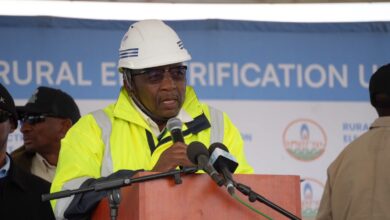
SACU Summit Pushes Regional Industrial Growth as Leaders Call for Deeper Economic Cooperation


The Southern African Customs Union summit has placed regional industrial development at the center of its agenda, with leaders focusing on how member states can respond to a fast-changing global economy. The discussions highlighted the need for stronger cooperation between countries to build resilient industries that can withstand external shocks. Leaders stressed that regional integration is no longer optional but necessary for long term economic stability. The summit also focused on expanding intra-African trade as a key driver of growth. This approach reflects growing concern about global trade uncertainty and shifting supply chains.
Opening the summit, South African President said SACU member states must work together to build stronger regional industries that can compete globally. He explained that no single African country can achieve meaningful prosperity in isolation, especially under current global economic pressures. Ramaphosa pointed to the Re-imagined SACU Agenda adopted in 2023 as a critical framework that is now even more relevant. He emphasized that the agenda supports coordinated industrial planning and shared economic goals. His message centered on unity, resilience and practical cooperation between member states.
Ramaphosa highlighted key sectors across SACU countries as building blocks for a regional industrial ecosystem. He cited Lesotho’s textile and apparel industry as a strategic strength that can be expanded through regional value chains. He also referenced Botswana’s diamond beneficiation potential, Namibia’s green hydrogen opportunities, Eswatini’s manufacturing capacity and South Africa’s automotive industry. These sectors, he said, should not operate in isolation but should be connected through integrated supply networks. This model would allow countries to specialize while still benefiting from shared growth across the region.
The summit also recognized the ongoing work of the SACU Task Team on Automotive and Mineral Beneficiation, which met earlier in Maseru. The group has been tasked with identifying practical ways to build competitive regional value chains in high potential industries. The initiative is seen as a step toward reducing dependency on raw exports and increasing value addition within the region. It also aims to improve coordination between governments and private sector players. Officials believe this work will strengthen industrial capacity and create more skilled employment opportunities across member states.
SACU Executive Secretary said industrialisation remains the bloc’s main priority under its Strategic Plan. He explained that SACU is focusing on developing regional value chains that can support long term economic transformation. He also pointed to the African Continental Free Trade Area as a major opportunity for SACU countries to expand their reach beyond their borders. The AfCFTA opens access to a market of about 1.4 billion people, which he said should encourage stronger private sector participation. He urged businesses to position themselves for export growth and regional integration.
The summit is expected to conclude with measures aimed at accelerating industrial development and improving economic opportunities across all SACU member states, including Lesotho. These measures are likely to focus on investment attraction, manufacturing expansion and trade facilitation within the region. Leaders are also expected to strengthen policies that support cross border value chains and industrial cooperation. The overall direction of the summit reflects a shared commitment to moving from resource based economies to more diversified industrial systems. This shift is intended to create sustainable growth, reduce vulnerability to global shocks and strengthen the region’s position in international trade.
Join 'Lesotho News' WhatsApp Channel
Get breaking Lesotho news — delivered directly to your WhatsApp.
CLICK HERE TO JOIN