UNFPA Confirms Operational Gender-Based Violence Centre in Lesotho as Survivor Support Efforts Expand

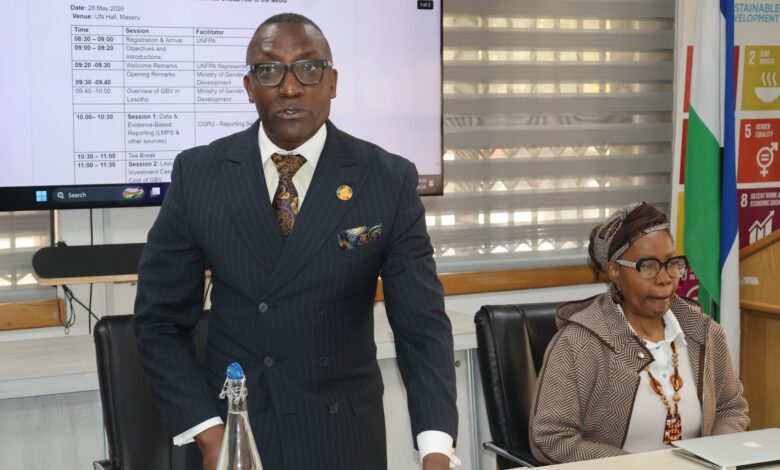
The United Nations Population Fund (UNFPA) Representative to Lesotho, Mr. John Kennedy Mosoti, has confirmed that the Gender-Based Violence (GBV) Centre in the country is now fully operational, marking a significant step in strengthening survivor support systems. The announcement was made during the Eliminating Gender-Based Violence in Lesotho workshop, which brought together media professionals, stakeholders, and development partners. The workshop focused on the critical role of the media in reporting GBV cases responsibly and raising public awareness. Mr. Mosoti highlighted that the centre has been active for approximately two weeks and is already providing essential services to survivors. The development signals an important milestone in national efforts to address and reduce gender-based violence.
According to Mr. Mosoti, the newly operational centre is currently accommodating at least 20 survivors who are receiving structured support services. These services include counselling, psychosocial assistance, and other forms of care designed to help victims recover and rebuild their lives. He emphasized that the centre aims to provide a safe and supportive environment where survivors can access professional help without fear or stigma. The presence of such a facility reflects growing efforts to strengthen institutional responses to GBV in Lesotho. It also demonstrates a commitment to ensuring that survivors are not left without support during critical moments of need.
Mr. Mosoti raised serious concern about the scale of gender-based violence in the country, noting that available statistics indicate that approximately 86 percent of women and girls in Lesotho have experienced GBV at some point in their lives. He described this figure as alarming and indicative of a widespread social and public health challenge. Despite the high number of cases, he pointed out that many incidents still go unreported. Fear, lack of trust in reporting systems, and limited confidence in available support structures continue to discourage survivors from coming forward. These barriers highlight the need for stronger systems that encourage reporting and protect victims.
The UNFPA Representative further explained that many survivors continue to suffer in silence, often sharing their experiences only with close friends or neighbours instead of seeking formal assistance. This pattern of underreporting, he noted, makes it difficult for authorities and support organisations to fully understand the scale of the problem. It also limits the effectiveness of prevention and response efforts. Mr. Mosoti stressed that breaking this cycle requires not only improved services but also stronger community engagement and awareness campaigns. He emphasized that survivors must feel safe and supported when reporting incidents of violence.
A key focus of the workshop was the role of the media in addressing gender-based violence in Lesotho. Mr. Mosoti called on journalists and media practitioners to report GBV cases responsibly and ethically in order to avoid further harm to survivors. He noted that accurate and sensitive reporting can play a major role in raising awareness, reducing stigma, and encouraging more victims to seek help. The media, he added, has the power to shape public perception and influence attitudes toward gender-based violence. By highlighting both challenges and available support systems, media professionals can contribute to national prevention efforts.
Mr. Mosoti also urged for collective action involving government institutions, civil society organisations, the media, and local communities to strengthen the fight against gender-based violence. He emphasized that no single institution can address the issue alone and that coordinated efforts are essential for long-term success. Strengthening prevention strategies, improving survivor support services, and ensuring accountability were identified as key priorities. He further stressed the importance of building trust in reporting mechanisms so that survivors feel confident in coming forward. The operational GBV Centre represents a step forward, but sustained collaboration is necessary to achieve meaningful change.
The confirmation of the operational Gender-Based Violence Centre in Lesotho marks an important development in the country’s ongoing efforts to address violence against women and girls. With survivors already receiving support services, the initiative provides a critical lifeline for those affected. However, the high prevalence of GBV and the continued issue of underreporting highlight the scale of the challenge ahead. Strengthening awareness, improving reporting systems, and enhancing survivor care remain urgent priorities. Through coordinated action and sustained commitment, Lesotho can move closer to a society where survivors are protected, supported, and empowered to rebuild their lives free from violence.
Join 'Lesotho News' WhatsApp Channel
Get breaking Lesotho news — delivered directly to your WhatsApp.
CLICK HERE TO JOIN