Lesotho’s Red Meat Industry Poised for Major Transformation with Launch of Semen Genetics Centre


Lesotho is on the cusp of a major agricultural breakthrough as a bold new initiative aims to transform the red meat industry through advanced livestock genetics and expanded beef production. This ambitious plan is being spearheaded by the upcoming Ramsem–Absolute Genetics Semen Centre, a franchised facility jointly owned by Phallo Beef Limited and the Thabeng ea Senai Breeders Community (TSBC).
Set to open by the end of 2025 in Ha Sebolai, Mokhethoaneng, the state-of-the-art centre will offer locally and internationally sourced genetics—including semen and embryos—to upgrade the country’s cattle breeds. The goal is to increase both the quality and volume of beef production for local consumption and international markets, including countries such as Russia, Brazil, and the UAE.
Speaking at the sod-turning ceremony, Dr. Fanie Steyn, Managing Director of Ramsem/Absolute Genetics, announced the introduction of mobile semen laboratories to accelerate livestock improvement across rural communities. “This semen centre will be instrumental in designing and developing Lesotho’s red meat industry,” said Dr. Steyn. “With breeds like Bosmara, Bykan, Beefmaster, Draughtmaster, Wagyu, Angus, Brangus, and Drakensberger, we are laying the foundation for a premium meat industry.”
The project has already garnered global recognition. It received the prestigious Signage Award from the World Trade Organization (WTO), highlighting its economic potential even before its full rollout.
At the forefront of this movement is Sebabatso Makoanyane, a visionary youth entrepreneur and founder of Phallo Beef Limited, as well as the president of TSBC. Over the years, Makoanyane has mobilized cattle farmers across Lesotho—from Sehlabathebe to Metolong—encouraging the adoption of modern breeding technologies.
“If we can reduce the M1.5 billion Lesotho spends annually on importing South African red meat, we can transform rural livelihoods and build real wealth,” he said. Makoanyane emphasized that replacing traditional breeds with high-performance beef breeds is key to unlocking the country’s full agricultural potential.
To support these efforts, TSBC has acquired Absolute Genetics and will soon begin constructing the genetics facility. The centre will not only supply top-tier cattle genetics but also serve as a hub for farmer training and knowledge-sharing.
The academic sector is also playing a pivotal role. Setsumi Molapo, a lecturer in Animal Science at the National University of Lesotho (NUL), highlighted the country’s unique high-altitude, disease-resistant environment as an ideal setting for cattle development. He advocated for more investment in training local students in artificial insemination to ensure sustainable knowledge transfer. “Let our students contribute to the practice of artificial insemination; this is a legacy we can own,” Molapo said.
Mokhethoaneng will serve as the pilot site for red meat production, with additional support from NUL nutrition experts who will train farmers in animal feed formulation and production.
Chief Animal Production Officer in the Ministry of Agriculture, Molefi Petlane, confirmed that livestock development is now a top government priority. “Millions are spent on beef and mutton imports every year. That’s why agriculture features prominently in our National Strategic Development Plan,” he said. Petlane added that funding has been allocated to boost not only beef but also poultry, wool, fish, and mohair sectors.
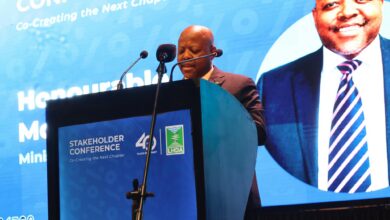
Minister of Agriculture and Food Security, Thabo Mofosi, reaffirmed the government’s commitment to supporting entrepreneurs like Makoanyane. “The government does not create businesses, but it must create conditions for businesses to flourish,” he said. The minister also called for the swift passage of the Animal Health and Welfare Bill, which will enable Lesotho to align with global food safety standards and facilitate access to international markets.
Phallo Beef Limited aims to revolutionize Lesotho’s beef production by delivering Grade A and B beef—an upgrade from the country’s current Grade C standard. This leap in quality could significantly reduce imports while opening doors for exports.
Lesotho’s red meat industry, traditionally based on subsistence cattle farming, faces challenges such as overgrazing, water scarcity, livestock diseases, climate change, and stock theft. Most cattle sales happen informally, and the country ranks 157th out of 167 globally in beef production, with just 1.25 kilotonnes produced in 2022.
However, with initiatives like the Ramsem–Absolute Genetics Semen Centre, artificial insemination training, and government support, Lesotho is now building the foundations for a competitive, high-quality beef industry. This transformation promises not only to enhance food security and economic growth but also to empower local farmers with the tools and knowledge needed to thrive in the global agricultural economy.
Join 'Lesotho News' WhatsApp Channel
Get breaking Lesotho news — delivered directly to your WhatsApp.
CLICK HERE TO JOIN