UN Resident Coordinator Residen Taija Kontinen Holds Courtesy Meeting with Lesotho Minister Nthati Moorosi
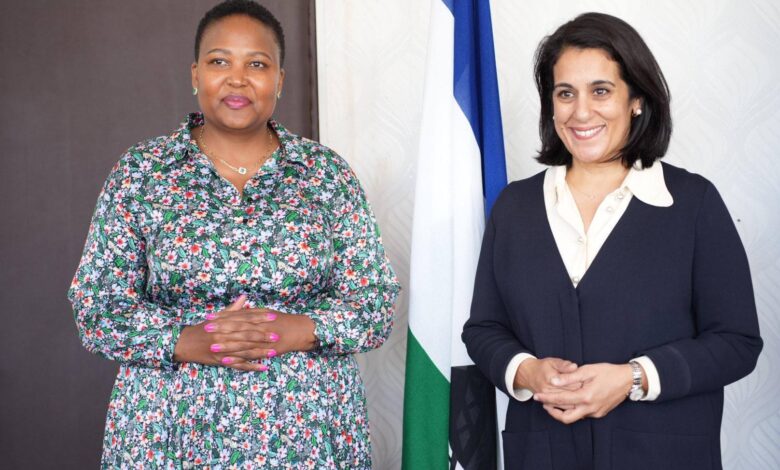
The new United Nations Resident Coordinator, Ms. Residen Taija Kontinen, recently paid a courtesy call on Lesotho’s Minister of Information, Communications, Science, Technology and Innovation, Hon. Nthati Moorosi. The meeting signifies the beginning of a collaborative relationship between the UN and the Ministry, focusing on advancing development priorities in Lesotho. Ms. Kontinen’s appointment comes at a time when the country is pursuing digital transformation and innovative solutions to strengthen public service delivery. The courtesy visit provided an opportunity for both leaders to discuss key areas where the UN can support national initiatives. This engagement reflects the UN’s commitment to working closely with government partners to address development challenges and promote inclusive growth.
During the meeting, discussions centered on leveraging digital technology to improve access to services and enhance governance. Minister Moorosi highlighted the Ministry’s ongoing projects, including efforts to expand digital public infrastructure and promote science and technology as drivers of economic growth. She emphasized the importance of partnerships with international organizations to ensure that technological innovations are implemented efficiently and inclusively. Ms. Kontinen expressed her support for these initiatives and offered the UN’s expertise in areas such as digital inclusion, child protection, and sustainable development. Both leaders underscored the need to align international support with national priorities to achieve measurable impacts for communities.
The meeting also addressed broader issues of development cooperation, including education, health, and social services. Ms. Kontinen stressed the UN’s role in facilitating knowledge sharing, capacity building, and resource mobilization to support Lesotho’s policy goals. Minister Moorosi acknowledged the importance of international collaboration in strengthening local institutions and enhancing the country’s ability to implement evidence-based policies. The discussion highlighted the shared commitment to promoting inclusive growth, reducing inequalities, and ensuring that technological advancements benefit all citizens. Both parties agreed that ongoing dialogue and coordinated efforts are essential for achieving sustainable development outcomes.
The courtesy call by Ms. Kontinen marks the start of a strategic partnership between the UN and Lesotho’s Ministry of Information, Communications, Science, Technology and Innovation. It sets the stage for future collaboration aimed at advancing the country’s development agenda through technology, innovation, and international support. The meeting reinforced the UN’s role as a partner in promoting inclusive, equitable, and sustainable progress in Lesotho. By combining national leadership with global expertise, these efforts are expected to strengthen public service delivery and empower communities across the country. The engagement demonstrates a shared commitment to building a resilient, innovative, and digitally connected society.
Join 'Lesotho News' WhatsApp Channel
Get breaking Lesotho news — delivered directly to your WhatsApp.
CLICK HERE TO JOIN