Khosana e Nyenyane: The Little Prince Comes to Life in Sesotho Through New Book Launch in Lesotho

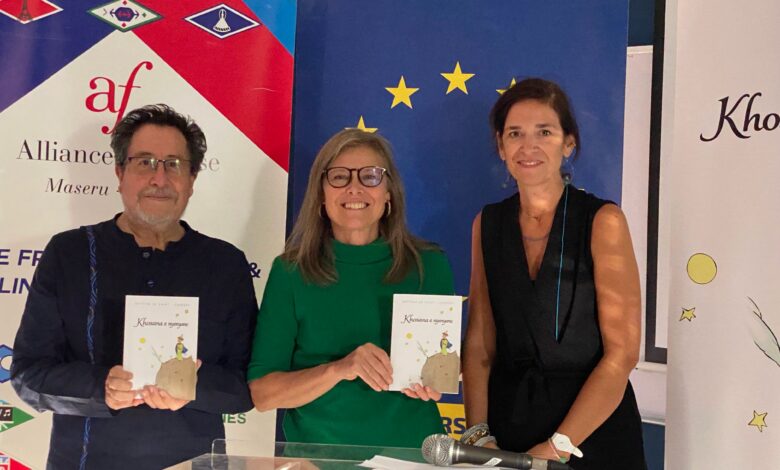
Lesotho has taken an important step towards promoting local languages, literacy and cultural exchange with the official launch of Khosana e Nyenyane, the Sesotho translation of the internationally celebrated book The Little Prince by French author Antoine de Saint-Exupéry. The special launch took place last Friday, 6 November, at Alliance Française de Maseru as part of the 5th European Film Festival in Lesotho. The publication brings one of the world’s most recognised literary classics to Sesotho-speaking readers, making its story and messages accessible to a new generation of Basotho. A total of 3,000 copies have been printed for distribution across the country, with particular attention given to schools and their libraries. The initiative highlights the importance of translating international literature into local languages while ensuring that children and young people have access to diverse reading materials. It also demonstrates how literature, education and cultural cooperation can work together to strengthen relationships between countries and communities.
The Sesotho translation of The Little Prince represents more than the introduction of a popular French literary work to a new audience. It creates an opportunity for Basotho children to experience an internationally recognised story in their mother tongue while exploring ideas that remain relevant across different cultures and generations. Originally written by Antoine de Saint-Exupéry, The Little Prince is a literary classic that explores themes such as friendship, love, imagination, responsibility and the meaning of life. Its storytelling combines simple language with deeper reflections about human relationships and how people understand the world around them. Making the book available in Sesotho allows readers to connect with these themes through a language that is familiar to them. It also reinforces the value of local languages as important tools for education, cultural expression and intellectual development. Through Khosana e Nyenyane, the story gains a new cultural identity while retaining the central ideas that have made it popular among readers worldwide.
The printing of 3,000 copies marks a significant part of the project, as the books are intended to reach communities across Lesotho. Schools and school libraries are among the main beneficiaries because access to reading materials plays an important role in developing children’s literacy skills. Having books available in Sesotho can encourage learners to develop a stronger interest in reading while improving their understanding of language and storytelling. Reading in a familiar language can also help children build confidence before engaging with literature in additional languages. For schools with limited library resources, receiving new books can provide teachers and learners with useful materials for classroom activities and independent reading. The planned nationwide distribution therefore aims to extend the benefits of the publication beyond the launch event in Maseru. It also provides an opportunity to make an internationally recognised literary work part of the reading experience of children in different districts.
The successful production of Khosana e Nyenyane involved the contributions of several individuals and organisations committed to supporting the translation and publication process. Special appreciation was expressed to Fondation PIAF and Fondation Jean-Marc Probst pour le Petit Prince for supporting the translation and proofreading of the Sesotho edition. Their involvement helped make it possible to bring the literary work into a language that serves communities in Lesotho. The translation was undertaken by Nthatisi Bulane, while Tsabello Tsonane was responsible for proofreading the edition. Translation requires more than replacing words from one language with their direct equivalents in another. It involves preserving meaning, tone and cultural context so that readers can understand and appreciate the original story. The work of the translator and proofreader was therefore central to producing an edition that could communicate Saint-Exupéry’s story effectively in Sesotho.
The book’s visual presentation also received special attention through the work of graphic designer Rele Pasa. The designer gave the Sesotho edition a distinctive Basotho identity, incorporating cultural elements that connect the publication with Lesotho’s heritage and traditions. This creative contribution helps make Khosana e Nyenyane more than a translated text by giving it a visual identity that reflects the community for which it was produced. Book design plays an important role in how readers experience a publication, particularly younger audiences who often respond to illustrations and visual storytelling. Bringing Basotho cultural elements into the design also creates an opportunity for readers to recognise aspects of their own identity within an international literary work. This approach demonstrates how cultural adaptation can help international literature connect with local audiences without losing its original meaning. The result is an edition that brings together French literary heritage and Basotho cultural expression.
The French Embassy to Lesotho and the European Union Delegation to Lesotho also played an important role in making the publication and distribution project possible. Their financial support covered the printing of the 3,000 copies, helping turn the translation project into a practical literacy initiative with a wider national reach. Producing books in sufficient quantities is important because translation alone does not guarantee that readers will have access to a publication. Printing and distribution require resources, planning and cooperation between the organisations involved. By supporting these costs, the two institutions contributed to making the Sesotho edition available to schools and communities across Lesotho. Their involvement also reflects the role that international cultural partnerships can play in supporting education, language development and access to literature. The project demonstrates how cooperation between local and international partners can help deliver initiatives that benefit children and the wider reading community.
The distribution of Khosana e Nyenyane has already begun, with the first copies presented to Bocheletsana High School’s library in Thaba-Tseka during the European Film Festival’s district screenings. This marked the beginning of the planned distribution to schools across Lesotho. The presentation is particularly important because it demonstrates that the project is moving beyond its official launch and reaching educational institutions. School libraries provide learners with opportunities to explore books outside formal classroom lessons and develop independent reading habits. Introducing a translated literary classic into these spaces can encourage discussions about friendship, responsibility, imagination and cultural understanding. It can also help teachers use literature to support language learning and creative classroom activities. Bocheletsana High School is the first of many schools expected to receive copies, making the presentation an early milestone in the wider distribution initiative.
The decision to connect the book launch with the 5th European Film Festival in Lesotho also highlighted the relationship between literature and cinema. Both forms of storytelling allow audiences to explore different cultures, ideas and human experiences. The festival provided an appropriate setting for introducing a French literary classic through its Sesotho translation while bringing together different forms of cultural expression. Following the launch, attendees had the opportunity to watch The Little Prince, also known as Le Petit Prince, directed by Mark Osborne. The film adaptation brought the story from the printed page to the cinema screen, allowing audiences to experience its themes through animation and visual storytelling. This combination of a book launch and film screening created an opportunity for audiences to engage with the same literary work in two different formats. It also demonstrated how cultural festivals can encourage people to explore literature and cinema while developing an appreciation for international artistic works.
The screening was made possible through the support of the Institute Français d’Afrique du Sud (IFAS) and VideoVision SA. Their contribution helped bring the film presentation to audiences as part of the festival programme at Alliance Française de Maseru. Film adaptations can introduce literary works to people who may not have encountered the original books, while encouraging existing readers to revisit familiar stories from a different perspective. In this case, the screening complemented the Sesotho publication by allowing audiences to experience the story visually after learning about its translation into a local language. The combination also strengthened the festival’s focus on cultural exchange and artistic collaboration. It provided a fitting way to conclude the festival’s screenings at Alliance Française de Maseru while celebrating the connection between written literature and cinema. The event showed how different creative platforms can work together to make cultural experiences accessible to wider audiences.
The launch of Khosana e Nyenyane also draws attention to the importance of promoting Sesotho literature and strengthening the presence of local languages in educational spaces. Language plays a central role in how children develop communication skills, understand their surroundings and connect with their cultural identities. When young readers have access to quality books in their mother tongue, they gain opportunities to strengthen their vocabulary, comprehension and appreciation of storytelling. Translated literature can complement locally written books by exposing readers to different experiences and perspectives while allowing them to engage with those ideas in a familiar language. It can also encourage interest in translation as a creative and professional field. Projects such as this demonstrate that local languages can carry complex literary ideas and participate in international cultural conversations. Making more translated books available could help expand reading choices and encourage a stronger reading culture throughout Lesotho.
The project further demonstrates the value of cultural diplomacy between Lesotho and European partners. Cultural initiatives create opportunities for countries to build relationships through literature, film, language and education. The involvement of Alliance Française de Maseru, the French Embassy to Lesotho, the European Union Delegation to Lesotho and other supporting organisations reflects the cooperation required to bring such projects to completion. These partnerships allow international cultural works to reach new audiences while giving local communities opportunities to express their own identities and traditions. The Basotho-inspired design of Khosana e Nyenyane is an important part of this exchange because it places Lesotho’s cultural identity within a publication that originated in France. The initiative therefore creates a meeting point between French literature and Basotho language and heritage. Such exchanges can strengthen mutual understanding while encouraging appreciation of cultural diversity.
The official launch of Khosana e Nyenyane marks an important achievement for literacy promotion, Sesotho language development and cultural exchange in Lesotho. With 3,000 copies prepared for distribution, the initiative aims to bring Antoine de Saint-Exupéry’s timeless story to school libraries and new generations of readers across the country. The contributions of translator Nthatisi Bulane, proofreader Tsabello Tsonane and graphic designer Rele Pasa helped give the publication its linguistic and cultural identity. Support from Fondation PIAF, Fondation Jean-Marc Probst pour le Petit Prince, the French Embassy to Lesotho and the European Union Delegation to Lesotho made the project possible. The accompanying film screening, supported by IFAS and VideoVision SA, further celebrated the relationship between literature and cinema. As more schools receive their copies, Khosana e Nyenyane has the opportunity to encourage reading, strengthen appreciation for Sesotho and introduce young Basotho to a literary classic in their own language.
Join 'Lesotho News' WhatsApp Channel
Get breaking Lesotho news — delivered directly to your WhatsApp.
CLICK HERE TO JOIN