Prime Minister Matekane Backs Tougher SADC Rules on Member States in Financial Arrears

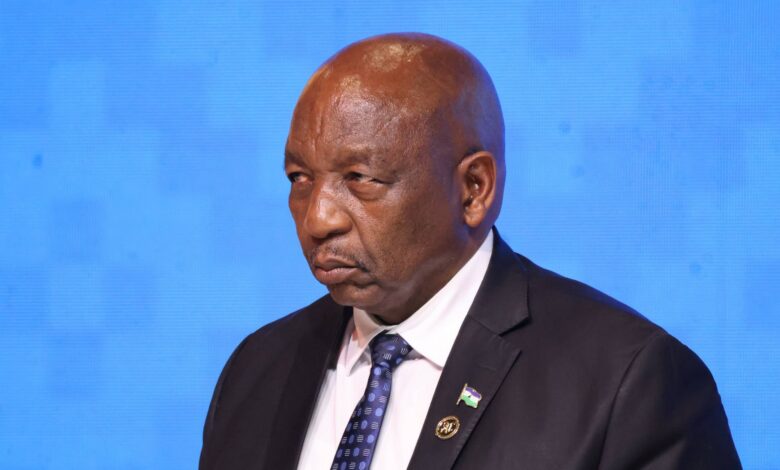
The Right Honourable Prime Minister Samuel Ntsokoane Matekane has joined fellow Southern African Development Community (SADC) Heads of State and Government in adopting an amendment to the regional bloc’s sanctions regime. The decision was taken during the closed session of the 46th SADC Summit, where leaders considered measures aimed at strengthening compliance with financial obligations to the organisation. The amendment provides for the suspension of a SADC Member State that remains in arrears with its financial contributions for four or more years, subject to the provisions of the amended SADC Treaty. The move signals a stronger commitment among regional leaders to ensuring that Member States meet their agreed financial responsibilities. For Lesotho, the decision places greater emphasis on responsible participation in regional institutions and the importance of supporting the financial sustainability of SADC.
The amendment introduces a clearer consequence for prolonged failure to meet financial commitments to SADC. Member States rely on contributions from participating countries to support the organisation’s programmes, institutions and regional initiatives. When countries remain in arrears for extended periods, the resulting financial pressure can affect the implementation of programmes designed to advance regional cooperation and integration. Establishing a specific threshold of four or more years provides a defined basis for addressing persistent arrears under the amended Treaty. The measure also reinforces the principle that participation in SADC comes with financial responsibilities that Member States are expected to fulfil.
Prime Minister Matekane’s participation in the adoption of the amendment reflects Lesotho’s continued engagement in regional decision-making processes. As a SADC Member State, Lesotho participates in discussions and initiatives covering areas such as economic integration, peace and security, infrastructure development, trade and social development. Financial contributions form part of the obligations that enable the regional organisation to carry out these responsibilities. The adoption of the amended sanctions regime therefore has significance for Lesotho as both a participant in SADC and a country with an interest in maintaining strong regional institutions. The decision also demonstrates the importance of collective agreements in establishing common standards among Member States.
Lesotho, Eswatini and Mozambique were among the Member States that signed the provision, supporting the amendment aimed at strengthening compliance with SADC financial obligations. Their participation demonstrates support for measures designed to improve financial discipline within the regional organisation. The provision does not simply focus on penalties, but also reinforces the importance of predictable financial contributions to the functioning of SADC. Regular contributions allow the organisation to plan its programmes and meet its institutional responsibilities more effectively. By establishing consequences for prolonged arrears, SADC leaders are seeking to protect the organisation from financial uncertainty and strengthen accountability among its members.
The four-year threshold provides an important distinction between temporary financial difficulties and prolonged non-compliance. Member States can face different economic circumstances that may affect their ability to meet obligations at particular times. However, persistent arrears over several years can create broader challenges for a regional institution that depends on Member State contributions. The amended Treaty therefore provides a mechanism for addressing situations where financial obligations remain outstanding for an extended period. Any suspension would remain subject to the provisions and procedures contained in the amended Treaty, ensuring that the measure operates within the established legal framework of SADC.
The decision comes as SADC continues efforts to strengthen regional cooperation and advance its broader integration objectives. The organisation brings together countries across Southern Africa to promote economic development, peace, security and cooperation. Effective implementation of these objectives depends on strong institutions and the ability of Member States to meet agreed commitments. Financial sustainability is particularly important because regional programmes require consistent resources to operate and deliver results. Stronger compliance with financial obligations can therefore contribute to greater institutional stability and help SADC focus its resources on priorities affecting the region.
The amendment also highlights the role of collective accountability within regional organisations. SADC decisions are based on cooperation between Member States, but that cooperation depends on countries respecting agreements reached at the regional level. Financial contributions represent one of the practical commitments required to maintain the organisation’s operations. By agreeing to a clearer sanctions mechanism, leaders have strengthened the framework for addressing prolonged financial non-compliance. The measure could also encourage Member States to monitor their obligations more closely and take steps to address outstanding contributions before reaching the four-year threshold.
For Lesotho, participation in the amendment reflects the country’s broader role in regional affairs under Prime Minister Matekane. Lesotho has long been part of regional efforts aimed at strengthening cooperation among Southern African countries. Its involvement in the adoption of the provision demonstrates its participation in decisions that affect the governance and sustainability of SADC. The amendment also reinforces the importance of maintaining strong relationships with neighbouring countries through shared institutions and agreed regional frameworks. Continued engagement in SADC provides Lesotho with an avenue to contribute to regional policy while also advancing its own interests within Southern Africa.
The decision at the 46th SADC Summit could have a lasting effect on how the organisation manages financial obligations among its Member States. A stronger sanctions regime can provide greater clarity around the consequences of prolonged arrears while encouraging countries to prioritise their contributions. It can also support more predictable financial planning within SADC and strengthen confidence in the organisation’s ability to implement its programmes. The effectiveness of the amendment will ultimately depend on consistent application of the amended Treaty and continued commitment from Member States. Regional leaders will therefore have an important role in ensuring that the new provision is implemented fairly and in accordance with the agreed legal framework.
Prime Minister Samuel Ntsokoane Matekane’s participation in adopting the amendment places Lesotho among the Member States supporting stronger financial accountability within SADC. The decision reflects a broader recognition that regional cooperation requires more than political commitments and shared objectives. It also requires Member States to meet the financial obligations that support the institutions responsible for delivering those objectives. By providing for possible suspension after four or more years of arrears, subject to the amended Treaty, SADC has strengthened its approach to prolonged non-compliance. The move ultimately supports the sustainability of the regional organisation and reinforces the importance of shared responsibility among Southern African states.
Join 'Lesotho News' WhatsApp Channel
Get breaking Lesotho news — delivered directly to your WhatsApp.
CLICK HERE TO JOIN