Lesotho Receives M30 Million Emergency Food Assistance from China to Address Food Security Challenges

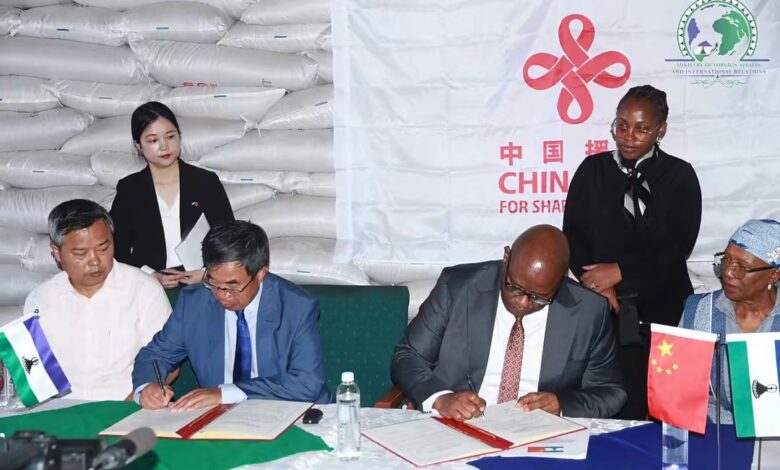
The Government of the Kingdom of Lesotho has received emergency food assistance worth M30 million from the Government of the People’s Republic of China in a significant show of international solidarity as the country continues to face food security challenges. The assistance comes at a critical time when many households are experiencing the effects of climate shocks and rising living costs, which have placed additional pressure on food availability and affordability. The support is expected to contribute to national efforts to address food-related challenges and assist vulnerable communities facing difficulties in accessing adequate food. It also demonstrates the importance of international partnerships in helping countries respond to humanitarian and economic pressures. Through this assistance, China has reaffirmed its friendship with Lesotho and its commitment to supporting the development and well-being of the Basotho people.
Food security remains an important national concern for Lesotho, where agricultural production and household livelihoods are increasingly affected by changing weather conditions and economic pressures. Climate shocks can disrupt farming activities, reduce crop yields and affect the availability of food in local markets. When agricultural production declines, households that depend on farming for their livelihoods may experience reduced incomes and greater difficulty meeting their daily food requirements. At the same time, rising living costs can make essential food products less affordable, particularly for families with limited financial resources. These combined challenges highlight the importance of emergency food assistance and sustained efforts to strengthen the country’s food systems.
The M30 million contribution from China provides important support at a time when additional resources are needed to respond to food security concerns. Emergency food assistance plays a valuable role in helping governments address immediate humanitarian needs, particularly when communities face difficulties accessing sufficient food. Such support can complement national interventions aimed at protecting vulnerable households and reducing the effects of food shortages. It also provides an opportunity for the Government of Lesotho to strengthen its response to the challenges affecting food availability and household welfare. While emergency assistance addresses immediate needs, continued cooperation and investment remain necessary to build long-term food security.
Climate change and extreme weather conditions present significant challenges for agricultural development in Lesotho. Farmers depend on suitable rainfall patterns and favourable growing conditions to produce crops and sustain their livelihoods. However, droughts, irregular rainfall and other climate-related events can negatively affect agricultural productivity and increase the vulnerability of rural communities. These challenges can also affect livestock production and the wider agricultural economy. Strengthening climate resilience, improving agricultural practices and supporting farmers are therefore important measures for reducing the country’s vulnerability to future food shortages.
Rising living costs have added another layer of difficulty for households already dealing with food security challenges. When the prices of essential goods increase, families with limited incomes may struggle to maintain adequate and balanced diets. Food affordability is particularly important for vulnerable groups, including low-income households that spend a significant share of their available resources on basic necessities. Emergency food assistance can help ease some of these pressures by supporting efforts to make food available to people who need it most. However, improving household food security also requires broader economic measures that support employment, income generation and affordable access to essential goods.
The Government of Lesotho has expressed sincere gratitude to the Government of the People’s Republic of China for its continued friendship, solidarity and commitment to the development of the Basotho people. The appreciation reflects the importance Lesotho attaches to its relationship with China and the support provided through bilateral cooperation. The M30 million emergency food assistance further demonstrates China’s willingness to stand with Lesotho during a challenging period. Such cooperation strengthens diplomatic relations while providing practical support in addressing national development and humanitarian priorities. It also reinforces the value of international partnerships in responding to challenges that affect people’s livelihoods and well-being.
The assistance further reflects the strong Strategic Partnership between Lesotho and China. Over the years, the relationship between the two countries has provided a framework for cooperation in areas of mutual interest and development. Strategic partnerships allow governments to work together on shared priorities, exchange expertise and mobilise support for projects that benefit their populations. In the case of Lesotho, cooperation with China forms part of its broader international engagement aimed at supporting economic development and improving living conditions. The latest food assistance represents another expression of solidarity within this bilateral relationship.
Emergency food support is important, but sustainable food security requires long-term solutions that strengthen local production and improve the resilience of agricultural communities. Lesotho needs continued efforts to improve farming methods, strengthen access to agricultural inputs and promote the efficient use of available land and water resources. Investment in climate-smart agriculture can also help farmers adapt to changing weather patterns and reduce production risks. In addition, improving food storage, distribution and market access can help reduce losses and strengthen the availability of locally produced food. Combining emergency assistance with these longer-term interventions can contribute to a more reliable and resilient food system.
The support from China also highlights the role that international cooperation can play in addressing humanitarian challenges. Food insecurity is not only an agricultural issue but also a development concern that affects health, education, productivity and household stability. When families struggle to access sufficient food, their ability to participate fully in economic and social activities can be affected. Assistance from development partners can help governments respond to immediate needs while continuing to pursue broader national development objectives. Strong cooperation between the Government of Lesotho and its international partners remains important in ensuring that vulnerable communities receive support during difficult periods.
The M30 million emergency food assistance from China represents a meaningful contribution to Lesotho’s efforts to address food security challenges caused by climate shocks and rising living costs. It demonstrates the continued friendship and solidarity between the two countries while reinforcing their Strategic Partnership. The Government of Lesotho’s appreciation reflects the importance of international cooperation in supporting national priorities and improving the well-being of its citizens. As the country continues to address food insecurity, emergency assistance must go hand in hand with investment in sustainable agriculture, climate resilience and stronger local food systems. Continued cooperation between Lesotho and China offers an important foundation for addressing immediate humanitarian needs while supporting the long-term goal of building a more food-secure and economically resilient nation.
Join 'Lesotho News' WhatsApp Channel
Get breaking Lesotho news — delivered directly to your WhatsApp.
CLICK HERE TO JOIN