
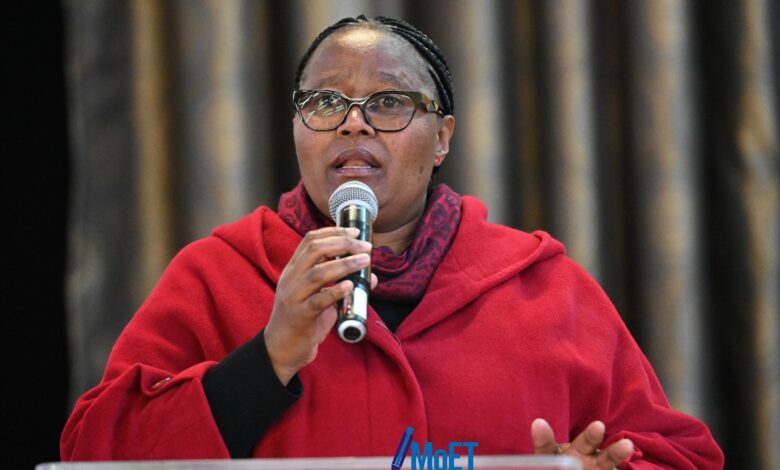
The Teaching Service Department (TSD) has launched a critical four day sensitization and validation workshop aimed at developing a stronger and more effective teacher monitoring and evaluation system in Lesotho. The workshop, which is taking place in Thaba-Bosiu, brings together key education stakeholders from across the country to review, discuss, and validate the proposed Teacher Monitoring and Evaluation System. This initiative reflects the government’s commitment to improving the quality of education through better accountability, teacher support, and performance management within schools. The gathering started on Tuesday and is expected to conclude on Friday this week after several days of intensive discussions and collaborative engagements. Education experts and senior officials view the workshop as an important step toward strengthening teaching standards and improving learning outcomes for students nationwide.
The main purpose of the workshop is to sensitize senior education stakeholders on the newly proposed Teacher Monitoring and Evaluation System while ensuring that the policy documents and tools are relevant to the local education environment. Participants are expected to collaboratively validate the Monitoring and Evaluation Policy, the supporting framework, and the tools that will be used to monitor teacher performance in schools. By involving education leaders directly in the validation process, TSD aims to create a sense of ownership and ensure that the final system reflects the realities faced by schools and educators across the country. The process also allows stakeholders to identify gaps, suggest practical improvements, and contribute ideas that can strengthen implementation. This collaborative approach is expected to improve acceptance of the new system once it is rolled out nationwide.
The workshop has attracted a wide range of influential participants within the education sector. Among those attending are senior officials from the Ministry of Education and Training, District Education Managers (DEMs), School Inspectors, and School Principals. These individuals play a central role in the administration and supervision of schools, making their input essential in shaping an effective monitoring and evaluation system. Their experience in dealing with everyday challenges in schools gives them valuable insight into what works and what needs improvement within the education system. The inclusion of multiple stakeholders also promotes transparency and encourages collective responsibility in improving teacher performance and educational standards. Such broad participation demonstrates the importance the government places on education reform and professional accountability.
Teacher monitoring and evaluation systems are increasingly becoming an important part of education management across many countries. These systems help education authorities assess teacher performance, identify training needs, and ensure that classroom teaching meets expected standards. In many cases, monitoring and evaluation frameworks also support professional development by identifying areas where teachers may require additional guidance or support. For Lesotho, the development of a contextualized system is especially important because schools operate under different conditions depending on their location, resources, and learner populations. A locally relevant framework ensures that evaluations are fair, practical, and focused on improving educational quality rather than simply measuring performance. This workshop therefore represents an opportunity to design a system that balances accountability with professional growth.
Participants at the workshop are expected to engage in detailed discussions around policy implementation, data collection methods, reporting structures, and evaluation tools that will be used in schools. They will also examine how monitoring results can be used to improve teacher effectiveness and learner achievement. The discussions are likely to focus on creating systems that are practical for both urban and rural schools while ensuring consistency across districts. Stakeholders are also expected to consider the challenges schools currently face, including limited resources, staffing shortages, and varying levels of infrastructure development. Addressing these realities during the validation process will help ensure that the final monitoring and evaluation framework remains realistic and achievable. This level of engagement is important for building a sustainable education monitoring system that can produce long term improvements.
The workshop in Thaba-Bosiu also highlights the increasing emphasis on evidence based decision making within the education sector. Modern education systems rely heavily on data to identify trends, measure performance, and develop targeted interventions. A strong monitoring and evaluation system can provide reliable information that helps policymakers make informed decisions about teacher support, school management, and curriculum delivery. By improving how teacher performance is monitored, the Ministry of Education and Training can better identify successful teaching practices and address areas where support is needed. This can ultimately lead to improved classroom instruction and better educational outcomes for learners across the country. Effective monitoring systems also create opportunities for continuous improvement by encouraging regular feedback and professional reflection among educators.
The timing of this initiative is significant as many countries continue to focus on strengthening education systems following years of global disruptions and changing educational demands. Schools today face increasing pressure to deliver quality education while adapting to new teaching methods, technological changes, and evolving learner needs. In this environment, strong teacher support systems have become more important than ever. Monitoring and evaluation frameworks are no longer viewed solely as accountability tools but also as mechanisms for professional development and educational improvement. The TSD workshop reflects this modern understanding by focusing on collaboration, validation, and stakeholder engagement rather than imposing policies without consultation. Such an approach can help build trust and encourage active participation from educators and school leaders.
The four day sensitization and validation workshop organized by the Teaching Service Department marks an important milestone in Lesotho’s efforts to strengthen its education sector. By bringing together senior education officials, District Education Managers, School Inspectors, and Principals, the initiative creates a platform for meaningful dialogue and collaborative policy development. The validation of the Teacher Monitoring and Evaluation Policy, Framework, and associated tools has the potential to improve teacher accountability while also supporting professional growth and educational excellence. The workshop demonstrates a commitment to creating a system that is practical, inclusive, and aligned with the realities of schools across the country. As discussions continue throughout the week in Thaba-Bosiu, stakeholders are expected to contribute ideas that will shape the future of teacher monitoring and education quality in Lesotho for years to come.
Join 'Lesotho News' WhatsApp Channel
Get breaking Lesotho news — delivered directly to your WhatsApp.
CLICK HERE TO JOIN