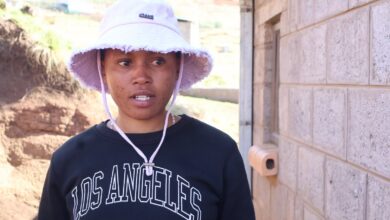
NUL Graduate Katleho Mpopo Leads a Soil Healing Movement to Restore Food Sovereignty in Lesotho

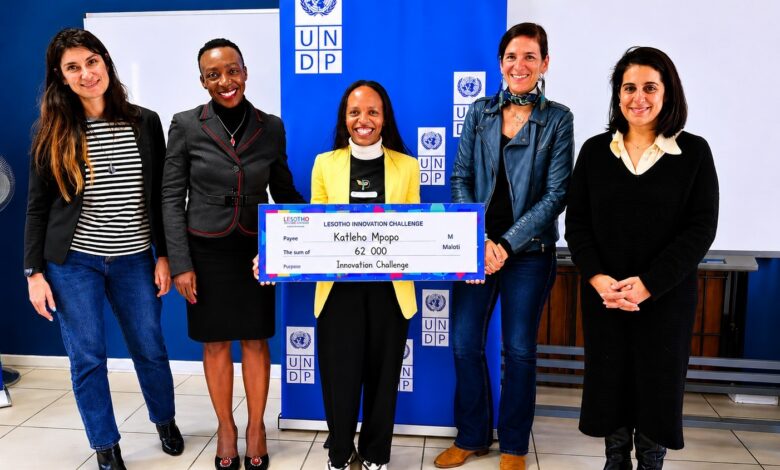
In May 2026, a strong collaboration between leading agricultural and development institutions placed a growing Lesotho innovation in the spotlight. The France South Africa Agricultural Institute, Alliance Française Maseru, and the United Nations Development Programme Lesotho formally recognized the PEACE FARM GROUP OF COMPANIES as a top national innovator. The recognition highlights a rising shift toward sustainable agriculture and local food systems in Lesotho, where food security and land restoration remain critical national priorities. At the center of this movement is a 2022 economics graduate from the National University of Lesotho, who chose to redirect her academic training into practical agricultural transformation. Instead of entering traditional corporate employment, she returned to Berea Teyateyaneng to build solutions rooted in soil regeneration and community resilience.
The founder of Peace Farm Group of Companies represents a new wave of development thinking that connects economics directly with environmental health. Her approach focuses on food sovereignty, the principle that communities should control how food is produced, distributed, and sustained using local resources. She built Peace Farm on the belief that economic progress cannot be separated from ecological stability, especially in rural economies where agriculture remains central to survival. The initiative challenges conventional commercial farming models that depend heavily on chemical inputs and imported seeds. It replaces them with regenerative systems designed to restore degraded land while improving household income and nutrition.
Peace Farm operates through a structured model built on three interconnected pillars that work together to rebuild agricultural systems. The first pillar is diversified organic production, which focuses on growing a wide range of nutrient-rich vegetables without chemical fertilizers or pesticides. This system improves soil health, increases biodiversity, and reduces long term production costs for farmers. The second pillar is regenerative farming training, where Peace Farm functions as a practical learning hub for rural farmers and youth groups. Participants are trained in methods that restore soil fertility, reduce input costs, and improve yields through natural ecological processes. The third pillar is the Genesis Seed Bank, a community managed seed library that preserves indigenous and climate resilient vegetable varieties for future use.
The Genesis Seed Bank plays a central role in protecting agricultural biodiversity in Lesotho. It collects, multiplies, and distributes locally adapted seeds that are better suited to changing climate conditions. This approach reduces dependence on commercial seed systems that often require repeated purchasing and external supply chains. By maintaining indigenous seed varieties, Peace Farm helps farmers regain control over their planting cycles and production decisions. The seed bank also strengthens resilience in rural communities by ensuring access to reliable planting materials during climate shocks such as droughts or erratic rainfall. This model supports long term sustainability rather than short term yield maximization.
A key feature of Peace Farm’s impact is its Contract Seed Multiplication Program, which creates a direct economic link between production and guaranteed market access. Under this system, indigenous seeds are distributed to rural farmers, with a strong focus on women and youth who often face barriers to agricultural financing and market entry. Farmers grow crops from these seeds and Peace Farm guarantees to purchase the entire harvest. This arrangement creates a closed economic loop that injects stable income into vulnerable households while ensuring consistent supply for the enterprise. It also reduces market risk for smallholder farmers, allowing them to invest more confidently in production.
The model has gained attention because it addresses multiple challenges at once, including unemployment, land degradation, and food insecurity. Many rural areas in Lesotho face declining soil fertility due to overuse of land and limited access to sustainable farming knowledge. Peace Farm responds to this by restoring soil health while creating practical income opportunities. The integration of training, production, and guaranteed markets makes the system both educational and economically viable. It demonstrates how agriculture can function as both an environmental solution and a development strategy.
Support from institutions such as the NUL Innovation Hub has strengthened the visibility and scalability of the initiative. By connecting academic knowledge with real world implementation, the hub provides a platform where research and enterprise meet. This support has helped position Peace Farm within broader conversations about agricultural transformation in Southern Africa. The recognition from regional and international partners also signals growing interest in locally driven solutions that reduce dependency on external food systems. It highlights the importance of youth led innovation in shaping the future of agriculture.
The story of Katleho Mpopo reflects a broader shift in how development is understood in rural economies. It shows how academic training in economics can be applied directly to agricultural systems to solve structural problems at community level. Her decision to focus on soil health and food sovereignty demonstrates a long term vision for sustainable growth rooted in local resources. The Peace Farm model continues to expand its reach by empowering farmers with skills, seeds, and guaranteed markets. It also reinforces the idea that restoring land is directly connected to restoring livelihoods.
The rise of Peace Farm Group of Companies marks a significant step in redefining agricultural innovation in Lesotho. It combines environmental restoration with economic empowerment in a way that directly benefits rural communities. The recognition from major institutions confirms its relevance in addressing food security and climate resilience challenges. As more farmers adopt regenerative practices, the potential for scaling this model continues to grow. The work of Katleho Mpopo and Peace Farm stands as a practical example of how local innovation can rebuild both ecosystems and economies from the ground up.
Join 'Lesotho News' WhatsApp Channel
Get breaking Lesotho news — delivered directly to your WhatsApp.
CLICK HERE TO JOIN