Lesotho Transport and Trade Project Gains Momentum as World Bank Mission Reviews Progress

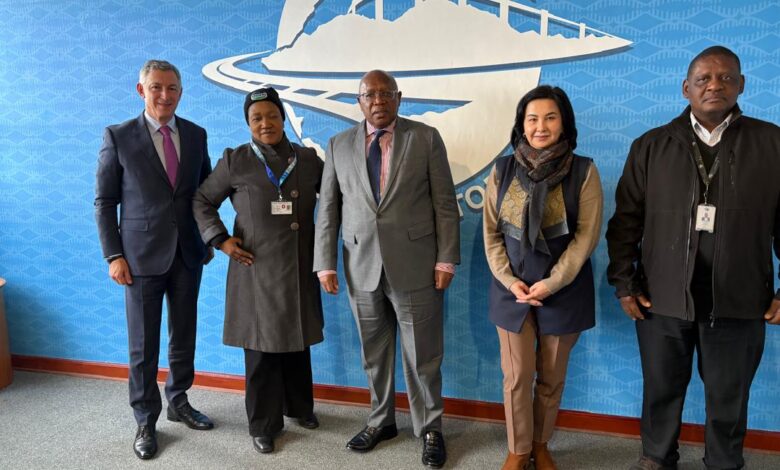
The Roads Directorate has confirmed that a World Bank implementation support mission led by Ms. Wei Yan has visited Lesotho to assess progress on the Lesotho Integrated Transport, Trade and Logistics Project (LITTL). The project is designed to strengthen trade competitiveness, improve transport efficiency and modernize key logistics systems across the country. The visit comes at a critical stage of implementation, where coordination between government institutions and development partners plays a central role in achieving project targets. According to the Roads Directorate Corporate Communications Manager, Mrs. Nosezolo Mpopo, the mission engaged multiple stakeholders to review progress and address operational constraints affecting delivery timelines. The engagement reflects continued international support for Lesotho’s long-term infrastructure development goals.
Mrs. Mpopo explained that the mission focused heavily on assessing implementation progress across several components of the project. Government counterparts were engaged in detailed discussions aimed at identifying bottlenecks that could slow down procurement and execution processes. Technical teams worked with the World Bank delegation to find practical solutions that could improve efficiency and ensure smoother delivery of planned activities. The mission also emphasized the importance of coordination between institutions responsible for transport, trade and logistics. This approach is intended to strengthen accountability and ensure that project milestones are met within expected timeframes.
A key area of focus during the visit was Component One of the LITTL project, where procurement delays and operational challenges have required targeted support. Mrs. Mpopo said the mission provided technical and operational assistance to accelerate processes and improve implementation performance. Attention was also given to the aviation component, where clarification of implementation arrangements was necessary to ensure effective coordination between the Roads Directorate, Airport Services and other aviation stakeholders. The goal is to align responsibilities clearly so that upgrades and reforms in the aviation sector can proceed without administrative delays. This coordination is seen as essential for improving transport connectivity and regional mobility.
The mission also reviewed progress under Component Two, which focuses on customs administration, trade facilitation and border efficiency. Special attention was given to the Smart One Stop Border Post initiative, which is being implemented at the Maseru and Maputsoe border crossings. These crossings are critical trade points for Lesotho and neighboring countries, and improvements in their efficiency are expected to reduce delays and boost cross-border commerce. Discussions highlighted the need for modern systems that simplify customs procedures while improving security and compliance. The initiative is expected to support faster movement of goods and strengthen Lesotho’s position in regional trade networks.
During the visit, the World Bank delegation also met with the Minister of Public Works and Transport to provide updates on overall project progress. The meeting served as an opportunity to align government priorities with implementation realities on the ground. Both parties discussed challenges affecting different components of the project and explored areas where further technical or financial support may be required. The engagement reinforced the importance of continued collaboration between Lesotho’s government and international development partners. It also highlighted the shared commitment to ensuring that infrastructure investments deliver measurable economic benefits.
The mission conducted several site inspections across key project locations during the week-long visit. These included Moshoeshoe I International Airport, where upgrades are planned to improve safety, functionality and compliance with international aviation standards. The delegation also visited the A1 Road at Lekokoaneng, which has been earmarked for spot improvements to enhance road safety and accessibility. Additional inspections took place at the Ha Nyenye intersection in Maputsoe and the A8 intersection in Hlotse, both of which are scheduled for infrastructure upgrades. These site visits provided first-hand insight into the physical progress of works and the challenges facing contractors on the ground.
Mrs. Mpopo emphasized that the LITTL Project is designed to strengthen climate-resilient regional connectivity, particularly along the Katse–Thaba-Tseka Road corridor. The project aims to improve logistics efficiency while also enhancing border operations at key crossings including Maseru, Maputsoe, Caledonspoort and Qacha’s Nek. These improvements are expected to support economic growth by reducing transport costs and improving access to regional markets. The project also places strong emphasis on resilience, ensuring that infrastructure can withstand climate-related disruptions. This is particularly important for a country like Lesotho, where terrain and weather conditions often affect transport systems.
Another important objective of the project is improving the functionality, safety and security of Moshoeshoe I International Airport. Upgrades in this area are intended to strengthen Lesotho’s aviation capacity and bring operations closer to international standards. Improved airport infrastructure is expected to enhance passenger experience, support tourism and improve cargo handling capabilities. Strengthening aviation systems is also seen as a key step in improving regional integration and economic competitiveness. The project therefore links air transport development directly with broader economic transformation goals.
The LITTL Project is financed through the World Bank’s International Development Association with funding of 80 million US dollars. Additional support of 40 million US dollars is provided by the OPEC Fund for International Development, bringing total project financing to 120 million US dollars. This blended financing structure reflects strong international confidence in Lesotho’s infrastructure development agenda. The funding is intended to support long-term improvements across transport, trade and logistics systems. As implementation continues, the project is expected to play a significant role in shaping Lesotho’s economic future by improving connectivity, strengthening trade systems and supporting sustainable growth.
Join 'Lesotho News' WhatsApp Channel
Get breaking Lesotho news — delivered directly to your WhatsApp.
CLICK HERE TO JOIN