Lesotho Highlands Water Project Bridges Near Completion as Connectivity Improvements Advance

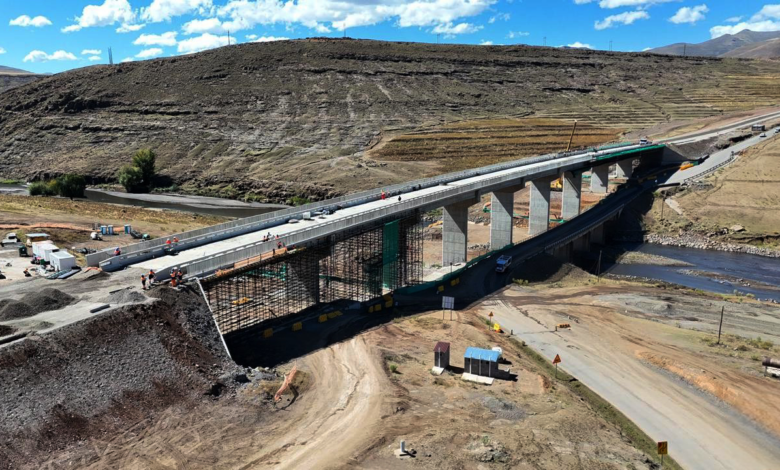
Construction progress on key bridge infrastructure under Phase II of the Lesotho Highlands Water Project continues to move forward steadily, with two of the three main bridges along the A1 now nearing completion. The development marks another important milestone for one of the country’s largest infrastructure and water projects. The bridges are expected to improve transport connections, support local communities and ensure continued movement of people and goods once the Polihali reservoir area becomes inundated. Major work has already been completed on both the Mabuyaneng and Khubelu bridges, while final finishing activities are currently underway. Officials involved in the project say both bridges remain on track for completion and opening to traffic by the end of June.
The Lesotho Highlands Water Project remains one of the most significant infrastructure developments in Southern Africa, bringing together water transfer, road development and community support initiatives. Phase II of the project includes the construction of major bridges, feeder roads and transport links designed to maintain connectivity in areas affected by the expansion of the Polihali reservoir. As construction activities continue, these infrastructure projects are becoming increasingly important for communities that rely on access to schools, healthcare facilities, businesses and local markets. Improved transport routes are also expected to support economic activity and long-term regional development. The nearing completion of the bridges therefore represents more than construction progress alone because it directly affects daily life for thousands of people living in surrounding areas.
One of the bridges making major progress is the Mabuyaneng bridge, where the 120-metre-long deck has already been completed. Construction teams are now focusing on final activities including the installation and finishing of handrails as well as the approach walkway. These finishing stages are important because they improve safety and prepare the structure for public use. Once complete, the bridge will provide a reliable transport route for local communities that may otherwise face difficult travel conditions when reservoir flooding begins. The project has also created employment opportunities for workers involved in construction, engineering and support services throughout the development process.
Work is also advancing well on the Khubelu bridge, another important structure within the Phase II infrastructure network. The 270-metre-long bridge deck has already reached an advanced stage, with teams currently completing finishing touches on handrails and balustrades ahead of waterproofing work. Waterproofing remains a critical stage in bridge construction because it helps protect the structure from water damage and extends long-term durability. Engineers and project teams continue to focus on ensuring the bridge meets required safety and quality standards before opening to traffic. The bridge is expected to become a vital transport link for communities and businesses operating within the region.
In addition to the bridge structures themselves, work on surrounding road infrastructure is also preparing to move into another important phase. Asphalting on the approach roads and interleading roads connected to the bridges is scheduled to begin in mid-May. These roads are essential because they ensure smooth access to the bridges and support uninterrupted transport movement throughout the affected areas. Good road infrastructure also helps reduce travel times, improve safety and support commercial activities such as farming and local trade. The completion of both the bridges and the connecting roads will significantly strengthen transport connectivity in the region.
Officials involved in the project have confirmed that both the Mabuyaneng and Khubelu bridges remain on schedule to be fully completed and operational by the end of June. Maintaining construction timelines is important because local communities are preparing for major environmental and geographical changes linked to the filling of the Polihali reservoir. Reliable infrastructure will play a central role in helping residents maintain access to essential services once certain routes become inaccessible due to inundation. The bridges are therefore considered critical components of the wider resettlement and connectivity strategy under the Lesotho Highlands Water Project. Their completion will help ensure that movement across the region remains possible even after significant landscape changes take place.
The largest bridge within the trio, the Senqu Bridge, has already achieved a major milestone after opening to traffic at the end of March. The bridge was later officially inaugurated on 22 April, marking a significant achievement for the project and the country’s infrastructure sector. The Senqu Bridge has drawn attention for both its scale and engineering design, becoming one of the standout structures within the development. Its opening has already improved transport access for nearby communities while demonstrating the progress being made under Phase II of the project. Together with the Khubelu and Mabuyaneng bridges, it forms part of a broader network intended to maintain regional connectivity.
The network of feeder roads, smaller bridges and major crossing points being developed under the project is expected to play a crucial role in protecting local livelihoods. Communities in affected areas depend heavily on road access for farming activities, schooling, healthcare visits and small business operations. Without proper replacement infrastructure, inundation linked to the reservoir could isolate villages and disrupt daily economic activity. The bridges and connecting roads are therefore designed to reduce social and economic disruption while supporting long-term development opportunities. Infrastructure investments of this scale can also help attract future economic activity and improve regional mobility for years to come.
The Lesotho Highlands Water Project also continues to hold major economic significance for the country as a whole. Beyond its water transfer objectives, the project contributes to infrastructure growth, job creation and regional cooperation between Lesotho and South Africa. Construction activities have supported local employment while also creating opportunities for skills development within engineering and construction sectors. Improved roads and bridges may further support tourism, trade and investment in the future. As major components near completion, attention is increasingly shifting toward ensuring long-term maintenance and sustainability of the infrastructure being developed.
The nearing completion of the Mabuyaneng and Khubelu bridges marks another major step forward for Phase II of the Lesotho Highlands Water Project. The infrastructure developments are expected to strengthen transport networks, protect community access and support economic activity once the Polihali reservoir becomes operational. Together with the already opened Senqu Bridge, the projects demonstrate Lesotho’s continued investment in large-scale infrastructure designed to support national development and regional connectivity. The bridges will help ensure that communities remain connected, children continue reaching schools and businesses maintain access to markets despite future environmental changes in the area. As construction moves toward its final stages, the project is steadily transforming both the physical landscape and the long-term prospects of the surrounding communities.
Join 'Lesotho News' WhatsApp Channel
Get breaking Lesotho news — delivered directly to your WhatsApp.
CLICK HERE TO JOIN