National University of Lesotho Hosts Seminar on Chinese Modernization and FOCAC 2024 Implications

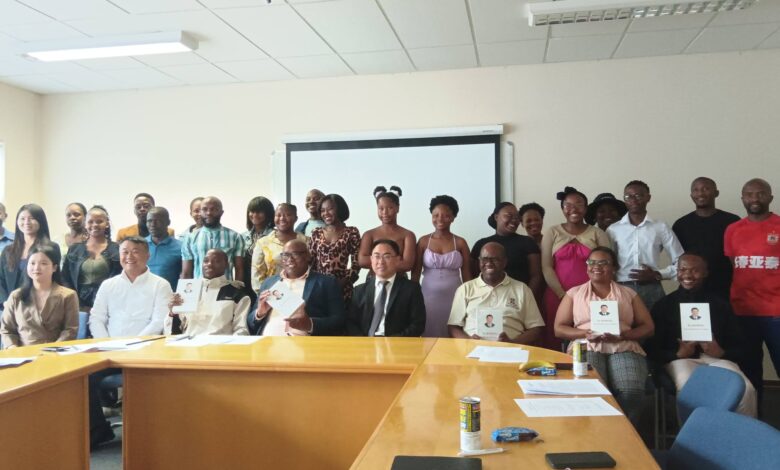
On 4th December 2025, the National University of Lesotho, in collaboration with the Chinese Embassy, hosted a landmark seminar themed “Charting a New Blueprint for Chinese Modernization.” The event in Roma brought together participants from politics, academia, media, and the Chinese Embassy to discuss China’s 15th Five-Year Plan and the 2024 Forum on China–Africa Cooperation (FOCAC), with particular attention to the implications for Lesotho.
Professor Motlamelle Kapa, Political Science Lecturer at the university, highlighted that President Xi Jinping’s 2024 FOCAC address outlined a strategic vision for a “high-level China–Africa community with a shared future.” He emphasized that this vision is rooted in historical solidarity, with China and Africa having stood together against colonialism and for national liberation, now entering a new phase focused on development, industrialization, and global governance reform.
Professor Kapa identified three main initiatives from FOCAC relevant to Lesotho. The first is Supporting Africa’s Industrialization, which aims to help countries move from raw material exporters to diversified economies. This includes support for industrial and special economic zones, investment in infrastructure such as transport, energy, and logistics, and technical and vocational education to build a skilled workforce. He noted that Lesotho’s existing textiles and apparel sector, alongside plans to expand agro-processing and light manufacturing, makes these initiatives particularly relevant.
The second initiative, Agricultural Modernization, prioritizes food security through climate-resilient agriculture, modern farming techniques, mechanization, agricultural research, extension services, technology transfer, and training for farmers and agricultural officials. Professor Kapa explained that this initiative aligns with Lesotho’s national priorities, as agriculture remains a critical livelihood sector under increasing pressure from climate change.
The third initiative focuses on Talent Development. President Xi emphasized expanded scholarships and training programs for African students and professionals, partnerships between universities and research institutes, and capacity building in governance, public health, digital technology, and green development. For the National University of Lesotho, this creates opportunities for joint degrees, research collaborations, staff and student exchanges, and professional training for civil servants.
Professor Kapa stressed the university’s responsibility to align these opportunities with national development strategies and skills gaps, ensuring that knowledge gained abroad is reintegrated into local institutions and communities. He outlined three roles for the university: producing independent research on China–Africa relations, contributing to informed policymaking, and preparing students as informed citizens and bridge-builders between societies. He highlighted the importance of critical engagement, interdisciplinary research, and applying theories to real-world policy processes.
Counselor Lu Hui of the Chinese Embassy commended the university for advancing academic exchanges and mutual understanding between the two countries. He explained that Chinese modernization represents an alternative model of development, proving that developing countries can achieve modernization through independent choices. He noted that China’s approach emphasizes common prosperity and global openness, creating opportunities for mutually beneficial cooperation with African nations, including Lesotho.
The seminar also included perspectives from local leaders and students. Mr. Lesolle Phalatsi of the Young Basotho Professionals Forum urged Lesotho to learn from China’s Five-Year Plan to develop home-grown economic strategies. Mr. Remaketse Mokhupi of the Lesotho Congress for Democracy Youth League emphasized unity among political parties to accelerate national development, while NUL Student Representative Kamohelo Ntili encouraged analytical engagement with China-Africa relations to ensure accountability, transparency, and good governance.
Participants received copies of President Xi Jinping’s book, “The Governance of China (V),” marking the first seminar of its kind at the university. The event showcased Lesotho’s commitment to learning from international development models while fostering informed and critical engagement among students, policymakers, and academics.
Join 'Lesotho News' WhatsApp Channel
Get breaking Lesotho news — delivered directly to your WhatsApp.
CLICK HERE TO JOIN