Lesotho Finance Minister Highlights AI and Digital Infrastructure at 2026 KOAFEC Ministerial Conference

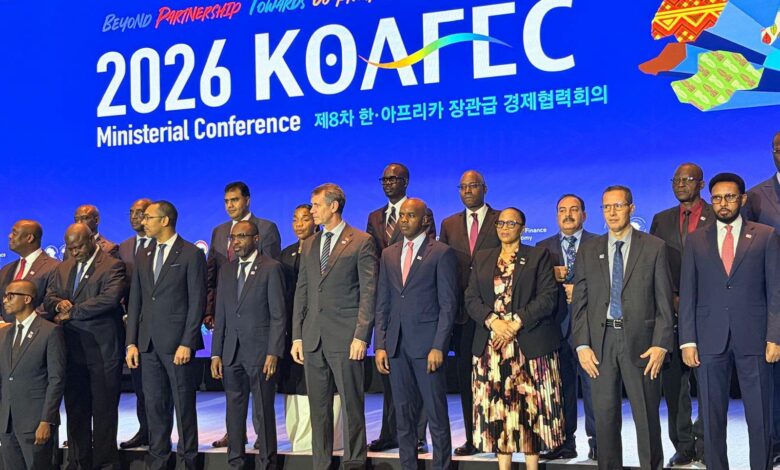
The Honorable Minister of Finance and Development Planning, Honorable Retšelisitsoe Matlanyane, has highlighted the important role of artificial intelligence and digital infrastructure in driving Africa’s economic transformation. She made the remarks while participating in the 2026 Korea-Africa Economic Cooperation (KOAFEC) Ministerial Conference, held under the theme, “Harnessing AI and Digital Infrastructure for Africa’s Transformation.” The conference provides an important platform for African countries and the Republic of Korea to discuss opportunities for economic cooperation, technological advancement and sustainable development. Minister Matlanyane’s intervention placed digital transformation at the centre of Africa’s development priorities. Her contribution also highlighted the need for African countries to build the systems, skills and policies required to ensure that technological progress creates meaningful and inclusive economic opportunities.
Minister Matlanyane emphasised that artificial intelligence and digital infrastructure have significant potential to support Africa’s sustainable development objectives. She pointed to the ability of digital transformation to create employment opportunities while improving access to essential services across different sectors of the economy. Healthcare and education could benefit from stronger digital systems that improve access to information, services and learning opportunities, particularly for communities that remain underserved. Agriculture could also become more productive through the use of digital technologies, data-driven decision-making and innovative tools that support farmers. At the same time, digital platforms can strengthen financial inclusion by making financial services more accessible while helping governments improve the delivery of public services.
The Minister’s intervention also recognised that technological development requires more than simply increasing access to digital tools. She identified three essential foundations that countries need to establish if they want digital transformation to deliver lasting economic and social benefits. These foundations include reliable digital infrastructure, skilled human capital and public trust, supported by enabling policies that encourage investment and innovation. Without dependable infrastructure, communities and businesses cannot fully benefit from technologies such as artificial intelligence, cloud computing and digital financial services. Building these foundations will therefore remain central to Africa’s efforts to use technology as a practical instrument for economic development.
Reliable infrastructure is particularly important because digital transformation depends on affordable and consistent access to connectivity and technology. Governments need to continue investing in systems that allow businesses, schools, healthcare facilities and communities to participate in the digital economy. Strong infrastructure can also create opportunities for entrepreneurs and companies to develop digital products and services that address local challenges. For countries such as Lesotho, improved digital connectivity can support economic activity while helping citizens access services without facing unnecessary geographical barriers. Investment in infrastructure can therefore contribute to both economic growth and greater inclusion when it reaches communities that have historically had limited access to digital services.
Human capital represents another critical part of the digital transformation agenda. Artificial intelligence and other emerging technologies require people with the skills to develop, manage and apply them responsibly. Minister Matlanyane’s emphasis on skilled human capital highlights the importance of investing in education, training and continuous skills development as African economies adapt to changing technology. Young people in particular can benefit from opportunities to develop skills in areas such as software development, data management, artificial intelligence, cybersecurity and other digital fields. Developing these capabilities can help African countries move beyond being consumers of imported technology and create a workforce capable of producing solutions that respond to African economic and social needs.
Public trust is equally important because digital transformation affects how people interact with governments, businesses and financial institutions. Citizens need confidence that their personal information will receive appropriate protection and that digital systems will operate fairly and responsibly. Governments must therefore consider issues such as data protection, cybersecurity, transparency and responsible use of artificial intelligence as they expand digital services. Clear policies can help establish trust while also creating conditions that encourage businesses and investors to participate in the digital economy. When infrastructure, skills and public trust develop together, countries have a stronger foundation for achieving sustainable digital transformation.
Minister Matlanyane also highlighted the importance of policies that promote investment and innovation. African governments can play a significant role in creating regulatory environments that encourage businesses to develop new technologies and expand digital services. Supportive policies can help attract investment while giving entrepreneurs opportunities to build solutions for local and regional markets. Innovation also becomes more meaningful when it responds to practical challenges in areas such as agriculture, healthcare, education, financial services and public administration. Africa has an opportunity to develop technologies that reflect its own needs and circumstances rather than relying solely on solutions designed for other markets.
The Minister’s remarks come as Lesotho and the Republic of Korea commemorate 60 years of diplomatic relations. The milestone provides an opportunity for both countries to strengthen cooperation in areas that can contribute to future economic development. Digital development represents one such area, particularly as governments and businesses increasingly rely on technology to improve productivity, expand services and connect markets. Lesotho has expressed its willingness to deepen cooperation with Korea as part of broader efforts to support an inclusive and digitally empowered Africa. Stronger partnerships could provide opportunities for knowledge sharing, skills development, investment and technological cooperation.
A key message from Lesotho’s participation in the conference is the need for Africa to become a producer of digital solutions rather than simply a source of raw data. The continent has a large and growing population with diverse economic and social needs that can create demand for locally developed technologies. African innovators can use artificial intelligence, digital platforms and data to develop products and services that address challenges within their own communities and across international markets. Building this capacity requires investment in infrastructure, education, research and entrepreneurship, as well as policies that allow innovation to grow. The objective is to ensure that Africa captures greater economic value from its participation in the global digital economy.
The 2026 KOAFEC Ministerial Conference therefore provides an important platform for discussions about the future of technology-driven development across Africa. Minister Retšelisitsoe Matlanyane’s contribution reinforces the view that artificial intelligence and digital infrastructure can support development across multiple sectors when countries establish the right conditions for adoption and innovation. For Lesotho, deeper cooperation with the Republic of Korea could support efforts to strengthen digital capabilities while opening new avenues for economic cooperation. The focus on infrastructure, human capital, public trust and enabling policies also provides a practical framework for countries seeking to turn technological opportunities into measurable development outcomes. As Lesotho and Korea mark six decades of diplomatic relations, the renewed focus on digital cooperation could help build stronger foundations for an African economy that develops, owns and exports its own solutions.
Join 'Lesotho News' WhatsApp Channel
Get breaking Lesotho news — delivered directly to your WhatsApp.
CLICK HERE TO JOIN