Qacha’s Nek Legal Aid Offices Bring Justice Closer to Remote Communities in Lesotho
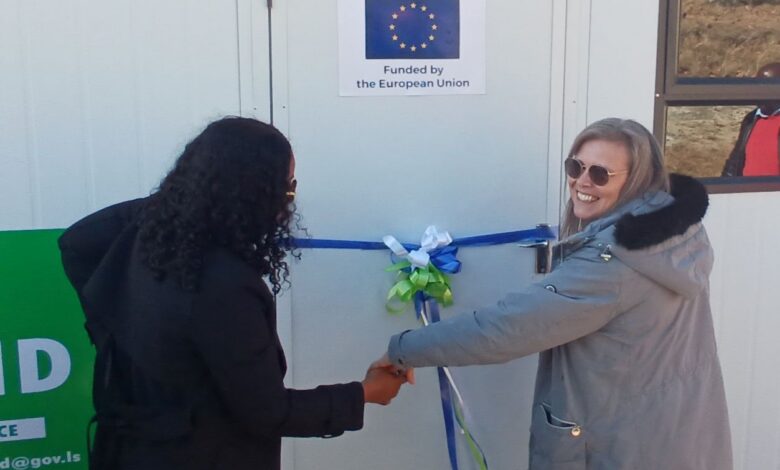
The official launch of the decentralised legal aid offices in Qacha’s Nek marks a major development in Lesotho’s effort to improve access to justice for vulnerable and underserved communities. The launch ceremony took place on Wednesday at Melele Ground and attracted government officials, justice sector representatives, civil society organisations and members of the local community. The initiative is designed to ensure that people living in remote districts can access legal services without the burden of travelling long distances to Maseru. For many years, people in areas such as Qacha’s Nek struggled to obtain legal representation, legal advice and support because services remained centralised in the capital city. The opening of the offices now represents a practical step toward building a more inclusive and accessible justice system for all Basotho.
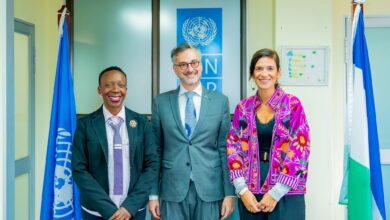
The launch was led by Relebohile Lebeta alongside Mette Sunnergren. Speaking on behalf of the Minister of Law and Justice, Ms. Lebeta expressed pride and excitement during the official opening of the decentralised legal aid offices. She highlighted that Lesotho’s Constitution contains a Bill of Rights aimed at promoting and protecting fundamental human rights, including the right to a fair hearing, legal representation and access to justice. According to her, the government has a responsibility to ensure that legal aid services are available nationwide, particularly for poor and vulnerable citizens who often cannot afford legal assistance. She explained that improving access to justice remains essential for protecting the dignity and rights of all citizens regardless of their economic or social status.
Ms. Lebeta further stated that the decentralisation of legal aid services had been overdue in districts such as Qacha’s Nek, where vulnerable groups have historically faced serious barriers in accessing justice. She noted that elderly people, children, people living with disabilities and unemployed residents in remote areas often experienced delays in resolving legal problems because of the absence of nearby legal support systems. Many people lacked transport money to travel to Maseru while others abandoned legal processes completely because they could not access representation. She explained that the opening of decentralised offices demonstrates Lesotho’s commitment to strengthening justice delivery across the country. According to Ms. Lebeta, similar offices have already been established in Leribe, Mokhotlong and Thaba-Tseka as part of a broader national strategy to expand legal aid services.
The Ministry of Law and Justice also acknowledged the critical role played by the European Union in supporting the initiative. Ms. Lebeta thanked the EU for funding office space, furniture and equipment for legal aid offices in Qacha’s Nek, Mokhotlong and Thaba-Tseka. She explained that this support has been instrumental in helping the ministry fulfil its constitutional obligation of ensuring access to justice for Basotho. The partnership between the Lesotho government and the European Union reflects a shared vision of creating inclusive institutions and improving governance. Through this collaboration, legal aid offices are now better equipped to provide practical assistance to citizens who need legal representation and advice.
Ambassador Sunnergren described the inauguration of the offices as an important milestone in promoting justice and good governance in Lesotho. She stated that the initiative forms part of a broader programme aimed at strengthening governance systems and supporting justice sector reforms across the country. According to her, the programme has focused on reinforcing infrastructure, institutional capacity and community engagement to create more efficient and sustainable justice systems. She explained that the legal aid project follows a holistic approach by combining office refurbishment, officer training, stakeholder collaboration and public awareness initiatives. Ambassador Sunnergren added that decentralisation is central to bringing justice closer to communities that have historically struggled to access services because of poverty, distance and limited resources.
The EU-supported programme has also invested in capacity building for legal aid officers and paralegals. Ambassador Sunnergren explained that officers have been trained to provide free legal advice, support with court documents and public awareness sessions tailored to women, youth and other vulnerable groups. These services are expected to improve legal literacy and empower citizens to understand their rights and responsibilities under the law. She noted that strengthening institutional systems is essential for ensuring justice services remain sustainable and accessible in the long term. The establishment of decentralised offices therefore goes beyond infrastructure because it also aims to strengthen the people and systems responsible for delivering justice.
Mary ’Nyane highlighted the difficulties the Legal Aid Department faced while operating solely from Maseru since its establishment in 1978. She explained that many accused persons pleaded guilty to crimes despite being innocent because they lacked legal representation and proper legal advice. Courts also experienced serious backlogs because people waited long periods for assistance from legal aid lawyers who were overstretched and under-resourced. According to Advocate ’Nyane, the department operated with fewer than 20 staff members responsible for serving vulnerable citizens across the country. She revealed that legal aid lawyers often faced transport shortages, lack of fuel, limited accommodation funding and insufficient staffing while trying to assist clients in remote districts.
Advocate ’Nyane explained that whenever legal aid teams travelled to Qacha’s Nek, they encountered large numbers of people referred by the courts, the Lesotho Correctional Service and community members seeking help. Because of limited resources, lawyers sometimes struggled to adequately support all clients in need of legal services. She noted that complaints about poor service often stemmed from operational challenges rather than unwillingness by staff to assist communities. The decentralisation of offices is therefore expected to ease these pressures and improve service delivery in rural districts. Advocate ’Nyane shared that although the Qacha’s Nek office only began operating in August 2025, it has already advised 34 accused persons, registered 63 new cases, completed 11 matters and continues handling 44 ongoing cases.
The launch also received support from other justice sector representatives and community leaders who acknowledged the importance of strengthening access to justice. ’Mathato Sekoai stated that the office strengthens the district’s justice system because prosecution, probation and other justice institutions are already operating within the area. She encouraged justice sector employees to cooperate professionally while respecting each institution’s responsibilities and mandates. Acting Commissioner of the Lesotho Correctional Service, Matingoe Phamotse, emphasised the importance of peace-building and social harmony within communities. Referring to the teachings of Moshoeshoe I, he urged Basotho to embrace the values of unity, peace and mutual respect as a way of reducing crime and social conflict.
Civil society organisations also welcomed the launch of the decentralised legal aid offices. Nkhethoa Mats’eleli described access to justice as a fundamental human right that should be available to every citizen regardless of their location or financial situation. He said the office would restore hope and trust among people who had long felt excluded from justice services. On behalf of the town chief, Thabo Mongali welcomed the initiative and expressed confidence that the office would benefit the wider community. Residents of Melele and surrounding areas are now expected to access legal services more easily and receive support without the financial burden of travelling to Maseru.
The official launch of the Qacha’s Nek legal aid offices represents an important milestone in Lesotho’s effort to create a more inclusive and accessible justice system. By decentralising services, the government is helping vulnerable citizens receive legal representation, counselling and advice closer to their communities. The initiative also reflects strong cooperation between the government, the European Union, justice institutions and civil society organisations in promoting human rights and good governance. Improved access to legal aid is expected to strengthen public trust in the justice system while helping reduce delays and inequalities that previously affected remote communities. As the offices continue operating and expanding their services, the people of Qacha’s Nek now have renewed hope that justice will become more accessible, fair and responsive to their everyday needs.
Join 'Lesotho News' WhatsApp Channel
Get breaking Lesotho news — delivered directly to your WhatsApp.
CLICK HERE TO JOIN