Mpopo Tšoele Becomes Fifth Permanent Secretary to Exit Ministry Amid Ongoing Government Reshuffle in Lesotho

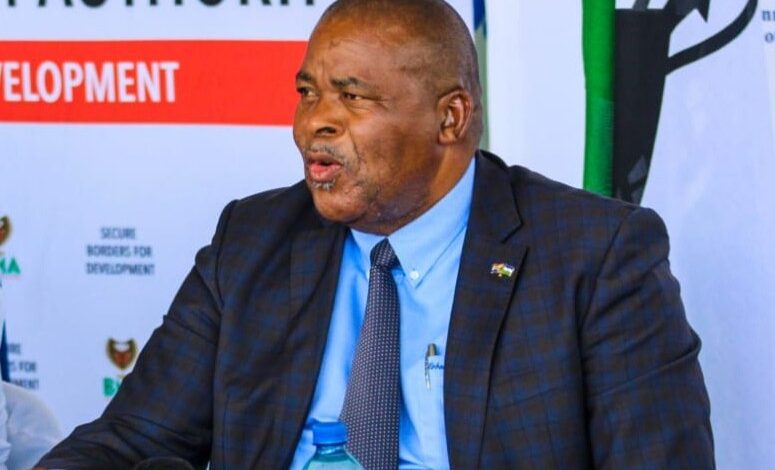
The Permanent Secretary in the Ministry of Local Government, Chieftainship, Police and Home Affairs, Mpopo Tšoele, has been reshuffled, marking his exit as the fifth PS to leave the ministry after a relatively short tenure. His reassignment to the Ministry of Defence has drawn attention within governance and public administration circles in Lesotho. Tšoele was widely viewed as a technically strong administrator with a focus on decentralisation, accountability, and public sector reform. His movement is seen as part of a broader pattern of instability within senior leadership structures in the ministry. The reshuffle has raised questions about internal working relationships and decision-making processes at senior government level. It also highlights ongoing tensions between administrative professionalism and political oversight in key ministries.
Reports from within the ministry suggest that the decision followed a growing fallout between Mpopo Tšoele and Minister Lebona Lephema. The disagreement is said to have centred on issues of staff management, discipline, and administrative authority within the ministry. Sources indicate that Tšoele maintained a strict interpretation of governance procedures and resisted directives he believed did not comply with legal and administrative frameworks. This approach reportedly created friction with political leadership, especially where urgent operational decisions were required. One source familiar with the situation stated that Tšoele consistently insisted on acting within the confines of the law, even when pressured to take alternative approaches. This principled stance is believed to have contributed significantly to the breakdown in working relations between the two officials.
The situation eventually escalated to a point where continued cooperation became difficult. According to internal accounts, the working relationship had deteriorated to the extent that effective collaboration was no longer sustainable. This led to the decision to transfer Tšoele out of the ministry and reassign him to the Ministry of Defence. His exit adds to a growing list of Permanent Secretaries who have served brief terms within the same ministry, raising concerns about continuity in administrative leadership. Frequent changes at senior level can disrupt policy implementation and slow down institutional reforms. In ministries responsible for local government and public safety, stability in leadership is often considered critical for effective service delivery. The repeated reshuffles therefore draw attention to deeper structural challenges within the system.
Tšoele’s departure also comes at a time when governance reform and decentralisation efforts remain key priorities in Lesotho’s public sector agenda. His reputation in governance circles was built on a strong focus on accountability mechanisms and adherence to administrative law. Many observers viewed him as part of a professional cadre of civil servants aiming to strengthen institutional integrity. His reassignment is therefore being closely watched by those interested in the direction of public sector reforms. Some analysts argue that tensions between political leadership and technocratic administrators are not uncommon in systems undergoing reform. However, repeated breakdowns in such relationships can undermine progress and weaken institutional trust. The situation reflects the ongoing balancing act between political direction and administrative independence.
Meanwhile, reports have emerged suggesting that further reshuffles of Permanent Secretaries may be on the horizon. Insider accounts describe this as part of an ongoing reconfiguration of the senior civil service. If confirmed, this would indicate a broader restructuring effort across government ministries. Such changes can have both positive and negative effects depending on how they are managed and communicated. On one hand, reshuffles can introduce new energy and align leadership with government priorities. On the other hand, frequent changes can create uncertainty among staff and disrupt long-term planning. The situation within the Ministry of Local Government, Chieftainship, Police and Home Affairs is therefore being viewed as part of a wider administrative shift.
The reshuffle of Mpopo Tšoele underscores the complex relationship between governance principles and political authority within Lesotho’s public service. His exit highlights how differences in interpretation of administrative procedures can lead to significant institutional changes. It also reflects the challenges faced by reform-minded officials operating within politically sensitive environments. As he moves to the Ministry of Defence, attention will likely remain on how his expertise is utilised in a new institutional setting. At the same time, the ministry he leaves behind continues to face questions about leadership stability and operational continuity. The developments signal a period of adjustment within the senior civil service structure. Ultimately, the situation illustrates the ongoing tension between reform, governance discipline, and political control in shaping the direction of public administration in Lesotho.
Join 'Lesotho News' WhatsApp Channel
Get breaking Lesotho news — delivered directly to your WhatsApp.
CLICK HERE TO JOIN