
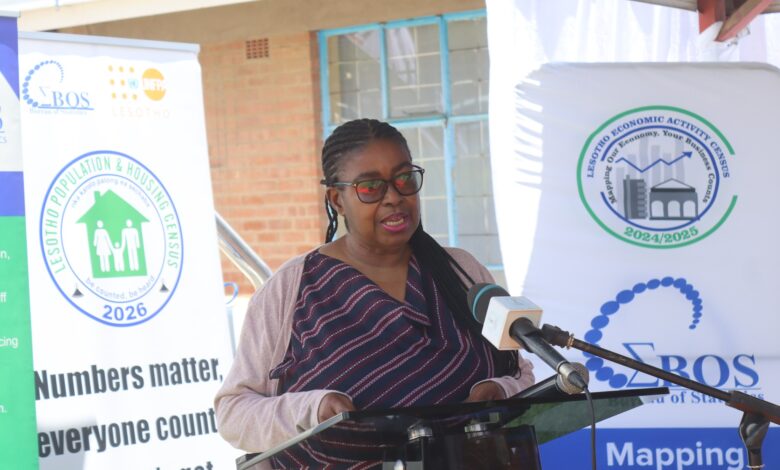
The Ministry of Finance and Development Planning, through the Bureau of Statistics, hosted celebrations for African Statistics Day at the Bureau’s premises in Maseru. The event highlighted the critical role of data and statistics in shaping equitable, peaceful, and prosperous societies.
Speaking on behalf of the Ministry’s Principal Secretary, Ms Malefu Khanyapa welcomed attendees and emphasized the theme for 2025: “Leveraging Innovations in Data and Statistics for a Just, Peaceful, Inclusive and Prosperous Africa.” She framed the discussion around the central focus: “Empowering Africa through Quality Data for Sustainable Development.”
Ms Khanyapa pointed out that innovations in data collection, analysis, and dissemination are transforming governance, civic engagement, and development outcomes across the continent. By leveraging modern statistical tools and digital technologies, African nations can tackle structural inequalities, improve public services, and strengthen community resilience.
Key Areas Highlighted During the Celebration
- Strengthening Governance: Digital platforms and open-data initiatives increase transparency and accountability. Citizens can monitor government spending, track development projects, and report corruption. Examples include Rwanda and Kenya, where e-governance systems have streamlined services and reduced inefficiencies. Real-time dashboards allow policymakers to allocate resources effectively and respond swiftly to crises.
- Inclusive Development: Data innovations ensure marginalised populations are not left behind. Traditional surveys often miss women, youth, persons with disabilities, and rural communities. Participatory mapping, mobile-based services, and citizen-generated data fill these gaps. Community-driven projects in Nigeria and South Africa have improved interventions targeting vulnerable groups.
- Gender and Youth Focus: Gender-disaggregated data informs programs that promote economic and social empowerment for women. Youth-focused data helps address unemployment, guide vocational training, and support entrepreneurship initiatives.
- Peace-building and Conflict Prevention: Data-driven tools such as conflict early-warning systems, geospatial analysis, and social media monitoring detect potential unrest. In post-conflict settings, data guides recovery, assesses reconciliation progress, and ensures fair distribution of aid. The Democratic Republic of Congo uses data mapping of displaced communities to inform humanitarian assistance and resettlement planning.
Ms Khanyapa concluded by underscoring that statistical evidence combats misinformation and divisive narratives. Fact-based dialogue, informed by quality data, can unite communities and support sustainable peace.
The celebration reinforced the importance of using data strategically to achieve inclusive growth, social justice, and long-term stability across Africa. By investing in statistical innovation, nations can build societies that are not only economically prosperous but also equitable and resilient.
Join 'Lesotho News' WhatsApp Channel
Get breaking Lesotho news — delivered directly to your WhatsApp.
CLICK HERE TO JOIN