Lesotho Farmers Seek Training to Improve Care of Hybrid Rams and Bucks Under WaMCoOP

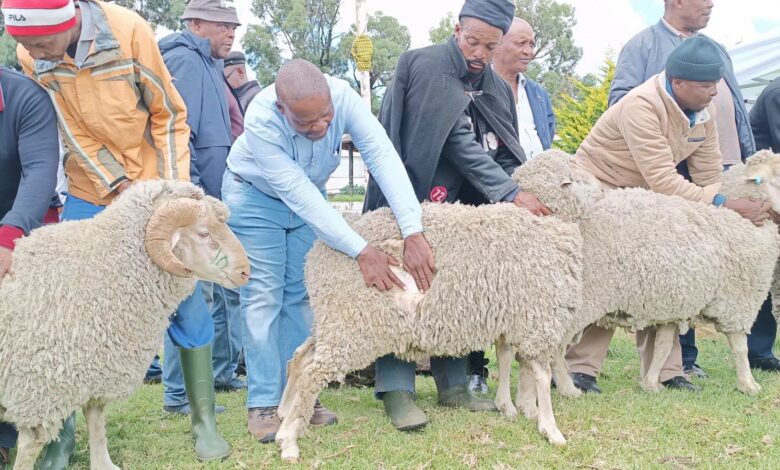
Smallholder farmers benefiting from the Culling Exchange Programme under the Wool and Mohair Value Chain Competitiveness Project (WaMCoOP) are calling for practical training on the proper care and management of their newly distributed hybrid rams and bucks. The request emerged during monitoring activities involving beneficiaries from Koali and Central Agricultural Resource Centres in Lesotho. Farmers want to ensure that the improved animals remain healthy and perform effectively as breeding stock. The call comes as agricultural officials continue assessing the condition of Merino hybrid rams and Angora goat bucks distributed earlier this year. Proper animal management will be essential if the programme is to achieve its objective of improving small stock breeds and strengthening the livelihoods of participating farmers.
District Animal Promotion Officer (DAPO) from the District Department of Agriculture and Food Security, Ms. Relebohile Ntsane, said the need for training became evident during ongoing monitoring of the animals. The monitoring process has allowed agricultural officials to identify challenges faced by beneficiaries after receiving the improved breeding animals. Farmers have reported concerns that include diarrhoea and mites, both of which can affect the health and productivity of sheep and goats if they are not managed correctly. According to Ntsane, some cases of diarrhoea appear to be linked to feeding practices, highlighting the importance of helping farmers understand appropriate nutrition and animal management. The occurrence of mites was also associated with situations where hybrid animals were mixed with local animals, making proper flock management another important area for farmer education.
Training on animal care could give beneficiaries practical knowledge on feeding, disease prevention, parasite control and general livestock management. Farmers who receive improved breeding animals need to understand that the animals require appropriate care to deliver their full genetic potential. Proper nutrition is particularly important because inadequate or unsuitable feeding can weaken animals and affect growth, reproduction and overall productivity. Regular monitoring can also help farmers identify signs of illness or infestation early and seek veterinary or agricultural support before problems become more serious. By strengthening farmers’ technical knowledge, WaMCoOP and agricultural authorities can help protect the investment made in improved breeding stock.
The Culling Exchange Programme is designed to encourage smallholder farmers to gradually phase out low-yielding animals and replace them with higher-yielding breeds. This approach seeks to improve the quality of sheep and goats available for breeding while strengthening the productivity of small-scale livestock enterprises. The distribution of Merino hybrid rams and Angora goat bucks gives farmers access to improved breeding genetics that can potentially enhance the quality of their flocks. However, improved genetics alone cannot guarantee better production outcomes because animal health, nutrition, breeding management and general husbandry also play important roles. Continued support and training can therefore help beneficiaries make the most of the improved animals they have received through the programme.
The hybrid animals distributed to beneficiaries were procured from farms belonging to the Lesotho Wool and Mohair Growers Association (WMGA) in Quthing as well as the Mokhotlong sheep stud. The use of animals sourced from established breeding operations is intended to support the introduction of better-performing genetics into smallholder farming systems. Merino sheep are particularly important to Lesotho’s wool sector, while Angora goats play a major role in the country’s mohair production. Improving the quality of breeding animals can therefore have implications beyond individual farms because stronger genetics can contribute to the wider productivity and competitiveness of the wool and mohair value chains. Farmers receiving the animals have an important role in maintaining their health and using them effectively within their breeding programmes.
In Quthing district, at least 18 farmers received rams while eight farmers received bucks after meeting the programme’s requirements. Among the requirements was demonstrating a clear commitment to improving the quality of their small stock breeds. The selection process is important because the programme aims to ensure that improved breeding animals reach farmers who are prepared to manage them responsibly and contribute to the broader objectives of the initiative. Beneficiaries are expected to use the animals as breeding resources rather than simply treating them as additional livestock. Their ability to maintain healthy animals and apply appropriate breeding practices will influence the long-term impact of the programme.
The concerns raised by beneficiaries also demonstrate why monitoring is an important part of agricultural development programmes. Distributing improved animals is only one stage of the process, while continued technical support can determine whether the investment produces sustainable results. Agricultural officers can use monitoring visits to identify health problems, assess management practices and understand the challenges farmers experience at household level. The information gathered can then be used to develop targeted interventions such as training, veterinary support and improved husbandry guidance. This creates a feedback mechanism that can help programme managers respond to practical problems rather than relying solely on the original programme design.
Monitoring activities will continue this month at the Tlatlamentsi and Mphaki agricultural resource centres. These visits are expected to provide further information about the condition of the hybrid rams and bucks and the experiences of farmers managing them. The findings will contribute to a final report containing recommendations for WaMCoOP and the Department of Livestock. Such recommendations could help strengthen future implementation of the Culling Exchange Programme and improve support for beneficiaries. Continued monitoring can also help identify recurring challenges that may require broader interventions across participating farming communities.
WaMCoOP is a seven-year initiative implemented under the Ministry of Agriculture, Food Security and Nutrition and is scheduled to be phased out in 2031. The project seeks to strengthen climate resilience, expand market access and increase income for small-scale farmers across Lesotho. Its focus on the wool and mohair value chains is particularly relevant to the country’s livestock economy, where smallholder farmers play an important role in production. Improving breeding quality can contribute to stronger production systems, while better access to markets can create opportunities for farmers to generate increased returns from their livestock enterprises. Building farmer capacity alongside these investments will be important for ensuring that the benefits continue beyond the project’s implementation period.
The call for training from beneficiaries of the Culling Exchange Programme highlights the importance of combining improved livestock genetics with practical farmer support. Hybrid rams and bucks can help improve the quality and productivity of small stock, but farmers need the right knowledge to manage these animals effectively. Addressing challenges such as diarrhoea, feeding problems and mites can protect the health of the animals and improve the chances of achieving the programme’s breeding objectives. The continued monitoring by agricultural officials and the planned recommendations to WaMCoOP and the Department of Livestock provide an opportunity to strengthen the programme based on real experiences from farmers. As Lesotho works to build more productive, climate-resilient and competitive wool and mohair value chains, investing in both improved animals and the knowledge of the farmers who care for them will remain essential.
Join 'Lesotho News' WhatsApp Channel
Get breaking Lesotho news — delivered directly to your WhatsApp.
CLICK HERE TO JOIN