Ramaphosa’s SADC Chairship Vision Aligns Closely With Lesotho’s Development Priorities

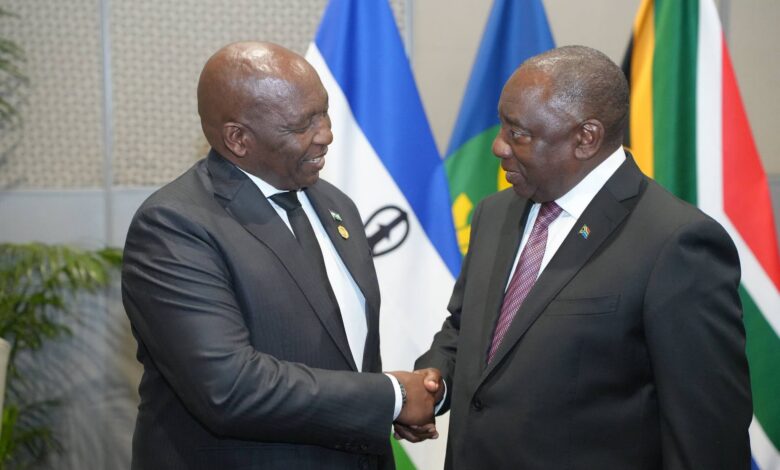
South African President Cyril Ramaphosa’s vision for South Africa’s chairship of the Southern African Development Community (SADC) closely reflects Lesotho’s development priorities, particularly in infrastructure, industrialisation, regional connectivity, energy, water and job creation. His emphasis on strengthening regional infrastructure comes at a time when Southern African countries are seeking practical ways to improve trade, attract investment and create sustainable economic opportunities. For Lesotho, a landlocked country surrounded by South Africa, stronger regional connections are especially important because efficient transport networks and reliable infrastructure directly affect access to markets and essential services. The priorities outlined by President Ramaphosa therefore have significance beyond South Africa’s national borders and could support broader regional development. The alignment also creates opportunities for Lesotho to deepen its participation in regional projects that promote economic integration and shared prosperity.
Closing the 46th SADC Summit in eThekwini on Monday, President Ramaphosa called for regional corridors and infrastructure that connect production centres to markets, link landlocked countries to ports and enable the efficient movement of goods, services and people. This approach places physical connectivity at the centre of regional economic development and recognises that infrastructure can determine how effectively countries participate in regional and international trade. For landlocked economies such as Lesotho, access to reliable transport corridors is particularly important because goods must cross borders and travel through neighbouring countries before reaching major ports and international markets. Improved roads, border facilities and transport networks can reduce delays, lower logistics costs and make businesses more competitive. Stronger connectivity can also improve the movement of people and support greater cooperation between communities and economies across the SADC region.
Lesotho’s development agenda similarly places infrastructure investment at the centre of economic growth, improved public services and employment creation. Roads, bridges, water systems, energy infrastructure and telecommunications networks all play a role in determining whether businesses can operate efficiently and whether communities can access economic opportunities. Investment in these areas can support construction activity in the short term while creating the foundation for long-term industrial and commercial growth. Better infrastructure can also help connect rural communities to urban centres, markets, schools, healthcare facilities and employment opportunities. For Lesotho, infrastructure development is therefore not simply about building physical assets, but about creating stronger conditions for inclusive economic development.
President Ramaphosa’s focus on industrialisation also has important implications for Lesotho and the wider SADC region. Regional industrialisation requires countries to improve their productive capacity while developing stronger supply chains that allow businesses to source inputs, manufacture products and reach consumers more efficiently. Lesotho can benefit from regional industrial development by strengthening sectors where it has existing capabilities and by improving its ability to participate in cross-border value chains. Greater regional cooperation can also encourage investment in manufacturing, agriculture, energy and other productive sectors. When combined with better infrastructure and easier movement of goods, industrialisation can help create jobs and provide more sustainable economic opportunities for communities.
Energy cooperation represents another important area where South Africa’s SADC priorities intersect with Lesotho’s development needs. Reliable and affordable energy is essential for households, businesses, manufacturing facilities and public institutions. Lesotho has significant potential in renewable energy, particularly hydropower, and regional cooperation can help countries make better use of their available energy resources. Stronger electricity networks and cross-border energy cooperation can contribute to greater energy security while supporting industrial and commercial activity. Investment in energy infrastructure can therefore become an important part of the broader regional effort to increase production, improve competitiveness and create employment.
Water also occupies a central position in the development relationship between Lesotho and South Africa. Lesotho’s water resources have long held strategic importance, while South Africa has substantial demand for reliable water supplies to support communities, agriculture and economic activity. Cooperation around water infrastructure demonstrates how regional development priorities can connect the interests of neighbouring countries. Projects involving dams, pipelines, roads and related infrastructure can generate economic activity while supporting the long-term management of essential resources. A coordinated approach to water and infrastructure can therefore contribute to both economic development and stronger regional cooperation.
The Senqu Bridge provides a practical example of how the shared infrastructure vision can translate into a tangible project. The bridge was jointly inaugurated by President Ramaphosa and Lesotho Prime Minister Ntsokoane Matekane earlier this year, highlighting the importance of cross-border infrastructure in strengthening the relationship between the two countries. Such projects can improve transport links while supporting trade, tourism, access to services and movement between communities. They can also demonstrate how investment in infrastructure can deliver benefits that extend beyond a single location or country. The Senqu Bridge consequently represents more than a transport connection, as it reflects the broader potential of regional infrastructure to support integration and economic opportunity.
Efficient borders will also remain important if regional infrastructure investments are to deliver their full economic potential. Roads and bridges can improve physical connectivity, but lengthy border processes can still increase transport costs and delay the movement of goods and people. Streamlined border procedures, improved infrastructure and greater cooperation between neighbouring countries can help businesses move products more efficiently across the region. For Lesotho, which depends heavily on connections with South Africa, improvements in border efficiency could have a direct effect on trade and economic activity. Regional connectivity therefore requires both physical infrastructure and coordinated systems that allow those infrastructure networks to function effectively.
Job creation provides another strong link between President Ramaphosa’s SADC vision and Lesotho’s development priorities. Large infrastructure projects can create employment during construction while also supporting longer-term economic activity once roads, bridges, energy systems and industrial facilities become operational. Improved connectivity can help businesses expand into new markets, potentially creating additional employment across sectors such as manufacturing, logistics, agriculture, tourism and services. Lesotho’s focus on infrastructure as a driver of job creation therefore fits closely with the wider regional objective of building economies that can generate sustainable opportunities for their populations. The success of these efforts will depend on ensuring that infrastructure investment is connected to skills development, private-sector growth and productive economic activity.
The alignment between South Africa’s SADC chairship priorities and Lesotho’s development agenda also highlights the importance of regional cooperation in addressing challenges that individual countries cannot solve alone. Infrastructure networks, energy systems, water resources, trade routes and supply chains often cross national borders, making cooperation essential for achieving their full potential. A coordinated regional approach can help countries reduce duplication, attract investment and develop projects that serve broader economic objectives. For Lesotho, stronger cooperation with South Africa and other SADC members can create opportunities to improve access to markets while supporting national development goals. The regional focus on connectivity can therefore provide a platform for countries to pursue national priorities within a wider framework of shared development.
President Ramaphosa’s vision for South Africa’s SADC chairship presents a clear opportunity to strengthen the connection between regional integration and practical development outcomes. His emphasis on infrastructure, industrialisation, connectivity, energy, water, efficient borders and job creation closely matches areas that remain central to Lesotho’s economic ambitions. The Senqu Bridge demonstrates the potential of this shared approach, while future regional corridors and infrastructure projects could expand those benefits across the SADC region. For Lesotho, stronger infrastructure and connectivity can support economic growth, improve access to markets and strengthen opportunities for its people. As South Africa advances its SADC priorities, closer cooperation with Lesotho and other member states can help turn regional infrastructure ambitions into practical projects that support trade, investment, industrial development and sustainable job creation.
Join 'Lesotho News' WhatsApp Channel
Get breaking Lesotho news — delivered directly to your WhatsApp.
CLICK HERE TO JOIN